

Research
- +5
Alper Coşkun, Fatih Ceylan, Tacan İldem, …
{
  "authors": [
    "Sinan Ülgen"
  ],
  "type": "legacyinthemedia",
  "centerAffiliationAll": "dc",
  "centers": [
    "Carnegie Endowment for International Peace",
    "Carnegie Europe"
  ],
  "collections": [
    "Turkey’s Transformation",
    "Brexit and UK Politics"
  ],
  "englishNewsletterAll": "ctw",
  "nonEnglishNewsletterAll": "",
  "primaryCenter": "Carnegie Europe",
  "programAffiliation": "EP",
  "programs": [
    "Europe"
  ],
  "projects": [],
  "regions": [
    "Middle East",
    "Türkiye",
    "Western Europe",
    "United Kingdom",
    "Iran"
  ],
  "topics": [
    "EU",
    "Economy"
  ]
}
Source: Getty
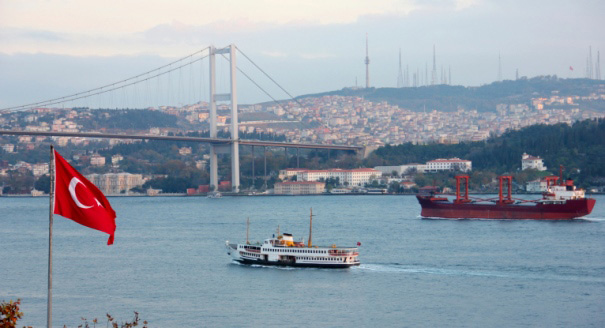
Despite traveling on different paths, Britain’s and Turkey’s relationships with the EU may end up the same in terms of their levels of economic integration.
Source: Intereconomics
Turkey's relationship with Europe is broken. The ultimate goal of accession that had underpinned this relationship has lost both its relevance and its credibility. The two sides may continue the pretense that Turkey's EU membership remains a shared objective, but in reality this objective has become more elusive than ever. Since Turkey started its accession talks in 2005, progress has been slow. Now talks have stalled completely, with little prospect of any real progress.
The responsibility for this failure is to be shared. Following the early momentum of reforms that convinced European policy makers to start accession talks in 2005, Turkey's ruling AK Party has since lost its zeal for convergence. This government's well-publicised backsliding on democratic norms – especially following the failed coup attempt – has distanced Ankara even further from its membership aspirations. The EU has at the same time singularly failed to embrace the prospect of Turkish accession. Unlike in past enlargements, which themselves were hardly popular propositions, European leaders have not been able to shed their ambiguity towards Turkey. The growing strength of populist and anti-enlargement political movements in many European polities has become another structural obstacle to an eventual Turkish accession.
Yet the loss of this momentum is mutually disadvantageous. Turkey finds itself devoid of a potential anchor for its political and economic reforms. Europe will increasingly deal with a large country at its borders that will be more accustomed to leveraging its nuisance value in order to achieve political ends. The value of partnership and the instinct towards cooperation will have been lost. The singular reliance on an accession framework that has lost credibility as the pillar of the relationship with Turkey is now generating acrimony and bad faith. The challenge now will be to elaborate a complementary relationship with Turkey that can co-exist with the accession track.
The refugee deal can be viewed as the first component of this new framework. The deal remains vulnerable due to Turkey's unwillingness to fulfil all the conditions for visa liberalisation and particularly the required changes to its anti-terror legislation. Meanwhile, the unwillingness of many European governments, under domestic pressure from anti-immigration parties, to move ahead with visa liberalisation with Turkey also threatens the viability of the deal. Nonetheless, it has proven to be resilient, as neither side wants to pull the plug on a deal that generates mutual benefits. The new framework of the Turkey-EU relationship will therefore need to combine such areas of mutual benefit. It will be more transactional in nature than the current accession track.
More advanced economic integration is likely to constitute a second and key pillar of this remodeled relationship. There is already an agreement to initiate a new round of negotiations to modernise the customs union, which dates back to 1995. The current Turkey-EU customs union is limited to trade in goods and to a few horizontal disciplines such as intellectual property rights and competition rules. The goal will be to enlarge the scope of the customs union by liberalising trade in services and possibly for at least some agricultural products. In addition, public procurement, state aids and an updated dispute settlement mechanism are set to be part of the new package.
The more difficult question is the challenge of dynamic harmonisation. In many areas, harmonisation with the EU acquis will be indispensable for trade liberalisation. But today there is no satisfactory model that can be replicated to ensure this objective for Turkey. On one end of the spectrum, there is the European Economic Area (EEA), which stipulates full harmonisation. At the same time, however, it creates full policy dependency. In other words, EEA countries like Norway and Iceland are total policy takers. They have to internalise rules and regulations which are determined by other sovereign nations. EEA countries have fundamentally decided that this policy dependency is an unenviable but necessary sacrifice to ensure full access to the European Single Market. For a large country like Turkey, though, the political calculus is likely to be different. The Turkish polity is not likely to back a model with such a loss of policy independence.
The current alternative which grants a modicum of additional policy independence is the Swiss model, in which a large set of bilateral agreements underpin the principle of internal market access. However, the sustainability of this arrangement is under threat. The possible obstacles to the freedom of movement contemplated by the Swiss government have jeopardised this deal. In any case, due to the complexity of this arrangement, there seems to be little willingness within the EU to extend it to other countries.
A deep and comprehensive free trade agreement constitutes another possible alternative. However, these arrangements do not aim at full internal market access for the signatory countries. As such, they do not represent the advanced level of economic integration that will be the objective for Turkish policy makers. Thus, the challenge will be to create a new model of economic integration, with the ultimate goal being internal market access but without creating the full policy dependency embedded within the EEA. Interestingly, this challenge is very similar to the question that now bedevils British policy makers. For the post-Brexit UK negotiators, the objective seemingly is to retain internal market access while at the same time maintaining some policy sovereignty.
Thus, the Turkish and British requirements are very similar, despite the fact that the two countries are assuredly traveling different paths. While the UK is exiting the union, Turkey is seeking a new model of convergence with the EU. But the end state of the relationship may be the same, at least in terms of economic integration. For this approach to be successful, and for a new model of economic integration with its institutional underpinnings to be established, the EU has to take a leap of faith. The strictly defended privilege of participation in decision making in areas that are relevant to internal market legislation has to be relaxed. Possibly a new category of virtual or associate membership could be created. This would apply to states that are willing to be part of the internal market but not necessarily willing or able to be full EU members. Virtual membership would include a commitment to apply the EU acquis in a similar fashion to the EEA members; unlike the EEA arrangement, however, it would also involve greater access to decision making. During the EEA negotiations in the past, efforts were made to address this unique challenge. At the time, a number of procedures were launched under the benign slogan of decision shaping. The reality remains, however, that the politics lacked ambition. The specifics of decision shaping proved to be quite insufficient to allay concerns over sovereignty capture.
Differentiated models of economic integration can provide an opening for tying in countries to the EU's core of internal market rules. However, the feasibility of these models will depend on the willingness of EU policy makers to think constructively about alternative models of governance for internal market access to non-EU member countries. So far, this has proved to be a losing proposition, but the combined economic weight of the UK and Turkey could possibly just prove sufficient to sway the balance.

Senior Fellow, Carnegie Europe
Sinan Ülgen is a senior fellow at Carnegie Europe in Brussels, where his research focuses on Turkish foreign policy, transatlantic relations, international trade, economic security, and digital policy.
Recent Work

Alper Coşkun, Fatih Ceylan, Tacan İldem, …
Carnegie does not take institutional positions on public policy issues; the views represented herein are those of the author(s) and do not necessarily reflect the views of Carnegie, its staff, or its trustees.

In the latest Five-Year Plan, the Chinese president cements the shift to an innovation-driven economy over a consumption-driven one.

Damien Ma

Rather than climate ambitions, compatibility with investment and exports is why China supports both green and high-emission technologies.

Mathias Larsen
“Involution” is a new word for an old problem, and without a very different set of policies to rein it in, it is a problem that is likely to persist.

Michael Pettis

While China's investment story seems contradictory from the outside, the real answers to Beijing's high-quality growth ambitions are hiding in plain sight across the nation's cities.

Yuhan Zhang
China's stimulus addiction cannot go on forever. Beijing still has policy space to clean up the country's massive debt issue, but time is running short.
Michael Pettis