

Article
Carole Nakhle
{
  "authors": [
    "Carole Nakhle"
  ],
  "type": "legacyinthemedia",
  "centerAffiliationAll": "dc",
  "centers": [
    "Carnegie Endowment for International Peace",
    "Malcolm H. Kerr Carnegie Middle East Center"
  ],
  "collections": [],
  "englishNewsletterAll": "menaTransitions",
  "nonEnglishNewsletterAll": "",
  "primaryCenter": "Malcolm H. Kerr Carnegie Middle East Center",
  "programAffiliation": "MEP",
  "programs": [
    "Middle East"
  ],
  "projects": [
    "Carnegie Oil Initiative"
  ],
  "regions": [
    "Levant",
    "Lebanon",
    "Middle East"
  ],
  "topics": [
    "Political Reform",
    "Economy"
  ]
}
Source: Getty
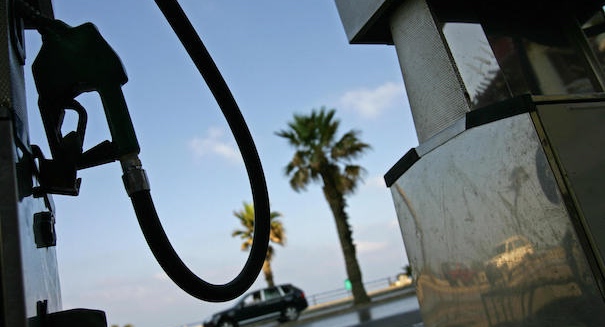
Lebanon has embarked on the path of developing an oil and gas sector at a time of increasingly vociferous calls for transparency in the sector worldwide.
Source: Lebanese Center for Policy Studies
At their summit meeting in 2013, the Group of Eight (G8) highly industrialized nations—including Canada, France, Germany, Italy, Japan, Russia, the United Kingdom, and the United States—committed to three core actions. In addition to boosting trade and improving the efficiency of tax systems, they also agreed to promote transparency, particularly in relation to companies and legal agreements in the oil and gas sector.
The G8’s public backing of improved transparency likely stems from mounting evidence that reveals the vital role transparency can play in fighting corruption and averting various economic and social crises and political ills. According to this argument, the more transparent a country is, the better suited it is to fighting corruption.
However, as noble as the concept may be, when it comes to implementation, the political commitment to transparency seems to fall short of its aspirations. In some countries, calls for transparency are employed as mere political rhetoric, while more serious transparency advocates often end up overlooking fundamental prerequisites such as the quality of public sector management along with rule of law and legal frameworks, which are necessary to achieve accountability as well as successful governance of the oil and gas sector.Transparency has many dimensions and can be best described as involving ready access to reliable, comprehensive, timely, understandable, and internationally comparable information.1 It therefore involves disclosing and publishing information in a robust manner and encompasses engagement from multiple stakeholders.
In addition to fighting corruption, which is epidemic in many developing oil and gas rich countries, transparency supports accountability and reduces inefficiencies. It also enhances relations between stakeholders as it boosts trust between society, government, and companies, helping to avoid misperceptions and reducing local tensions.
From an investor’s perspective, it also improves the business climate. As Lord Brown, the former CEO of BP, argues, “it is rare for a company to lose business by being too transparent. In fact, opacity can create political risk by allowing rumor to predominate over facts and by allowing contracts to become entangled with the personal interests of officials2.” It is therefore not surprising to see many oil companies backing transparency promoting initiatives such as the Extractive Industry Transparency Initiative (EITI) where more than 80 extractive companies worldwide are EITI Supporting Companies.
Lebanon has embarked on the path of developing an oil and gas sector at a time of increasingly vociferous calls for transparency in the sector worldwide, as more evidence emerges about the evaporation of vast sums of money from national accounts in some oil and gas-producing countries, along with increasing public awareness and scrutiny, and more coordinated global efforts to fight tax evasion. The fear of mishandling the oil and gas sector and the squandering of potential revenues is legitimate in Lebanon, which does not fare well on the Global Corruption Perception Index, ranking at 123 out of 167 countries.
The oil and gas industry has some special features, including the potential for substantial economic rents, high-levels of government involvement, technically and structurally complicated operations, as well as complex and lengthy fiscal, legal, and commercial agreements. Such features make it easier to manipulate revenue flows for political or personal gain, in turn fueling the resource curse.
The industry also encompasses thousands of companies engaged directly and indirectly in a wide range of activities across the supply chain from upstream, midstream, and downstream, in addition to various supporting services and functions from banking and trading to catering.
Therefore, if transparency is to be seriously promoted, it should apply to all sectors in the economy—including but not exclusive to those directly engaged in upstream operations.
Recent attempts in Lebanon toward promoting transparency in the oil and gas industry are encouraging. They range from the draft oil and gas transparency law, to the preparation of the public register for licenses. Another positive step is that the Lebanese government has expressed interest in joining EITI, although it is yet to make a formal commitment.
These, however, are baby steps, and much remains to be done. For instance, the Offshore Petroleum Resources Law (OPRL) of 2010 is silent on any public reporting and disclosure of information. In fact, Lebanon has yet to pass any law allowing for public access to information.
The details of the fiscal terms that will determine the potential revenues accruing to the government from the sector are left to individual oil contracts. As stated by the International Monetary Fund, setting terms in model agreements, instead of the law, “can make them little more than a basis for negotiation".3 Contract negotiations can be a breeding ground for corruption, especially if the resulting agreement is not published.
A true commitment to transparency should therefore call on governments and companies to publish potential oil contracts. Surprisingly, however, this essential aspect of transparency in the sector seems to have been overlooked by officials and commentators.
Some would argue that a law on the management of a potential Sovereign Wealth Fund (SWF), along with the oil and gas sector transparency law, would prevent instances of corruption and the misuse of resources. As evidence, one only need look at the world’s most successful and transparent SWF—Norway’s Government Pension Fund Global, which has been exemplary in terms of revenue management. However, the success of this fund cannot be ascribed to one specific piece of legislation; it is due to Norway’s historical strengths, including a much broader well-established and transparent institutional framework, which encompasses its entire economy, not just the oil and gas sector.
It is difficult to argue against transparency, particularly since it promotes good governance in the long run, especially in countries with a poor record in this area. However, it would be naïve to believe that a general law on transparency specifically targeting the oil and gas sector will eliminate corruption and power abuse risks. It is true that transparency is needed but it is not sufficient to produce accountability in the public sector. It takes several robust pillars to build a strong bridge; transparency is only one of them.
1 Kopits and Craig (1998) Transparency in Government Operations, International Monetary Fund.
2 Lord Brown (2012) Europe Must Enforce Oil Sector Transparency, The Financial Times.
3 IMF (2012) Fiscal Regimes for Extractive Industries: Design and Implementation. Fiscal Affairs Department. p. 36
This article was originally published by The Lebanese Center for Policy Studies.

Former Nonresident Scholar, Middle East Center
Nakhle was a nonresident scholar at Carnegie Middle East Center, specializing in international petroleum contracts and fiscal regimes for the oil and gas industry, world oil and gas market developments, energy policy, and oil and gas revenue management.
Recent Work
Carole Nakhle
Carole Nakhle
Carnegie does not take institutional positions on public policy issues; the views represented herein are those of the author(s) and do not necessarily reflect the views of Carnegie, its staff, or its trustees.

In the latest Five-Year Plan, the Chinese president cements the shift to an innovation-driven economy over a consumption-driven one.

Damien Ma

Rather than climate ambitions, compatibility with investment and exports is why China supports both green and high-emission technologies.

Mathias Larsen
“Involution” is a new word for an old problem, and without a very different set of policies to rein it in, it is a problem that is likely to persist.

Michael Pettis

While China's investment story seems contradictory from the outside, the real answers to Beijing's high-quality growth ambitions are hiding in plain sight across the nation's cities.

Yuhan Zhang
China's stimulus addiction cannot go on forever. Beijing still has policy space to clean up the country's massive debt issue, but time is running short.
Michael Pettis