

Paper
Ananth Padmanabhan, R. Shashank Reddy, Shruti Sharma
{
  "authors": [
    "Ananth Padmanabhan"
  ],
  "type": "legacyinthemedia",
  "centerAffiliationAll": "",
  "centers": [
    "Carnegie Endowment for International Peace",
    "Carnegie India"
  ],
  "collections": [],
  "englishNewsletterAll": "",
  "nonEnglishNewsletterAll": "",
  "primaryCenter": "Carnegie India",
  "programAffiliation": "",
  "programs": [],
  "projects": [],
  "regions": [
    "South Asia",
    "India"
  ],
  "topics": [
    "Economy"
  ]
}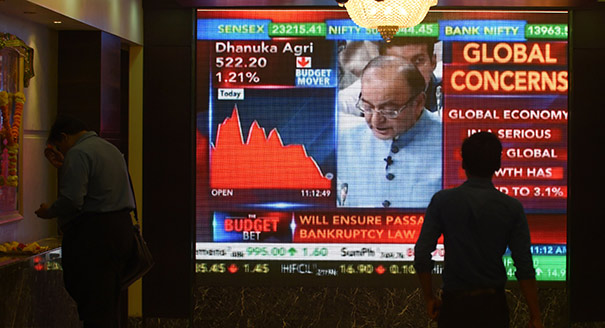
Source: Getty
Predatory pricing can benefit consumers in the short run. Regulators are however cautious of such pricing strategies because of the ominous possibility that the winner of the pricing wars will eliminate all competition.
Source: Hindustan Times
Though predatory pricing is not a new phenomenon, it was more commonly used in the past by incumbents to keep out fresh competition. Now, such pricing strategies appear to be finding favour with disruptors and new entrants too.
Predatory pricing can benefit consumers in the short run. Regulators are however cautious of such pricing strategies because of the ominous possibility that the winner of the pricing wars will eliminate all competition. Upon achieving this outcome, prices could well start spiralling upwards with no alternative in sight for the consumer. Moreover, the infant industry argument from India’s economic past retains some bit of traction even today. Some domestic players have recently accused their foreign competition of being better placed to carry out predatory pricing strategies.
Two distinct kinds of responses to predatory pricing have emerged in the Indian context. The first is a regulatory model, captured best in the Guidelines for FDI in E-Commerce issued last year by the Department of Industrial Policy and Promotion. Guideline 2.3 (ix) stipulates that e-commerce entities will not directly or indirectly influence the sale price of goods or services, and shall maintain level playing field. This guideline, introduced to protect brick and mortar stores against disruption by e-commerce players, places a total embargo on discounting, subject to creative legal interpretation.
The judicial model, practiced by antitrust/competition regulators in various jurisdictions including India, works on a case-to-case basis and relies on standards rather than hard-and-fast rules and rigid embargos. The law on predatory pricing is fairly complex and varies across jurisdictions. The United States follows the correct standard that predatory pricing must be frowned upon only when there exists a distinct possibility in the near future, of the predator recouping losses suffered on account of below-cost prices.
The challenger has to first demonstrate the dominance of the predator in the “relevant market”. Questions such as whether e-commerce portals are part of the retail sector, or form a separate, standalone market, arise here, with no clear cut answers in sight yet. Once such dominance stands established, the competition regulator examines the permissibility of the pricing model. The Competition Commission of India has sent out early signals in MCX Stock Exchange v. National Stock Exchange (2009) that it would not look at recoupment possibilities as an independent factor, focusing instead on whether the conduct of predatory pricing is unfair to the competitor.
Regardless of the standard employed, the judicial model is more appropriate, considering the regulatory model can freeze innovation by removing any free play from the equation. Moreover, market forces are reasonably capable of driving out irrational predators. No business can survive on endless discounts. The regulatory model ignores this commonsensical view.
The regulatory model should instead be used only to enhance customer options and convenience. The Watal committee report on digital payments recently advocated State intervention only when there is an absence or stagnation of competition, and that too for promoting corrective innovation. To enhance supply of payment systems, the committee has endorsed unstructured supplementary service data (USSD) based systems and direct carrier billing facilities, and even possible use of crypto-currency. It has also called for open access and greater interoperability between payment systems so as to enhance customer convenience.
The committee also recommended a competition impact assessment of any proposed regulation, which would assess the regulation’s impact on the choice and information available to consumers of payment services, and on the ability of payment service providers to compete efficiently in the market. Similar impact assessment should follow in every sector, instead of focusing on protecting incumbents against lower pricing structures. This way, the regulatory model can be kept in check while simultaneously ensuring that regulations benefit end users.
This article was originally published in the Hindustan Times.
Former Fellow, Carnegie India
Ananth Padmanabhan was a fellow at Carnegie India, based in New Delhi. His primary research focus is technology, regulation, and public policy, and the intersection of these three fields within the Indian context.
Recent Work

Ananth Padmanabhan, R. Shashank Reddy, Shruti Sharma
Ananth Padmanabhan
Carnegie does not take institutional positions on public policy issues; the views represented herein are those of the author(s) and do not necessarily reflect the views of Carnegie, its staff, or its trustees.

In the latest Five-Year Plan, the Chinese president cements the shift to an innovation-driven economy over a consumption-driven one.

Damien Ma

Rather than climate ambitions, compatibility with investment and exports is why China supports both green and high-emission technologies.

Mathias Larsen
“Involution” is a new word for an old problem, and without a very different set of policies to rein it in, it is a problem that is likely to persist.

Michael Pettis

While China's investment story seems contradictory from the outside, the real answers to Beijing's high-quality growth ambitions are hiding in plain sight across the nation's cities.

Yuhan Zhang
China's stimulus addiction cannot go on forever. Beijing still has policy space to clean up the country's massive debt issue, but time is running short.
Michael Pettis