

Paper
Constantino Xavier
{
  "authors": [
    "Constantino Xavier"
  ],
  "type": "legacyinthemedia",
  "centerAffiliationAll": "",
  "centers": [
    "Carnegie Endowment for International Peace",
    "Carnegie India"
  ],
  "collections": [],
  "englishNewsletterAll": "",
  "nonEnglishNewsletterAll": "",
  "primaryCenter": "Carnegie India",
  "programAffiliation": "",
  "programs": [],
  "projects": [],
  "regions": [
    "South Asia",
    "India",
    "Western Europe"
  ],
  "topics": [
    "Economy",
    "Trade"
  ]
}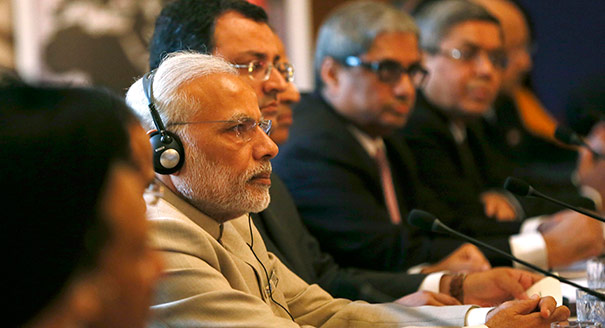
Source: Getty
Portugal and India have an opportunity to revive their legacy of cooperation and explore its economic potential in the 21st century and strategically couch their relationship in the context of the Portuguese-speaking countries.
Source: Scroll.in
Five hundred years ago, after Vasco da Gama’s belligerent arrival in Calicut, the Portuguese were busy transforming the Indian subcontinent into a strategic hub for their Asian empire, opening the way for the world’s first era of globalisation. Today, the tables have turned. While Portugal struggles with recession and austerity, India is emerging globally, supporting International Monetary Fund bailouts in Europe and projecting power across Africa and the Indian Ocean region. The seven-day visit of Portuguese Prime Minister Antonio Costa starting from Saturday marks the beginning of a new era, one in which beyond the purely bilateral level, both countries could develop trilateral partnerships across the Portuguese-speaking world, from Brazil to Timor-Leste.
With close to 250 million speakers, Portuguese is the world’s fifth-most spoken language and official in eight countries across four continents, six being in Africa (Angola, Mozambique, Equatorial Guinea, Guinea Bissau, Cape Verde, São Tomé and Príncipe) and one each in Europe (Portugal), South America (Brazil) and Asia (Timor-Leste). Portuguese is an official language in Macau (China) and also an Indian language in its own right, spoken by thousands of people in Goa, Daman and Diu.
For almost five centuries, Goa was at the heart of a vast empire and trading network that spanned the Atlantic, Indian and Pacific oceans, connecting India to Southern America, Africa and East Asia. India played a central role in this first era of globalisation, exchanging its mangoes for Brazilian cashew and chillies, harbouring African slave communities, and sending off Goan priests and Gujarati merchants to Mozambique, Macau and Timor. In 2007, former Prime Minister Manmohan Singh recognised this heritage by noting that “the richness of Portuguese culture in Goa, Daman and Diu is well known to every Indian, and we celebrate this legacy”. Similarly, in 2014, while serving as the chief minister of Goa, Defence Minister Manohar Parrikar went out of his way to ensure that his state successfully hosted the Lusophone Games (which is to the Portuguese world what the Commonwealth Games are to the former British colonies).
It is now time for Portugal and India to revive this legacy and explore its economic potential in the 21st century and strategically couch their relationship in the context of the Portuguese-speaking countries. Prime Ministers Antonio Costa and Narendra Modi could pursue this partnership in the following four domains.
First, the Indian government must express formal interest to become a part of the Community of Portuguese Language Countries, founded in 1996, which is based on Commonwealth and Francophonie organisations and has all nine Portuguese-speaking countries as its members. Established in 2005, the associate member (observer) category currently allows states like Georgia, Japan and Mauritius to attend the biennial summits and get privileged access to a variety of Community of Portuguese Language Countries forums and initiatives, ranging from economic and technical to security and military cooperation, as well as parliamentary and cultural exchanges. New Delhi and Lisbon must work together to ensure that India is present in this multilateral room of the Lusosphere.
Second, beyond the institutional level, there is no better location than Goa to host a strategic and economic dialogue between Indian and Portuguese-speaking officials and other stakeholders. China opted, since 2008, to establish the Macau Forum to engage with the Lusophone countries at the ministerial and economic levels. India could benefit from hosting a less formal, semi-official and annual Track-2 dialogue. India’s trade volume with the Portuguese-speaking economies and Macau has grown six-fold in just ten years, currently peaking at $20 billion, which is similar to the total trade volumes with Germany and Japan. Given Portugal’s extraordinary experience in the development sector in Lusophone Africa, Brazil’s new capabilities there, and India’s willingness to become a collaborative player in the sector, there is also great potential for triangulating assistance and setting up collaborative projects.
Third, in the strategic dimension, India and Portugal must work together to meet across Africa. On the maritime front, the security of the Indian Ocean begins in the Atlantic, and vice-versa, demanding greater cooperation and coordination. The Portuguese, Brazilian, Angolan, Mozambican and Indian navies should establish a closer dialogue and joint exercises with a focus on out-of-area deployment, non-conventional maritime threats such as piracy, and other security trends in the Southern Indo-Atlantic region.
Similarly, Portugal and India have vast experience in contributing personnel and resources to United Nations-mandated peacekeeping missions in Angola, Mozambique and Timor-Leste. This offers a potential convergence in various military-technical cooperation domains, including under the Community of Portuguese Language Countries umbrella, which has been developing the idea of a joint CPLP peacekeeping force and training missions. On the defence industry side, the Indian Air Force has made a variety of acquisitions from Brazil’s Embraer, including VIP jets, which have been serviced at Portugal’s OGMA aeronautical hub, indicating another area of potential trilateral cooperation. Lisbon and Delhi should also cooperate on the shipbuilding front, developing vessels and technologies to be exported to Mozambique and Timor-Leste.
Finally, on the softer side of culture, education and technology, India and Portugal can also pool efforts to develop human resources and technical capacity in Portuguese-speaking countries. Hundreds of Portuguese-speaking students and government officials arrive every year in India under the Indian Council for Cultural Relations and the Indian Technical and Economic Cooperation programmes. To moderate linguisticand cultural barriers, these could be jointly trained in institutions in Goa and in Portugal. On the cultural level, a Lusophone Institute in Goa could also play a catalytic role as hub to increase research collaboration between Indian and Lusophone institutions. In 2008, Brazil sponsored Goa’s Carnival celebrations. Goa’s state archives include thousands of valuable historical documents on India’s links with Brazil, Mozambique, and Timor that are in dire need for closer study and preservation. At the science and technology levels, there is also great potential for research in the maritime domain in collaboration with India’s National Institute of Oceanography.
Nobody else is more symbolically entitled to facilitate Indo-Portuguese cooperation in these four domains than Antonio Costa, the West’s first Prime Minister of Indian origin, whose family history connects India, Africa and Europe. China has been the flavor of the day in recession-hit Portugal, allowing Beijing to acquire a variety of strategic assets and start projecting its power on to the North Atlantic. If it wishes to balance China’s rising political leverage, Lisbon should explore a window of opportunity thrown open by New Delhi’s new interest in Europe, Africa and the Southern hemisphere, as testified by Prime Minister Modi’s visits to Brussels and Mozambique, in 2016. Similarly, India must recognise that while it cannot go alone in its quest to project power beyond its region, it will benefit from aligning with smaller countries that have a comparative advantage in specific regional niches, such as Portugal in the Portuguese-speaking world.
Former Fellow, Carnegie India
Constantino Xavier was a fellow at Carnegie India, based in New Delhi. His research focus is on India’s foreign policy, with emphasis on relations with its neighboring countries and South Asian regional security.
Recent Work
Constantino Xavier
Constantino Xavier
Carnegie does not take institutional positions on public policy issues; the views represented herein are those of the author(s) and do not necessarily reflect the views of Carnegie, its staff, or its trustees.

China’s banking crisis in the 2000s was resolved by transferring the costs to households through financial repression—a decision that recapitalized the banks while exacerbating the structural imbalances that continue to shape the Chinese economy today.

Michael Pettis

In the latest Five-Year Plan, the Chinese president cements the shift to an innovation-driven economy over a consumption-driven one.

Damien Ma

Regulation, not embargo, allows Beijing to shape how other countries and firms adapt to its terms.
Alvin Camba
Rather than climate ambitions, compatibility with investment and exports is why China supports both green and high-emission technologies.

Mathias Larsen
“Involution” is a new word for an old problem, and without a very different set of policies to rein it in, it is a problem that is likely to persist.
Michael Pettis