

Commentary
Michael Pettis
{
  "authors": [
    "Michael Pettis"
  ],
  "type": "legacyinthemedia",
  "centerAffiliationAll": "dc",
  "centers": [
    "Carnegie Endowment for International Peace"
  ],
  "collections": [],
  "englishNewsletterAll": "asia",
  "nonEnglishNewsletterAll": "",
  "primaryCenter": "Carnegie Endowment for International Peace",
  "programAffiliation": "AP",
  "programs": [
    "Asia"
  ],
  "projects": [],
  "regions": [
    "North America",
    "United States",
    "Western Europe",
    "Germany"
  ],
  "topics": [
    "Economy",
    "Trade"
  ]
}
Source: Getty
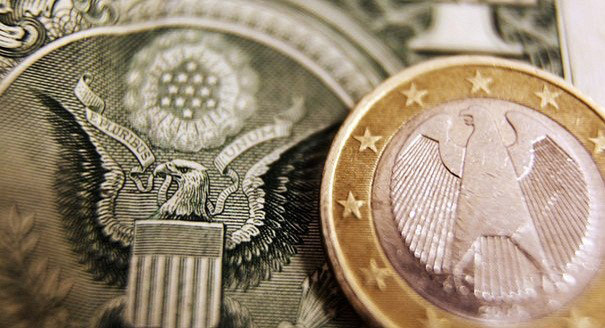
Large concentrations of capital into a single market can eventually lead to a debt crisis and rising unemployment, making large infrastructure investment a necessity in both the United States and Europe.
Source: Financial Sense
In a recent podcast with Financial Sense, Michael Pettis discussed the wider implications of large capital concentrations in single markets, such as in the current U.S. economy. Such concentrations arguably can lead to major debt crises and unemployment; Pettis offered German trade surpluses in the pre-2008 era as an example. Germany’s huge surpluses and the Eurozone’s restraints on monetary policies for countries such as Spain and Italy led to negative real interest rates in high inflation European countries. This negative interest rate, he explained, contributed to real estate and stock market booms, as well as large consumption binges, all of which rapidly increased debt and played a role in the financial crisis. Pettis argued that Germany continues to have large surpluses that are now being absorbed outside of Europe, such as in the United States, which could lead to economic problems in the future.
To address various concerns of concentration in capital, Pettis explained that both the United States and Europe should make large infrastructure investments. He forecast that the industrial commodity sector—including iron ore and steel—have not in fact bottomed out, and may drop in price even further.

Nonresident Senior Fellow, Carnegie China
Michael Pettis is a nonresident senior fellow at the Carnegie Endowment for International Peace. An expert on China’s economy, Pettis is professor of finance at Peking University’s Guanghua School of Management, where he specializes in Chinese financial markets.
Recent Work
Michael Pettis
Michael Pettis
Carnegie does not take institutional positions on public policy issues; the views represented herein are those of the author(s) and do not necessarily reflect the views of Carnegie, its staff, or its trustees.

China’s banking crisis in the 2000s was resolved by transferring the costs to households through financial repression—a decision that recapitalized the banks while exacerbating the structural imbalances that continue to shape the Chinese economy today.
Michael Pettis

But their "principal to principal" model will only be as effective as the political strength of each leader back home.

Damien Ma

U.S. unpredictability has allowed China to capitalize on its positioning as the “responsible great power”. Paradoxically, the more China wins the perception game, the more likely expectations will rise for Beijing to deliver not just words but to demonstrate with its deeds.

Chong Ja Ian

In the latest Five-Year Plan, the Chinese president cements the shift to an innovation-driven economy over a consumption-driven one.
Damien Ma

For Malaysia, the conjunction that works is “and” not “or” when it comes to the United States and China.

Elina Noor