

Q&A
- +1
Sheena Chestnut Greitens, Oriana Skylar Mastro, Yukon Huang, …
{
  "authors": [
    "Tong Zhao"
  ],
  "type": "other",
  "centerAffiliationAll": "dc",
  "centers": [
    "Carnegie Endowment for International Peace",
    "Carnegie China"
  ],
  "collections": [
    "U.S.-China Relations",
    "China’s Foreign Relations",
    "Korean Peninsula"
  ],
  "englishNewsletterAll": "ctw",
  "nonEnglishNewsletterAll": "",
  "primaryCenter": "Carnegie China",
  "programAffiliation": "NPP",
  "programs": [
    "Nuclear Policy"
  ],
  "projects": [],
  "regions": [
    "East Asia",
    "China",
    "North Korea"
  ],
  "topics": [
    "Arms Control",
    "Nuclear Policy"
  ]
}
Source: Getty
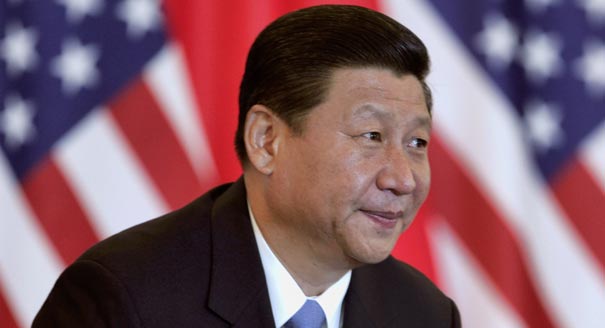
If President Donald Trump wants to make his upcoming Beijing summit meeting with President Xi Jinping successful, it is time to take a step back and reflect on his overall approach to solicit China’s cooperation.
Source: National Interest
President Donald Trump will visit Beijing on November 8, against the background of North Korea’s repeated threat to detonate a hydrogen bomb over the Pacific Ocean and an increasing sense of cluelessness among the international community about how to deal with Pyongyang. One thing is certain when Trump meets President Xi Jinping in Beijing: he will push very hard for China to impose stronger pressure on North Korea. However, Trump is unlikely to achieve his goal. There has been a deep and fundamental divergence of views between China and the United States about North Korea’s nuclear ambition and how to deal with the threat. If Trump wants to make his upcoming summit meeting with Xi successful, it is time to take a step back and reflect on his overall approach to solicit China’s cooperation. To start with, he needs to understand why China hasn’t used all its seeming leverage and acted to constrain North Korea to the greatest extent possible.
There is no doubt that North Korea’s nuclear weapons are a serious threat to China. Despite the proclaimed special relationship in the past, since the Korean War, North Korea has held deep grievances towards and been distrustful of China. Due to Pyongyang’s nuclear ambitions, the bilateral relationship has continued to deteriorate in recent years. Many Chinese experts worry that, if the relationship turns adversarial one day, China would face another nuclear-armed enemy in its neighborhood. Moreover, North Korea’s persistent pursuit of nuclear weapons is viewed by China as providing a sound excuse for Washington to threaten China’s core security interests by strengthening its security alliances in the region, and by deploying increasingly advanced military capabilities around China, including the Terminal High Altitude Area Defense system. Beijing also believes Pyongyang is handing Tokyo a convenient excuse to revitalize its military, further worsening China’s security environment.
China has strong incentives, therefore, to constrain North Korea’s nuclear ambitions, and that is why Beijing has agreed to impose increasingly painful economic sanctions. That said, China also has strong incentives to avoid destabilizing the North Korean regime. As many analysts have observed, China prioritizes regional stability over North Korean denuclearization because China would hate to see its economic development and national rejuvenation disrupted by a regional war that would likely involve China. In fact, even the United States seems to agree that trying to overthrow the regime would be a very risky option that involves too many uncontrollable variables to guarantee a desirable outcome. As a result, most senior U.S. officials have repeatedly stated that Washington only seeks policy change, not regime change.
This article was originally published in National Interest

Senior Fellow with the Nuclear Policy Program and Carnegie China
Tong Zhao is a senior fellow with the Nuclear Policy Program and Carnegie China, Carnegie’s East Asia-based research center on contemporary China. Formerly based in Beijing, he now conducts research in Washington on strategic security issues.
Recent Work



Sheena Chestnut Greitens, Oriana Skylar Mastro, Yukon Huang, …
Carnegie does not take institutional positions on public policy issues; the views represented herein are those of the author(s) and do not necessarily reflect the views of Carnegie, its staff, or its trustees.

The Plaza Accord was not an externally imposed punishment of Japan but part of a broader restructuring that Japanese economists and policymakers themselves recognized was necessary. Its effects were undermined, however, when Tokyo responded to the resulting slowdown with policies that exacerbated investment, credit expansion, and the very imbalances the adjustment was intended to resolve.

Michael Pettis

The nuclear relationship between China and the United States is increasingly shaped by widening perception gaps rather than deliberate strategic design.
Tong Zhao
China’s banking crisis in the 2000s was resolved by transferring the costs to households through financial repression—a decision that recapitalized the banks while exacerbating the structural imbalances that continue to shape the Chinese economy today.
Michael Pettis

Chinese biotech companies have been on the receiving end of U.S. economic coercion. Yet their responses have differed significantly because firm and state interests are not uniformly aligned. For Washington, treating all Chinese tech firms the same, irrespective of their actual interests, risks pushing them farther into Beijing’s corner.

Xue Gong

China’s latest energy plan explicitly calls for integrating data centers into the electricity system, particularly connecting them to green energy. It appears Beijing wants to use compute as a source of domestic demand to absorb renewables excess capacity.

Damien Ma