

Article
C. Raja Mohan, Darshana M. Baruah
{
  "authors": [
    "C. Raja Mohan"
  ],
  "type": "legacyinthemedia",
  "centerAffiliationAll": "dc",
  "centers": [
    "Carnegie Endowment for International Peace",
    "Carnegie India"
  ],
  "collections": [],
  "englishNewsletterAll": "ctw",
  "nonEnglishNewsletterAll": "",
  "primaryCenter": "Carnegie India",
  "programAffiliation": "SAP",
  "programs": [
    "South Asia"
  ],
  "projects": [],
  "regions": [
    "South Asia",
    "India",
    "North America",
    "United States"
  ],
  "topics": [
    "Foreign Policy"
  ]
}
Source: Getty
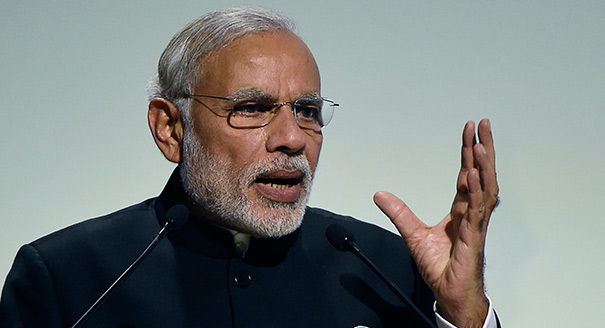
Indian Prime Minister Modi’s informal summits in Wuhan with Chinese President Xi and Sochi with Russian President Putin are part of the new nimble footed Indian diplomacy toward major powers.
Source: Indian Express
As Prime Minister Narendra Modi enters the last year of his tenure and prepares for the 2019 elections, there are no signs of a slowdown on the external front. Whether it was the quick dash to Sochi in Russia to meet President Vladimir Putin this week or the lakeside pow-vow with China’s leader Xi Jinping last month, the surprising recent re-engagement with North Korea or the planned expansion of India’s strategic partnership with Indonesia later this month, India’s diplomacy has entered a very intensive phase.
Some of it has to do with the current uncertain international environment that is throwing up new opportunities as well as fresh challenges for Delhi. India’s ability to respond effectively to the new international and regional uncertainty is constrained, however, by Delhi’s institutional and policy weaknesses especially in the domains of commerce and defence. The current turbulence in the international and regional environment is largely due to US President Donald Trump’s vigorous unilateralism and a major departure from the traditional American economic and foreign policies. In response, China, Russia, Japan and Europe are at once trying to find ways to propitiate Trump as well as hedge against the current volatility in US policies.
As Trump demands reciprocity in commercial relationships to redress America’s massive trade imbalance with the rest of the world, most of America’s partners are eager to make bilateral deals with Washington. As Trump questions the costs and benefits of alliances, America’s traditional partners in Europe and Asia have been compelled to consider the logic of strategic autonomy from the U S. Neither Trump’s allies nor his adversaries can now afford to take Washington for granted.
Contrary to the widespread hope — or expectation — Trump has declared that the US is not going to “decline elegantly”. The US president has signaled he was not going to accept the proposition that China is on an irrevocable course to replace America as the hegemonic power in the world. Instead he promises to “Make America Great Again”.
Trump’s decision to push back has cast a shadow over Beijing’s recent bet that the world had no choice but to accept and accommodate China’s rise. It has persuaded Beijing to demonstrate greater flexibility towards the US as well as its immediate neighbours, including India and Japan. Although Trump openly called for a normalisation of relations with Russia, the allegations in Washington that President Vladimir Putin had manipulated the 2016 presidential elections in favour of Trump have put the American foreign policy establishment at odds with Moscow. India’s positive political relations with the US have been complemented by the new challenges of managing the problems on the trade and immigration fronts. If Sino-US tensions have opened up space for India, those between Washington and Moscow shrink Delhi’s room for manoeuvre. Modi’s informal summits in Wuhan with Xi and Sochi with Putin are part of the new nimble footed Indian diplomacy towards major powers.
Trump has also muddied the regional environment in East Asia. His attempt at normalising relations with North Korea has left much of the region, especially China and Japan stunned. China — long standing ally of North Korea — is concerned that it might be cut out of the unexpected direct diplomacy between Trump and Chairman Kim Jong-un. As their engagement hit an air pocket last week, Trump accused Xi of trying to scuttle a potential American reconciliation with North Korea.
Japan, in contrast, is an ally of the United States. It is deeply is concerned that Trump’s nuclear deal with Kim might leave Tokyo exposed to the residual North Korean nuclear capabilities. Beijing and Tokyo are also wary about the consequences of a potential reconciliation between North and South Korea and the resurgence of Korean nationalism.
If the old alliances are under stress in North East Asia, the regional security framework for South East Asia, anchored in the ASEAN, has come under considerable strain, thanks to the return of the great power rivalries. While the ASEAN remains central to the region’s future, most countries in the region are insuring against the current strategic uncertainty by boosting their national defence capabilities and diversifying their strategic partnerships.
The PM’s decision to dispatch General V K Singh, the minister of state for external affairs to North Korea, in the first high-level diplomatic engagement in two decades, is a reminder of India’s unique relationship with the divided peninsula. Modi’s visit to Indonesia later this month promises to reverse the prolonged Indian strategic neglect of Indonesia.
Modi’s high-voltage diplomacy towards major powers and Asia, however, is not matched by the government’s approaches to trade and security. India’s seemingly neuralgic opposition to trade liberalisation threatens international isolation amidst rearrangement of the global economic order. Delhi’s problems with implementing large infrastructure projects beyond its borders has also limited India’s ability to deepen economic and military connectivity with Asia.
Delhi’s weak defence industrial base and tentative military diplomacy have prevented it from measuring up to its own claim on being a “regional security provider”. Travels to the East later this month — to Jakarta and Singapore — provide an opportunity for the PM to signal that India is ready to address these structural weaknesses.
This article was originally published in the Indian Express.
Former Nonresident Senior Fellow, Carnegie India
A leading analyst of India’s foreign policy, Mohan is also an expert on South Asian security, great-power relations in Asia, and arms control.
Recent Work

C. Raja Mohan, Darshana M. Baruah


Alexander Gabuev, Paul Haenle, C. Raja Mohan, …
Carnegie does not take institutional positions on public policy issues; the views represented herein are those of the author(s) and do not necessarily reflect the views of Carnegie, its staff, or its trustees.

US unpredictability has allowed China to capitalize on its positioning as the “responsible great power”. Paradoxically, the more China wins the perception game, the more likely expectations will rise for Beijing to deliver not just words but to demonstrate with its deeds.

Chong Ja Ian

Hanoi and Beijing have long treated each other as distant cousins rather than comrades in arms. That might be changing as both sides draw closer to hedge against uncertainty and America’s erratic behavior.

Nguyễn Khắc Giang

Across Asia, China is better positioned to withstand energy shocks from the fallout of the Iran war. Its abundant coal capacity can ensure stability in the near term. Yet at the same time, the country’s energy transition away from coal will make it even less vulnerable during the next shock.

Damien Ma

Malaysia’s chairmanship sought to fend off short-term challenges while laying the groundwork for minimizing ASEAN’s longer-term exposure to external stresses.

Elina Noor

For Malaysia, the conjunction that works is “and” not “or” when it comes to the United States and China.
Elina Noor