

Commentary
Ulrich Kühn
{
  "authors": [
    "Ulrich Kühn"
  ],
  "type": "other",
  "centerAffiliationAll": "dc",
  "centers": [
    "Carnegie Endowment for International Peace"
  ],
  "collections": [
    "Korean Peninsula"
  ],
  "englishNewsletterAll": "ctw",
  "nonEnglishNewsletterAll": "",
  "primaryCenter": "Carnegie Endowment for International Peace",
  "programAffiliation": "NPP",
  "programs": [
    "Nuclear Policy"
  ],
  "projects": [],
  "regions": [
    "East Asia",
    "South Korea",
    "North Korea"
  ],
  "topics": [
    "Security",
    "Nuclear Policy",
    "Arms Control",
    "Foreign Policy"
  ]
}
Source: Getty
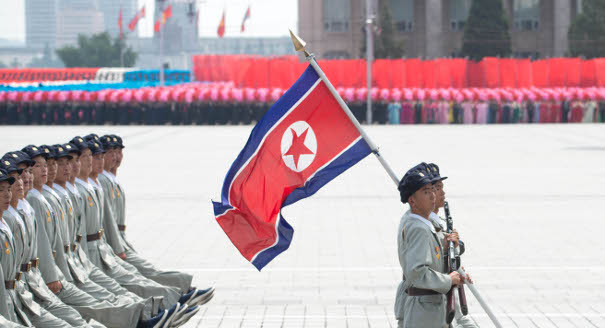
In 2018, political relations on the Korean peninsula are in flux to an unprecedented degree.
Source: Heinrich Böll Foundation
In 2018, political relations on the Korean peninsula are in flux to an unprecedented degree. Back in the summer of 2017, the possibility of a friendly visit of North Korea’s Supreme Leader Kim Jong-un to South Korea would have seemed far-fetched. Even more unrealistic: the prospect of a potential summit between Kim and US President Donald Trump, openly discussing the possibility of a full de-nuclearization of the North and a lasting peace framework for both Koreas. «What is real, and what is illusion?» we might ask ourselves. Is it really possible that Kim Jong-un, after decades of strenuous efforts from North Korea to acquire nuclear weapons, and after being punished by the international community with the most rigid sanctions regime, will simply give up his ‹ultimate insurance› policy? Would Washington truly be ready to consider withdrawing its forces from the peninsula as a result of a comprehensive peace agreement? And what could all that mean for East Asia and Europe?
At this point in time, with so many variables in flux, we can merely speculate. However, sometimes speculation is the only available means for assessing future outcomes and options. Taking note of the unclear situation, this article deliberately engages in speculation and develops three scenarios for the Korean Peninsula. The author does not claim that any of these will become reality—and in certain cases strongly wishes the opposite.
This piece was originally published by the Heinrich Böll Foundation.

Former Nonresident Scholar, Nuclear Policy Program
Ulrich Kühn was a nonresident scholar at the Carnegie Endowment for International Peace, and the head of the arms control and emerging technologies program at the Institute for Peace Research and Security Policy at the University of Hamburg.
Recent Work
Ulrich Kühn
Ulrich Kühn
Carnegie does not take institutional positions on public policy issues; the views represented herein are those of the author(s) and do not necessarily reflect the views of Carnegie, its staff, or its trustees.

China’s political future will be shaped between now and next October. As the Communist Party enters its intense “campaign season” to prepare for a major political transition in 2027, reading Beijing's actions and responses may become more difficult as domestic politics weigh on its behavior more than usual.

Damien Ma
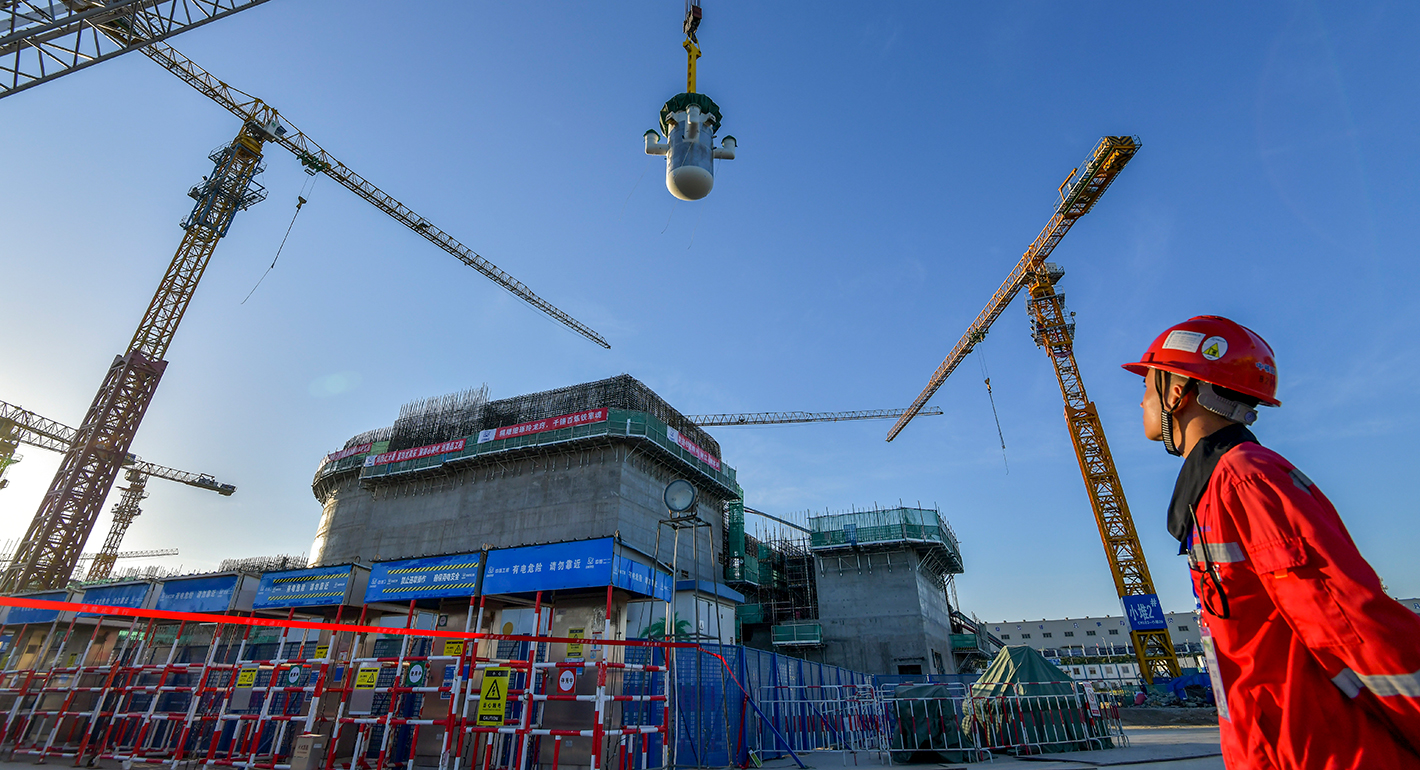
China has showcased its engineering prowess with small modular reactor demonstration projects. But turning these technological achievements into commercial success will be a greater challenge.

Tong Zhao

The nuclear relationship between China and the United States is increasingly shaped by widening perception gaps rather than deliberate strategic design.
Tong Zhao

Chinese biotech companies have been on the receiving end of U.S. economic coercion. Yet their responses have differed significantly because firm and state interests are not uniformly aligned. For Washington, treating all Chinese tech firms the same, irrespective of their actual interests, risks pushing them farther into Beijing’s corner.

Xue Gong

But their "principal to principal" model will only be as effective as the political strength of each leader back home.
Damien Ma