

Commentary
Andrei Kolesnikov
{
  "authors": [
    "Andrei Kolesnikov"
  ],
  "type": "legacyinthemedia",
  "centerAffiliationAll": "",
  "centers": [
    "Carnegie Endowment for International Peace",
    "Carnegie Russia Eurasia Center"
  ],
  "collections": [],
  "englishNewsletterAll": "",
  "nonEnglishNewsletterAll": "",
  "primaryCenter": "Carnegie Endowment for International Peace",
  "programAffiliation": "",
  "programs": [],
  "projects": [],
  "regions": [
    "Russia"
  ],
  "topics": [
    "Political Reform"
  ]
}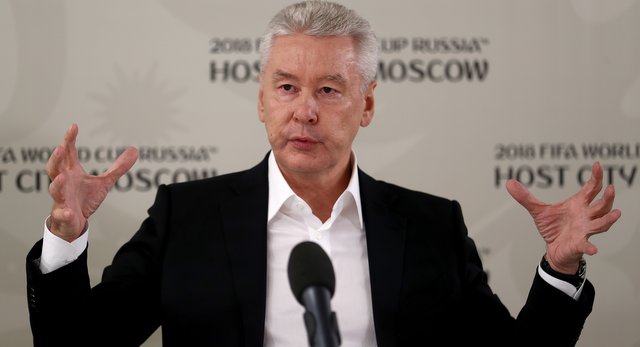
Source: Getty
Ahead of Sunday’s elections, the multifunctional Sobyanin brand was promoted like the latest washing machine.
Source: Moscow Times
Sunday’s mayoral elections in Moscow marked a turning point. Until this weekend, the capital had a democratically elected mayor: Sergei Sobyanin was the victor of an unexpectedly fierce electoral battle back in September 2013, and he has presided over the capital since.
Although Sobyanin was again chosen to be the capital mayor, his victory this time around was not the result of an election in the true sense of the word.
Rather, it was the product of a marketing campaign.
The multifunctional Sobyanin brand was promoted like the latest washing machine, or in this case, the latest, most cutting-edge construction company. After all, the almost continuous repaving of Moscow’s streets is the signature policy of the man in charge of the Russian capital.
This year, the Kremlin decided they weren’t going to allow candidates from the liberal opposition (such as former Duma deputy Dmitry Gudkov) to take part in the vote. These contenders failed to collect the required number of signatures from local lawmakers to be able to run.
The authorities likely took this decision to avoid repeating the mistakes of their 2013 campaign, when opposition leader Alexei Navalny took 27.24 percent of the vote, almost forcing Sobyanin, who won with 51.37 percent, into a runoff.
Sobyanin’s haul on Sunday was not too far off Vladimir Putin’s share of the vote in presidential elections earlier this year in March — 70 percent compared with Putin’s 71 percent.
But despite an unprecedented campaign to boost turnout, the overall figure of 30 percent will have been disappointing for the authorities. In 2013, the margin was slightly higher at 32 percent.
One reason that so few Muscovites went to the polls was likely because there was a complete lack of intrigue around the vote and no real competition from opposition candidates.
The Kremlin was confident that if they allowed anti-corruption crusader Navalny to run, he would not be able to secure more than a small percentage of the vote. But ultimately, the mayor’s office wasn’t even prepared to simulate electoral competition and risk disturbing the city’s political hibernation by allowing Navalny to run. In the end, it decided to only promote the Sobyanin brand.
City Hall’s marketing goals included transforming polling stations into mobile playgrounds (making them more attractive to families with children); handing out free concert tickets to voters; and opening a concert venue in the popular new Zaryadye park near the Kremlin, attended by Sobyanin and President Vladimir Putin.
All told, the day was characterized by a mixture of sophisticated marketing techniques, the suppression of the opposition and banning of any anti-government demonstrations.
The problem with this approach is that it affects voter turnout. As the municipal elections of September 2017 demonstrated, the fewer people at polling stations, the more votes for the ruling authorities, and vice versa. On Sunday, Sobyanin’s team was striving to achieve a decent turnout. But given the electorate’s loyalty to ritual ballots and giving the Kremlin the outcome it wants, this goal seemed attainable.
The dearth of real alternatives is the most obvious explanation for Sobyanin’s artificial popularity. Yet many representatives of the capital’s creative class do support him. Sobyanin’s team has created the image of a forward-looking mayor, open to urban modernization. Digitalization, gentrification, reconstruction, regeneration: all these buzzwords sound seductive to Moscow’s progressive and young population. For them, open urban spaces are sometimes more important than an open society.
Sobyanin mercilessly suppresses any signs of opposition activity. He is prepared to use any tools at his disposal to realize his personal vision of Moscow. He is ready to enter into conflict with local communities that defend parks and courtyards from sometimes barbaric reconstruction work. But in the eyes of the new urban conformists, the mayor is implementing an authoritarian modernization utopia in Moscow. And if he were to become prime minister or president, these dreamers reason, Sobyanin could realize this utopia on a nationwide scale.
Admittedly it would be in a technocratic way, but Moscow’s experience has demonstrated that the city can manage quite well without democracy.
These loyal Sobyanin supporters people don’t take into account that as Moscow mayor, Sobyanin has a vast fortune at his disposal: about 20 percent of all the country’s regional revenues. That is to say: We know who Mr. Sobyanin is with money, but we don’t know who he would be without money, as prime minister, for example.
A promotion like this is conceivable: he has demonstrated to Putin his efficiency in quelling social upset on more than one occasion, such as over plans to demolish many Khrushchev-era, five-story apartment buildings in the city. Not to mention that Sobyanin is the only pro-Putin politician to have taken on Navalny in an election — and won.
Former Senior Fellow, Carnegie Russia Eurasia Center
Kolesnikov was a senior fellow at the Carnegie Russia Eurasia Center.
Recent Work
Andrei Kolesnikov
Andrei Kolesnikov
Carnegie does not take institutional positions on public policy issues; the views represented herein are those of the author(s) and do not necessarily reflect the views of Carnegie, its staff, or its trustees.
Beijing is trying to navigate the overall situation regarding Ukraine, especially the substance of interactions between Washington and Moscow.
Ellen Nakashima, Zhao Long, Pavlo Klimkin, …
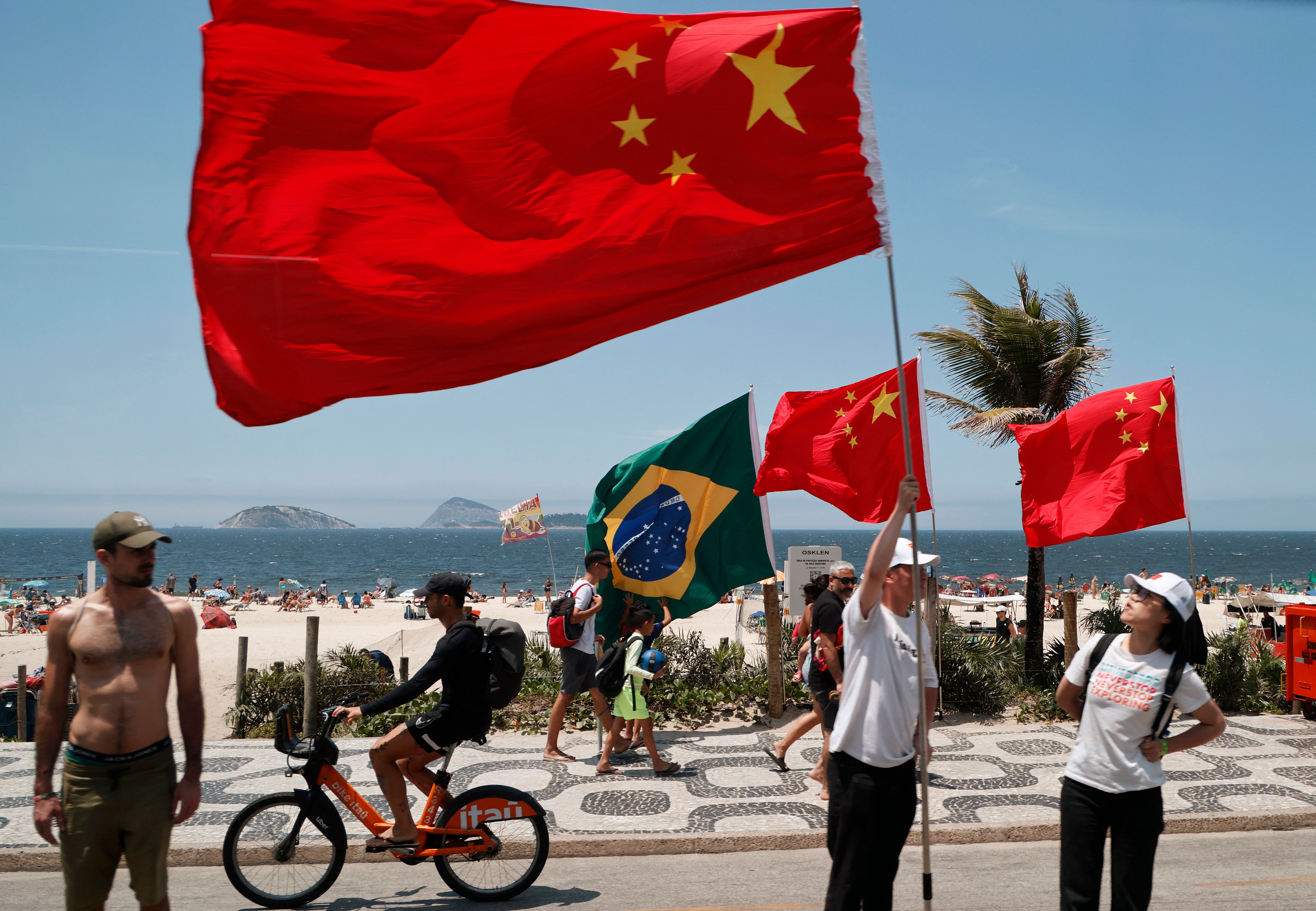
While China will remain a significant political and economic force in the Global South, its ambition to leverage the Global South as a counterbalance to the United States and the Global North is far from assured.

Xue Gong
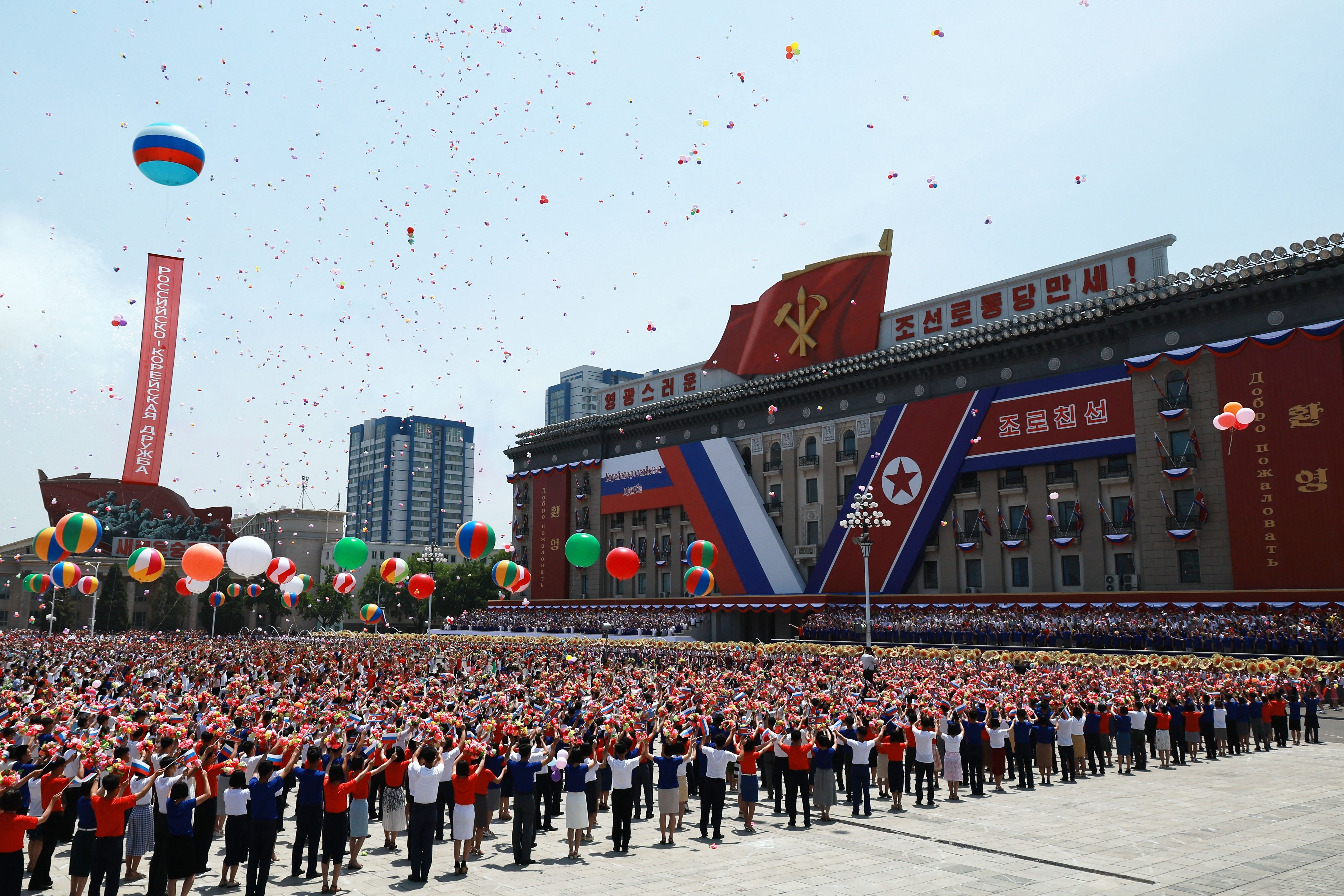
Faced with an increase in strategic maneuvering by Moscow and Pyongyang, Beijing will not sit idly by and allow Putin and Kim to shape the security environment on its behalf.

Tong Zhao
China’s growing attention to Central Asia is perceived as a harbinger of tectonic shifts in regional geopolitics.

Temur Umarov
The Russian invasion of Ukraine is a turning point in the EU-China relationship, and evolution of the China-Russia relationship will continue to impact EU-China relations.
Yifan Ding, Alice Ekman