

Commentary
Stefano Marcuzzi
{
  "authors": [
    "Stefano Marcuzzi"
  ],
  "type": "other",
  "centerAffiliationAll": "dc",
  "centers": [
    "Carnegie Endowment for International Peace",
    "Carnegie Europe"
  ],
  "collections": [
    "Transatlantic Cooperation",
    "Europe’s Southern Neighborhood"
  ],
  "englishNewsletterAll": "ctw",
  "nonEnglishNewsletterAll": "",
  "primaryCenter": "Carnegie Europe",
  "programAffiliation": "EP",
  "programs": [
    "Europe"
  ],
  "projects": [],
  "regions": [
    "Europe",
    "North America",
    "United States",
    "Western Europe",
    "Iran"
  ],
  "topics": [
    "EU",
    "Security",
    "Migration"
  ]
}
Source: Getty
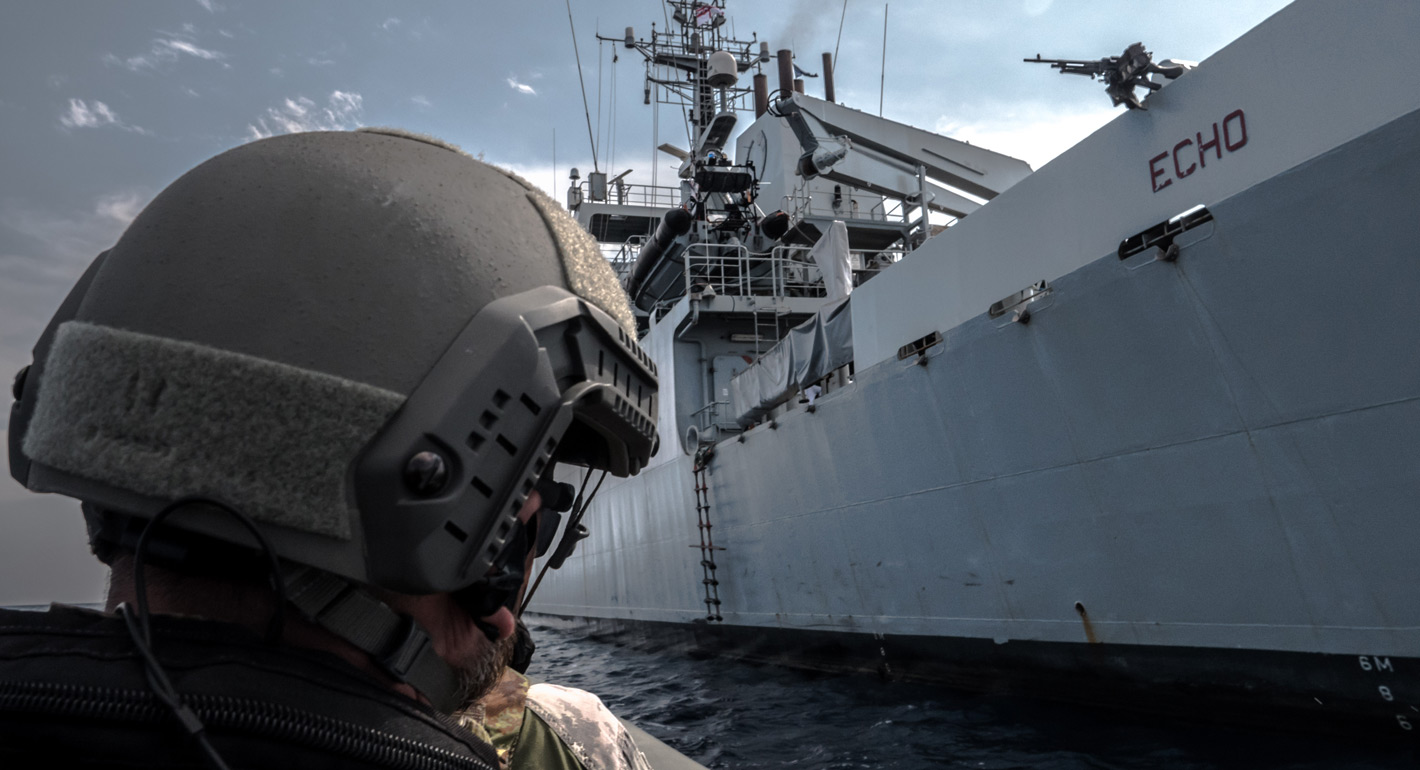
EU-NATO maritime cooperation in the Mediterranean has by and large been successful at the tactical level. However, operational achievements did not produce strategic effects.
Source: NATO Defense College
EU-NATO maritime cooperation is essential to a coordinated response to a variety of Mediterranean issues, including terrorist threats, the protracted conflicts in the Middle East and North Africa (MENA), and the refugee emergency. The EU’s Operation EUNAVFOR Med Sophia is deployed in the Southern-Central Mediterranean, whilst NATO’s Operation Sea Guardian operates in the whole Mediterranean basin. NATO also launched a new activity in the Aegean in 2016. Although each operation has its own mandate, their coordination was defined as crucial in the 2016 Joint Declaration on EU-NATO cooperation.
At a tactical level, these operations have by and large been successful in enhancing situational awareness in the Mediterranean; monitoring migration networks; constraining the activity of human and arms smugglers on the high seas; and to a degree in providing assistance to migrants. However, they also face strategic challenges, including the failure to dismantle the smugglers’ networks, their relatively low deterrent effect, and a limited degree of inter-institutional cooperation.
This article was originally appeared in the NATO Defense College Policy Brief series.
Photo: Jake Tupman; NATO via Flickr
Former Visiting researcher, Carnegie Europe
Marcuzzi was a visiting researcher at Carnegie Europe, where he focused on EU-NATO cooperation, in particular on the Mediterranean and Libya.
Recent Work
Stefano Marcuzzi
Carnegie does not take institutional positions on public policy issues; the views represented herein are those of the author(s) and do not necessarily reflect the views of Carnegie, its staff, or its trustees.

The nuclear relationship between China and the United States is increasingly shaped by widening perception gaps rather than deliberate strategic design.

Tong Zhao

But their "principal to principal" model will only be as effective as the political strength of each leader back home.

Damien Ma

U.S. unpredictability has allowed China to capitalize on its positioning as the “responsible great power”. Paradoxically, the more China wins the perception game, the more likely expectations will rise for Beijing to deliver not just words but to demonstrate with its deeds.

Chong Ja Ian

For Malaysia, the conjunction that works is “and” not “or” when it comes to the United States and China.

Elina Noor

Regulation, not embargo, allows Beijing to shape how other countries and firms adapt to its terms.

Alvin Camba