

Paper
Renée DiResta, Rachel Kleinfeld, Margot Treadwell
{
  "authors": [
    "Rachel Kleinfeld"
  ],
  "type": "legacyinthemedia",
  "centerAffiliationAll": "dc",
  "centers": [
    "Carnegie Endowment for International Peace"
  ],
  "collections": [
    "Democracy and Governance",
    "U.S. Democracy in Comparative Perspective"
  ],
  "englishNewsletterAll": "democracy",
  "nonEnglishNewsletterAll": "",
  "primaryCenter": "Carnegie Endowment for International Peace",
  "programAffiliation": "DCG",
  "programs": [
    "Democracy, Conflict, and Governance"
  ],
  "projects": [],
  "regions": [
    "North America",
    "United States"
  ],
  "topics": [
    "Political Reform",
    "Democracy"
  ]
}
Source: Getty
While third party candidates may seem like attractive alternatives to the major parties, they can serve as spoilers. Instead, ranked choice voting could be a solution for providing voters with greater choice, reducing polarization, and improving representation.
Source: Hill
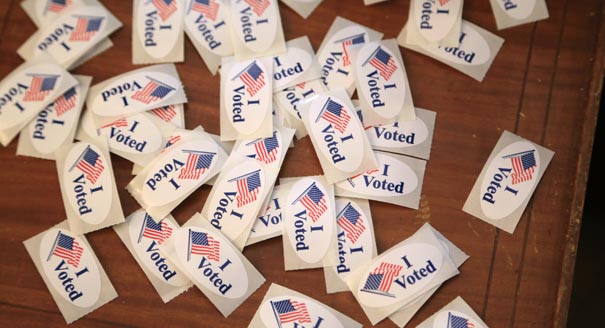
Howard Schultz and Michael Bloomberg have been flirting with a run for president. If they pick an independent ticket, it could be disastrous. But why? Americans want more options. Independents are growing faster than parties. They are now about 44 percent of the electorate. Since 2013, a majority of Americans have told pollsters that they want a third party.
They should be careful of what they wish for. Centrists like Schultz and Bloomberg often see a third party as a way to unite moderate Americans. Such centrists exist of course, but many independents have abandoned their respective parties for not being extreme enough. A recent study found that people most likely to vote for independent candidates were the least supportive of democracy itself. These are protest votes to blow up our political system rather than a practical demand for fixing potholes.
Swing voters courted at each election are often held up as moderates judging each candidate on their merits. They are not. People who vote across parties are generally less informed and more disaffected than ideological voters. Unhappy with democracy, they are far more likely to support a strong leader who does not have to bother with Congress.
Sound familiar? Recall it was swing voters who catapulted Donald Trump to lead the Republican primaries, forming 53 percent of his core primary constituency. They have been the most against immigration of all Trump supporters, and most claim that their racial identity is very important to them. Thus, when the Economist used election results to recast the 2016 American electorate into a multiparty system, a centrist coalition of the moderate right and moderate left performed the worst. A populist coalition of the far right and far left ended up as the big winner.
Sounds crazy? Tell that to the Italians, who are now governed by just such a far left and far right coalition. If a centrist third party did form in the United States, it would serve as a minority spoiler party in 2020. But it could damage American democracy far longer than one election. By siphoning off centrist voters, it would leave the Republican Party and the Democratic Party competing for the remaining disaffected citizens by moving further to the extremes, further deepening our dire polarization.
Yet if a third party is no solution, then neither is the status quo. First, the existing political parties are hardly representative. Only 22 percent of Americans identify as Republicans and 32 percent identify as Democrats. Yet 95 percent of Americans live in “safe” districts with a consistently winning party. In 42 percent of state legislative elections in 2016, one of the two major parties did not even bother to field a candidate because seats were safe. This is not how representative democracy should work.
When disillusioned voters begin to be courted by charismatic candidates atop single election parties, democracy is in trouble. What looks like more choice actually leads to a democracy death spiral. Personal whim, spread through mass media, can win elections. But it has very different effects on democracy than the arduous effort of cultivating parties. Democracies need consistent parties to give opposition movements a place to coalesce between elections. Mass parties that have organized grassroots enable dissenting views to be translated into governing platforms. By maintaining broad views on issues, standing parties allow horse trading so that policy can be made in countries where the citizens hold wildly diverging views.
Charismatic candidates need to build strong parties that last longer than one election if they are to improve democracy. But a third party will still serve as spoiler. So what should Schultz and Bloomberg do? How can the United States provide true representation without deepening our existing polarization or spoiling 2020? One possible solution is ranked choice voting. It prevented such a spoiler situation in Maine. The system allows voters to rank their preferences among many candidates from a first choice down to a last. If no candidate receives a majority of first place votes, the winner is the candidate with the most second and third votes.
Candidates benefit from becoming the first choice for some voters and the second choice for others, giving politicians a reason to appeal to a broader constituency. Ranked choice voting is sometimes derided as too complicated. But when a judge forced Santa Fe to honor an old measure and implement ranked choice voting just a month before early voting began, they found it increased turnout, which was replicated elsewhere. The Oscar Academy Awards have used ranked choice voting for years.
Our Constitution does not decree our current system. Our founders were, in fact, concerned about party factions forming at all. The United States has altered voting multiple times throughout history, from Jim Crow laws in the south to progressive reforms in the 1920s. The primary system only dates from the 1970s. Voters deserve representation rather than spoilers. It is time to use our laboratories of democracy to give change a chance.
Rachel Kleinfeld is a senior fellow in democracy and governance at the Carnegie Endowment for International Peace. Her new book is “A Savage Order: How the World’s Deadliest Countries Can Forge a Path to Security.”

Senior Fellow, Democracy, Conflict, and Governance Program
Rachel Kleinfeld is a senior fellow in Carnegie’s Democracy, Conflict, and Governance Program, where she focuses on issues of rule of law, security, and governance in democracies experiencing polarization, violence, and other governance problems.
Recent Work

Renée DiResta, Rachel Kleinfeld, Margot Treadwell
Political Violence Researchers, Rachel Kleinfeld, ed., Dalya Berkowitz, ed.
Carnegie does not take institutional positions on public policy issues; the views represented herein are those of the author(s) and do not necessarily reflect the views of Carnegie, its staff, or its trustees.

But their "principal to principal" model will only be as effective as the political strength of each leader back home.

Damien Ma

U.S. unpredictability has allowed China to capitalize on its positioning as the “responsible great power”. Paradoxically, the more China wins the perception game, the more likely expectations will rise for Beijing to deliver not just words but to demonstrate with its deeds.

Chong Ja Ian

For Malaysia, the conjunction that works is “and” not “or” when it comes to the United States and China.

Elina Noor

Regulation, not embargo, allows Beijing to shape how other countries and firms adapt to its terms.
Alvin Camba
Beijing believes that Washington is overestimating its own leverage and its ability to handle the trade war’s impacts.


Rick Waters, Sheena Chestnut Greitens