

Paper
- +3
Rajesh Bansal, Anirudh Burman, Rudra Chaudhuri, …
{
  "authors": [
    "Srinath Raghavan"
  ],
  "type": "legacyinthemedia",
  "centerAffiliationAll": "",
  "centers": [
    "Carnegie Endowment for International Peace",
    "Carnegie India"
  ],
  "collections": [],
  "englishNewsletterAll": "",
  "nonEnglishNewsletterAll": "",
  "primaryCenter": "Carnegie India",
  "programAffiliation": "",
  "programs": [],
  "projects": [],
  "regions": [
    "India"
  ],
  "topics": [
    "Domestic Politics"
  ]
}
Source: Getty
Recent revelations about the Rafale deal have all focused on one central question: was the contract for 36 aircrafts secured by the NDA government on better terms than the older UPA negotiations for 126 medium multi-role combat aircrafts, especially with respect to cost and delivery time?
Source: Print
Recent revelations about the Rafale deal have all focused on one central question: Was the contract for 36 aircraft secured by the NDA government on better terms than the older UPA negotiations for 126 medium multi-role combat aircraft (MMRCA), especially with respect to cost and delivery time?
Two documents made public Wednesday throw further light on these issues. The Hindu reproduced an eight-page dissenting note by three members of the Indian Negotiating Team (INT), claiming that the contract for the 36 aircraft was not on better terms. The CAG report tabled in Parliament, on the other hand, asserts that the government did manage to secure a better deal—but to a lesser extent than it claimed.

Nonresident Senior Fellow
Srinath Raghavan is a nonresident senior fellow at Carnegie India. His primary research focus is on the contemporary and historical aspects of India’s foreign and security policies.
Recent Work

Rajesh Bansal, Anirudh Burman, Rudra Chaudhuri, …
Srinath Raghavan
Carnegie does not take institutional positions on public policy issues; the views represented herein are those of the author(s) and do not necessarily reflect the views of Carnegie, its staff, or its trustees.

China’s political future will be shaped between now and next October. As the Communist Party enters its intense “campaign season” to prepare for a major political transition in 2027, reading Beijing's actions and responses may become more difficult as domestic politics weigh on its behavior more than usual.

Damien Ma

In the latest Five-Year Plan, the Chinese president cements the shift to an innovation-driven economy over a consumption-driven one.
Damien Ma
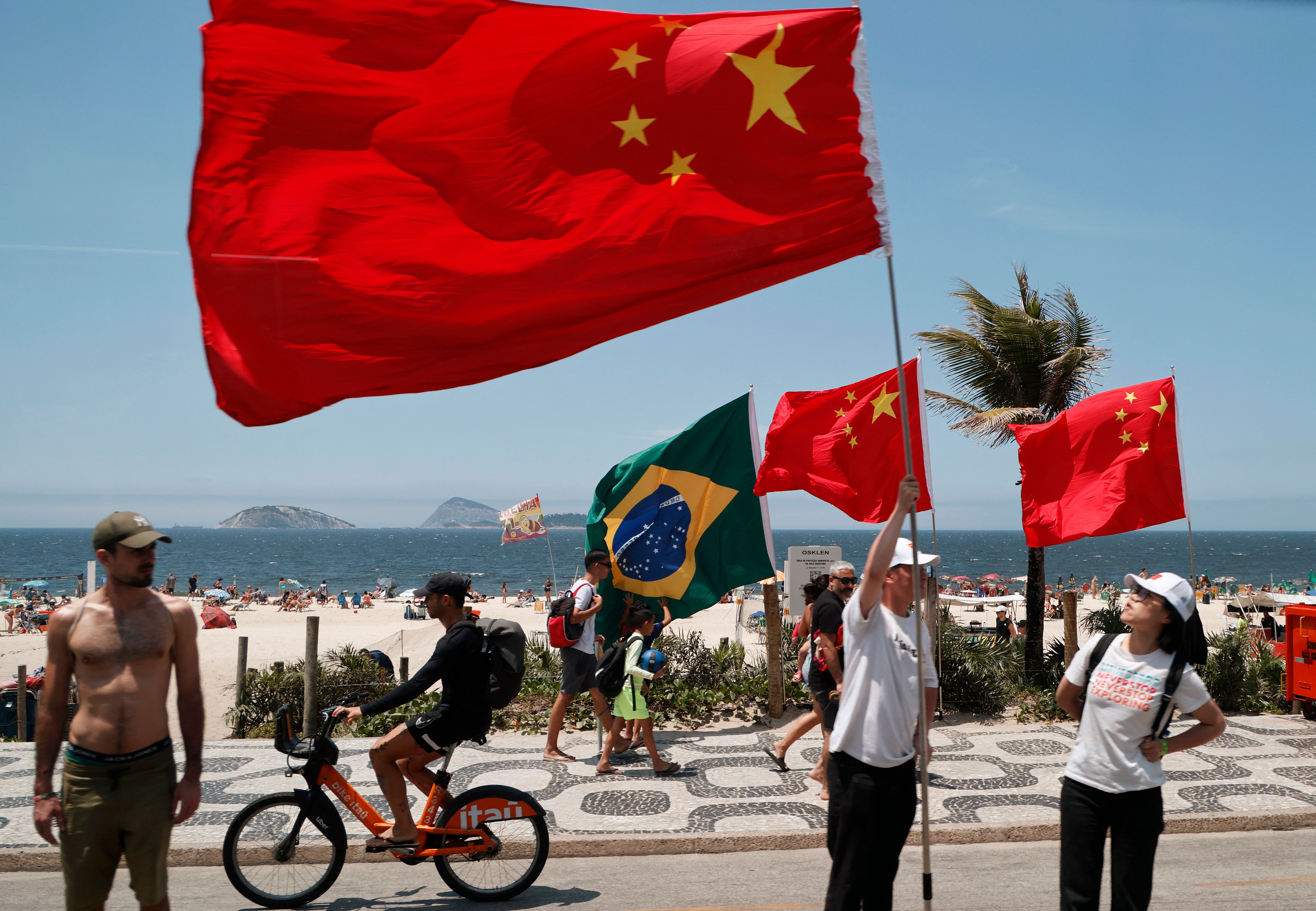
While China will remain a significant political and economic force in the Global South, its ambition to leverage the Global South as a counterbalance to the United States and the Global North is far from assured.

Xue Gong
Can China and India disengage from contested territories along the border?

Paul Haenle, Ashley J. Tellis, Han Hua, …
The government extends the uncertainty with its two new taxes and digital rupee.

Anirudh Burman, Priyadarshini D.