

Commentary
John Kerry
{
  "authors": [
    "John Kerry"
  ],
  "type": "legacyinthemedia",
  "centerAffiliationAll": "dc",
  "centers": [
    "Carnegie Endowment for International Peace"
  ],
  "collections": [],
  "englishNewsletterAll": "ctw",
  "nonEnglishNewsletterAll": "",
  "primaryCenter": "Carnegie Endowment for International Peace",
  "programAffiliation": "SCP",
  "programs": [
    "Sustainability, Climate, and Geopolitics"
  ],
  "projects": [],
  "regions": [
    "North America",
    "United States",
    "South Asia",
    "India",
    "East Asia",
    "China"
  ],
  "topics": [
    "Climate Change",
    "Global Governance"
  ]
}
Source: Getty
Since the Paris agreement was adopted, climate analysts have argued that the initial commitments made by more than 185 countries were insufficient to reach the agreement’s goals in fighting climate change.
Source: Washington Post
Five years ago, the U.N. secretary-general convened a summit on climate change in New York that helped jump-start the historic Paris agreement 15 months later. That summit, which launched a new era in global climate action, feels like an eternity ago, and in too many quarters not for the better. But the armies of progress have refused to bow to delay, denial or distortion. This week a different secretary-general will host another global climate summit to spur the world toward the next phase of meeting an existential challenge: countries strengthening their current national commitments under the agreement to reduce climate pollution. The need for leadership has never been more urgent; certainly the destruction from Hurricane Dorian and the fires in the Amazon should have refocused everyone’s minds on the fragility of our global carbon sinks. Most wars start with a bomb dropped, a leader killed or a line crossed. But today we stand on the precipice of the greatest battle humanity has ever faced, precisely because no one has done enough.
Since the Paris agreement was adopted, climate analysts have argued that the initial commitments made by more than 185 countries were insufficient to reach the agreement’s goals in fighting climate change. That’s true, but partly by design. The agreement was structured first to get countries to buy in and then to increase their ambition in five-year intervals; 2020 is the target date for the first round of more influential climate plans.
As secretary of state, I worked with President Barack Obama to ensure that the United States led by example with its ambitious first target. Unfortunately, the current administration has made its opposition crystal clear, even as governors, mayors and businesses continue to push forward. In the temporary absence of U.S. leadership, we need other major emitters to step up — not only to deliver the climate action we need but also to build trust that international institutions are prepared to take on this global challenge until the United States is ready to rejoin the fight.
Who will take the lead in lifting global ambition to the next stage?
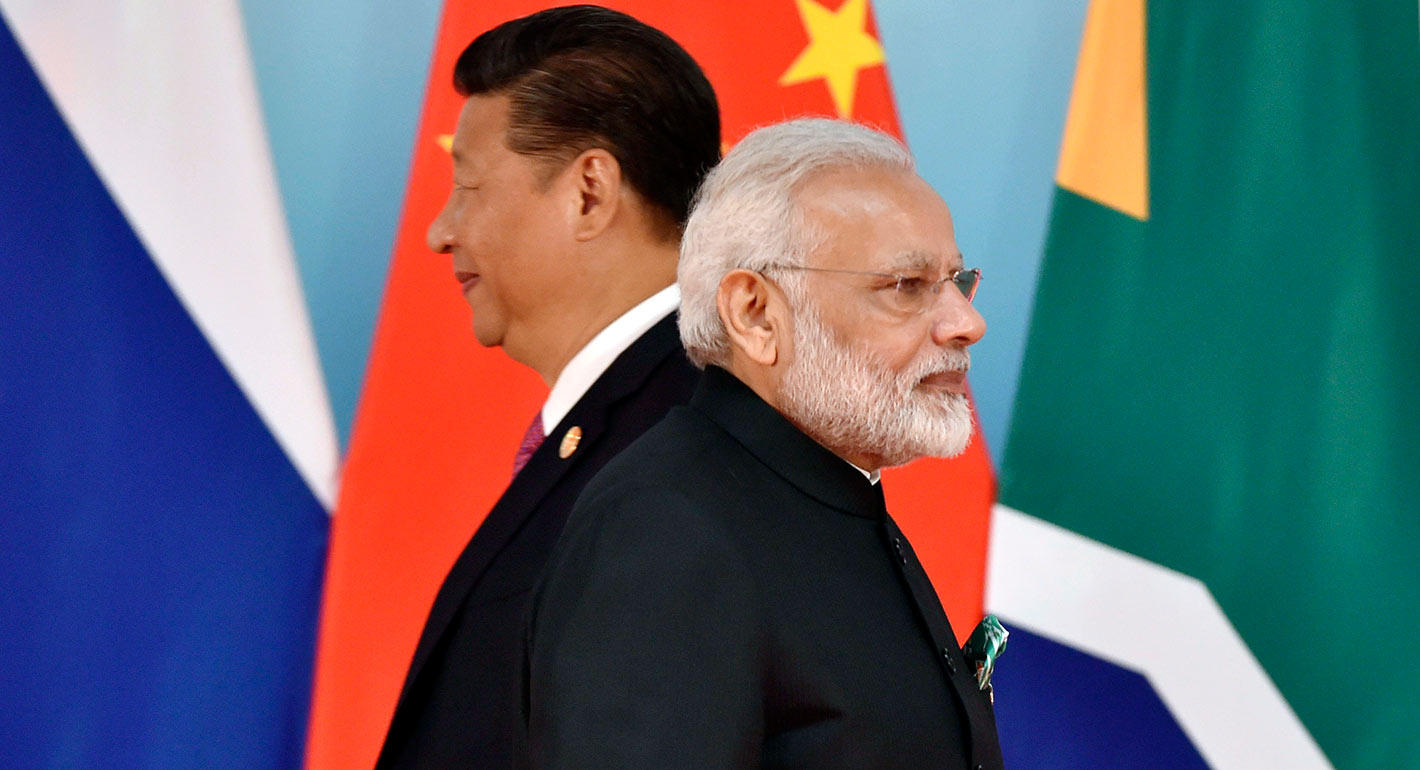
In recent joint statements with France, both India and China indicated they would update their national climate commitments “in a manner representing a progression beyond the current one and reflecting their highest possible ambition.” They also announced they would submit strategies next year for the essential task of cutting emissions over the long-term, also called for under the Paris Agreement.
These countries recognize that national climate commitments are not economic burdens, but opportunities. They’re right. A report from the World Bank’s International Finance Corp. finds that the commitments under Paris from just the top 21 developing countries will generate a $23 trillion investment opportunity by 2030.
France is seizing the reins of the Paris agreement’s legacy. Not only has the country adopted legislation to cut emissions to net-zero by 2050, it’s pushing the European Union to do the same and strengthen its Paris commitment for 2030.
China and India also might be ready to step up their efforts, which shouldn’t be a surprise given all they have to gain from improved air quality to economic competitiveness. This month, India announced it is making strong progress on its massive 175 gigawatts of new installed renewable capacity by 2022; 99 percent of electric buses currently on the road are in China, thanks to ambitious national policies.
But make no mistake, the true test for the two countries, and for all of us, arrives this week at the secretary-general’s summit. China and India have the chance to be much more explicit in their commitments about strengthening action and to clearly prove that they won’t be held back by a recalcitrant Washington or anyone else.
I’ve negotiated the language of international agreements, resolutions and joint statements. I know China and India are serious about international climate action. But any armchair quarterbacking or back-seat driving by the remaining skeptics, who dare say Paris is suspect because the large developing-country emitters aren’t serious, can be crushed this week. We don’t need open-ended statements. We need a concrete commitment that countries will step up their domestic ambition on the Paris agreement’s 2020 timetable, the ultimate rejoinder to the naysayers.
Swift, ambitious action can put the Paris agreement on track for success and put the deniers, the delayers and the distorters on the defensive. The United States will be back at the table after 2020, but in this aberrational period of shortsightedness, now is the time for China, India and other countries to prove just what we are missing.
This article was originally published by the Washington Post.
Nonresident Scholar, Sustainability, Climate, and Geopolitics Program
John Kerry is a nonresident scholar the Carnegie Endowment for International Peace.
Recent Work
John Kerry
John Kerry
Carnegie does not take institutional positions on public policy issues; the views represented herein are those of the author(s) and do not necessarily reflect the views of Carnegie, its staff, or its trustees.

China’s political future will be shaped between now and next October. As the Communist Party enters its intense “campaign season” to prepare for a major political transition in 2027, reading Beijing's actions and responses may become more difficult as domestic politics weigh on its behavior more than usual.

Damien Ma

China has showcased its engineering prowess with small modular reactor demonstration projects. But turning these technological achievements into commercial success will be a greater challenge.

Tong Zhao

The Plaza Accord was not an externally imposed punishment of Japan but part of a broader restructuring that Japanese economists and policymakers themselves recognized was necessary. Its effects were undermined, however, when Tokyo responded to the resulting slowdown with policies that exacerbated investment, credit expansion, and the very imbalances the adjustment was intended to resolve.

Michael Pettis

The nuclear relationship between China and the United States is increasingly shaped by widening perception gaps rather than deliberate strategic design.
Tong Zhao
China’s banking crisis in the 2000s was resolved by transferring the costs to households through financial repression—a decision that recapitalized the banks while exacerbating the structural imbalances that continue to shape the Chinese economy today.
Michael Pettis