

Commentary
Gwendolyn Sasse
{
  "authors": [
    "Gwendolyn Sasse"
  ],
  "type": "legacyinthemedia",
  "centerAffiliationAll": "dc",
  "centers": [
    "Carnegie Endowment for International Peace",
    "Carnegie Europe"
  ],
  "collections": [
    "Europe’s Eastern Neighborhood"
  ],
  "englishNewsletterAll": "ctw",
  "nonEnglishNewsletterAll": "",
  "primaryCenter": "Carnegie Europe",
  "programAffiliation": "EP",
  "programs": [
    "Europe"
  ],
  "projects": [],
  "regions": [
    "Russia",
    "Europe",
    "Eastern Europe",
    "Ukraine",
    "Iran"
  ],
  "topics": [
    "Security"
  ]
}
Source: Getty
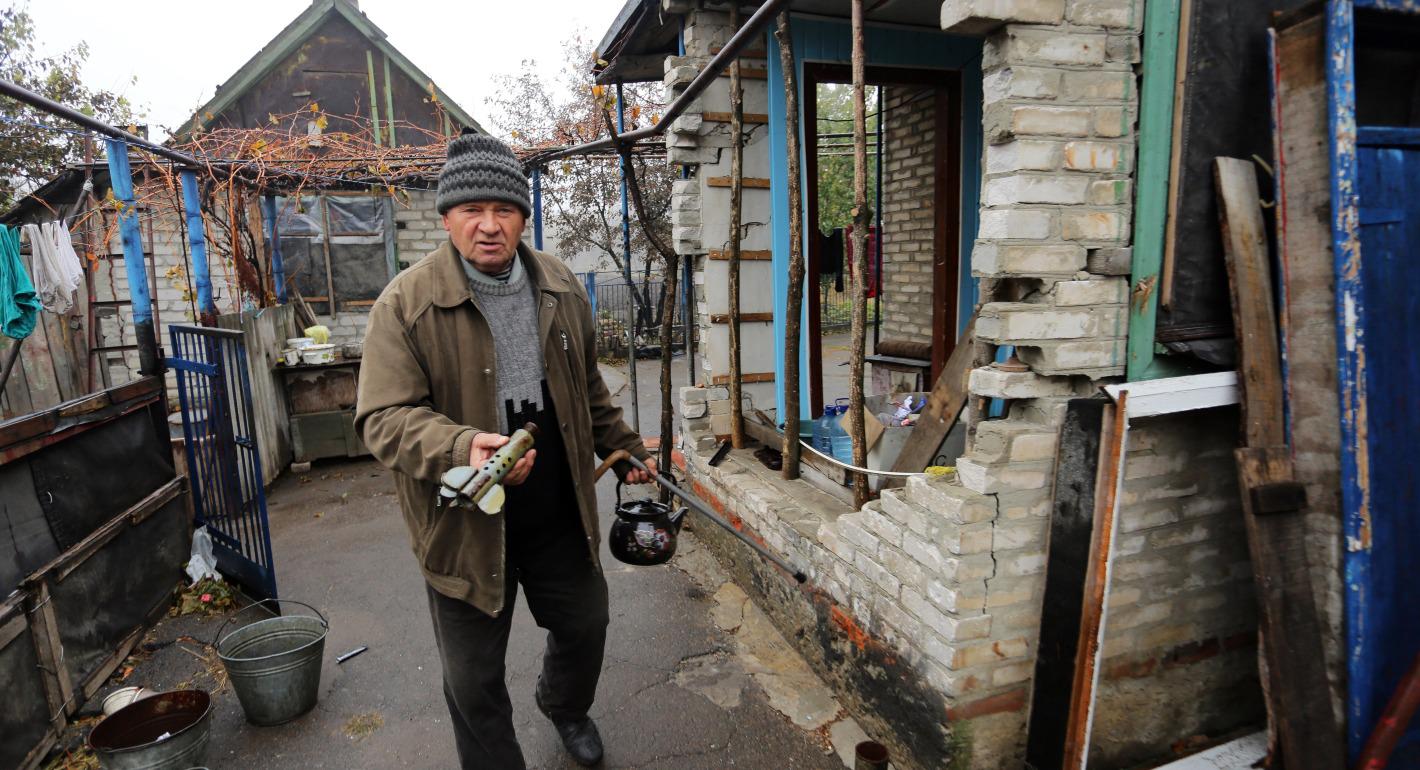
Ahead of renewed peace talks, a new survey shows that a majority of residents in separatist-held areas of eastern Ukraine wants to remain part of the Ukrainian state.
Source: Conversation
With renewed negotiations to end the conflict in Ukraine’s Donbas region on the horizon, the views of those people most affected by the war – the residents of eastern Ukraine – should be taken into account. Russia insists that the people living in areas of the Donbas currently controlled by separatists, who it supports, do not what to reintegrate with Ukraine.
But two surveys I carried out in the Donbas in 2016 and 2019, revealed that a majority of those we surveyed in areas not controlled by the government would prefer to be part of the Ukranian state.The war in the Donbas started more than five years ago and has cost in excess of 13,000 lives. At least 1.4m Donbas residents have been internally displaced, and at least 75,000 have fled to Russia.
Ukraine’s newly elected president Volodymyr Zelenskiy put ending the war at the centre of his election campaign, alongside fighting corruption. His rhetoric has remained consistent, treating the inhabitants of the areas not currently controlled by Kyiv – the self-declared people’s republics of Donetsk and Luhansk (DNR/LNR) – as fully-fledged Ukrainian citizens and emphasising their reintegration into the Ukrainian state.
In early October, Zelenskiy made an explicit commitment to what’s called the “Steinmeier formula”, proposed in 2016 by the then German foreign minister Frank-Walter Steinmeier. His idea envisaged the sequencing of local elections in the separatist-held Donbas which, if deemed acceptable by the Organisation for Security and Co-operation in Europe, would clear the way towards a permanent special status of the fought-over territories.
While uncertainties remain surrounding the precise gist of Zelenskiy’s commitment, and there have been some early stumbling blocks, it has made the first meeting in three years of the Normandy group, involving the heads of state of Ukraine, Russia, Germany, and France, a realistic prospect.
The attitudes and preferences of people living through war remain poorly understood in the comparative study of war. Empirical evidence collected during war remains scarce. At the Centre for East European and International Studies (ZOiS), I conducted two surveys in the two parts of the Donbas in December 2016 and March 2019. Both times, 1,200 face-to-face interviews were conducted in the government-controlled Donbas, split evenly between Donetsk and Luhansk administrative areas, called oblasts. We also conducted 1,200 telephone interviews in areas of the Donbas held by separatists supported by Russia.
Between 2016 and 2019, the size of territory in Donbas controlled by the Ukrainian government and the separatists has remained roughly the same.
The face-to-face interviews were based on a quota sample, with age, gender and level of education quotas taken from Ukraine’s last available official statistics. In the absence of equivalent information, the same quotas were applied in the separatist-held Donbas territories. Due to concerns related to access, security and ethics, the interviews in the separatist-held Donbas were conducted by telephone. As the results don’t capture the same people over time, statistical tests are applied to control for the differences between the two samples.
Preferences about the future status of the Donetsk and Luhansk people’s republics remained stable in the government-controlled Donbas. Across both 2016 and 2019, around 65% of the respondents wanted to see these areas reintegrated into Donetsk and Luhansk oblasts without any kind of special status.
In the separatist-held areas of the Donbas, about 55% of the respondents expressed a preference for being part of the Ukrainian state. This is very significant for the next round of the negotiations as this wish for reintegration is an important corrective to Russia’s official rhetoric and public perceptions in the West.
Of the overall majority in favour of staying within Ukraine, roughly a third of the respondents in both years voiced a preference for an autonomy status within Ukraine. Meanwhile, about 21% of the respondents in 2016 said that the territories should return to Donetsk and Luhansk oblasts without any special status. In 2019, 24% chose this option. Though small in absolute numbers, this is a statistically significant change that indicates that the idea of returning to the pre-war status has gained in popularity.
Our results also demonstrate how identities remain in flux during war. Identity change is hard to trace empirically, but crisis situations offer a window onto these processes. In 2016, a clear majority of the residents in the government-controlled part of the Donbas identified as Ukrainian citizens when asked about their primary identity. But in 2019, respondents self-identified in roughly equal measure as “Ukrainian citizens” and “ethnic Ukrainian”. The civic identification with the state has significantly decreased in the Donbas, suggesting widespread disappointment with the state’s role in handling the war. By comparison, self-identification as “ethnic Ukrainian” increased significantly, which may express the respondents’ wish to distance themselves further from the war.
By comparison, in the separatist-held areas of the Donbas, 21% of respondents in 2019 said they had a mixed ethnic Russian-Ukrainian identity, alongside different expressions of a regional identity. About 13% chose Ukrainian citizenship as their main identity – similar to 12% who identified as ethnic Russian. We didn’t ask this question in 2016.Mobility across the frontline continues to be high but remains, by and large, in one direction – from the separatist-held areas of the Donbas to the Kyiv-controlled areas. Monthly crossings in this direction increased significantly from 2016 to 2019, a trend that reflects people’s need to travel for socio-economic reasons but perhaps also a sense of normalisation amid a continued low level of fighting.
Ahead of a new round of negotiations under the Normandy format, three key findings from our surveys are worth remembering for all sides: the wish by the majority of the population of the separatist-held Donbas territories to remain part of the Ukrainian state, the absence of a clear-cut identity among the resident population in this part of the Donbas, and the strong personal linkages across the frontline.
Nonresident Senior Fellow, Carnegie Europe
Gwendolyn Sasse is a nonresident senior fellow at Carnegie Europe. Her research focuses on Eastern Europe, with a particular focus on Ukrainian politics and society, EU enlargement, and comparative democratization.
Recent Work
Gwendolyn Sasse
Gwendolyn Sasse

The Thai-Cambodian conflict highlights the limits to China's peacemaker ambition and the significance of this role on Southeast Asia’s balance of power.

Pongphisoot (Paul) Busbarat

Beijing believes that Washington is overestimating its own leverage and its ability to handle the trade war’s impacts.


Rick Waters, Sheena Chestnut Greitens
Tapping our network of China experts in the region, Carnegie China offers this latest “China Through a Southeast Asian Lens” report to offer preliminary assessments of whether the U.S. effort to reshape the global trading order will lead countries in the region to tilt toward Beijing.

Selina Ho, Khin Khin Kyaw Kyee, Joseph Ching Velasco, …
Beijing is trying to navigate the overall situation regarding Ukraine, especially the substance of interactions between Washington and Moscow.
Ellen Nakashima, Zhao Long, Pavlo Klimkin, …
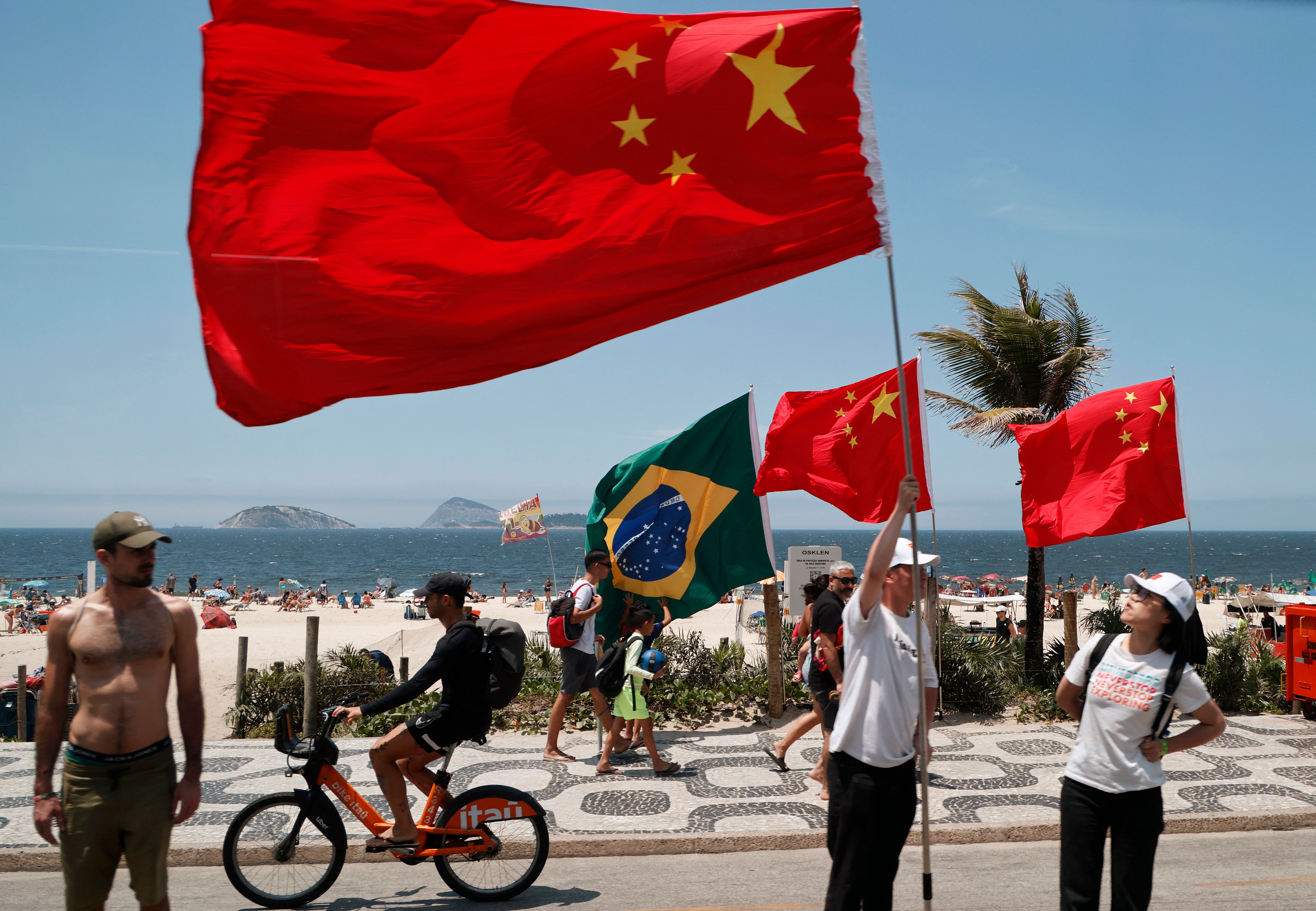
While China will remain a significant political and economic force in the Global South, its ambition to leverage the Global South as a counterbalance to the United States and the Global North is far from assured.

Xue Gong