

Research
- +8
William J. Burns, Michael Chertoff, Catherine Ashton, …
{
  "authors": [
    "William J. Burns"
  ],
  "type": "legacyinthemedia",
  "centerAffiliationAll": "",
  "centers": [
    "Carnegie Endowment for International Peace",
    "Malcolm H. Kerr Carnegie Middle East Center"
  ],
  "collections": [],
  "englishNewsletterAll": "",
  "nonEnglishNewsletterAll": "",
  "primaryCenter": "Carnegie Endowment for International Peace",
  "programAffiliation": "",
  "programs": [],
  "projects": [],
  "regions": [
    "Middle East",
    "Yemen",
    "Gulf"
  ],
  "topics": [
    "Political Reform",
    "Security",
    "Foreign Policy"
  ]
}
Source: Getty
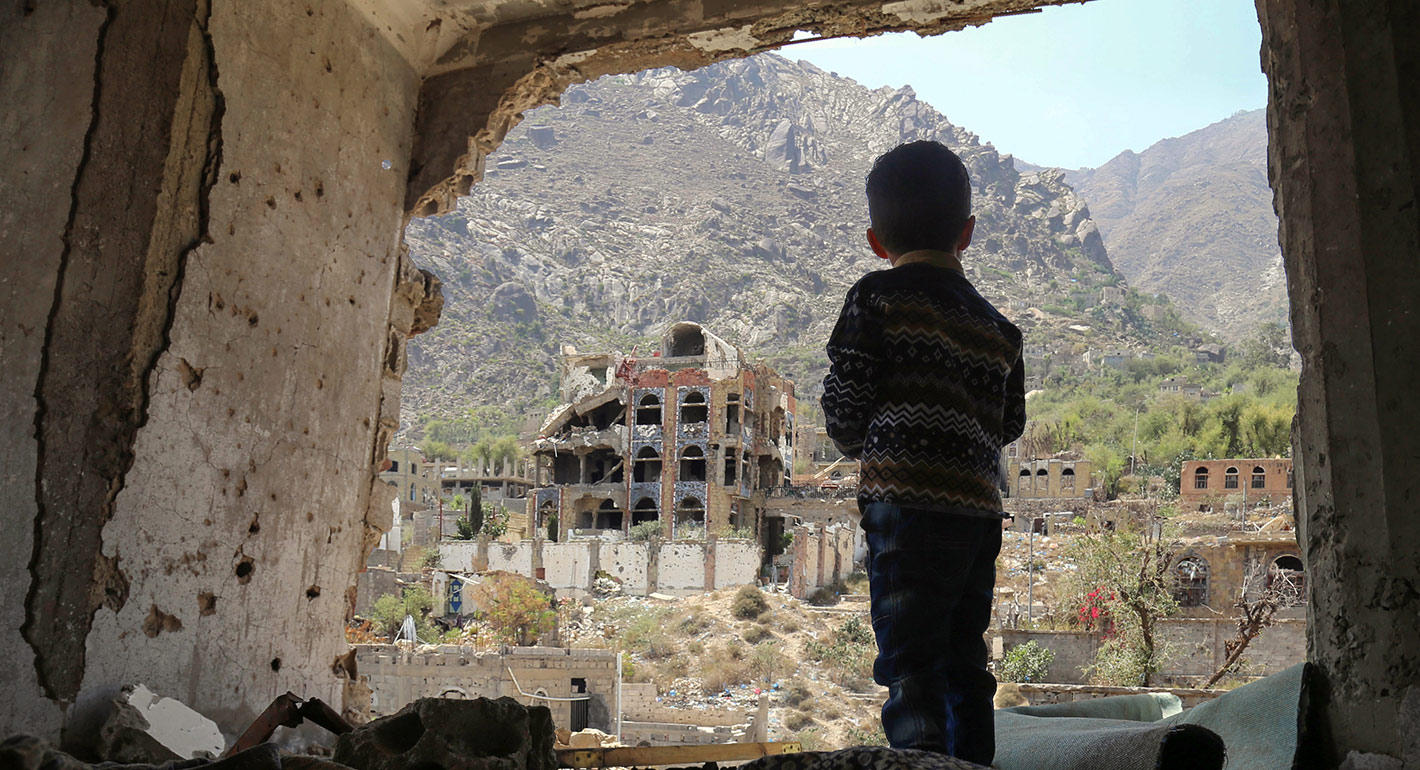
President Trump should seize the opportunity to help end the strategic and humanitarian calamity in Yemen.
Source: Washington Post
President Trump’s instinct to end America’s involvement in “endless wars” is sensible. But he has too often acted in ways that fan the flames of war in the Middle East rather than extinguish them.
In Syria, the remarkable operation against Islamic State leader Abu Bakr al-Baghdadi is undercut by a wider strategic incoherence. By impulsively deciding to withdraw troops from northeastern Syria — uncoordinated with allies and partners, let alone his own commanders and diplomats — Trump has opened the door to further conflict. We’ve boosted the interests of Damascus, Tehran, Moscow and Ankara, as well as exacerbated the local Sunni grievances on which the Islamic State feeds.
By pulling out of the Iran nuclear deal, Trump took the lid off Iran’s nuclear program and turned up the heat on roiling regional tensions. The result? A deployment of 3,000 additional U.S. troops to the gulf to deal with provocations largely of his own making.
There is, however, one war that Trump can still help end. The war in Yemen may seem distant to most Americans, but its humanitarian and strategic consequences are enormous.
The United Nations has called the situation in Yemen the world’s worst humanitarian crisis. More than 3 million Yemenis have been displaced, nearly a quarter of a million have been killed and more than 15 million are at risk of famine. The conflict has contributed to the worst cholera outbreak in modern history, and it’s getting worse by the day.
The strategic implications are just as grave. Yemen’s U.N.-recognized government sits in exile, the Iranian-supported Houthis control the capital, and Islamic State and al-Qaeda affiliates are growing in the eastern part of the country, where they continue to plot against the West.
The conflict is also a stain on U.S. foreign policy. We’ve sold Saudi Arabia the bombs and missiles that are responsible for two-thirds of civilian casualties as well as other U.S. arms now in the hands of both Saudi-backed militias and their rivals. We are training Saudi pilots, servicing their aircraft, sharing intelligence and advising on targets. We do ourselves — and our Saudi partners — no favor by indulging, aiding and abetting Riyadh’s disastrous overreach in Yemen.
The good news, to the extent there is any in the region these days, is that the conditions for diplomatic progress in Yemen are ripening.
The United Arab Emirates, Saudi Arabia’s more capable military partner, has realized that the blowback to its interests and reputation is simply not worth it. In July, it began withdrawing the vast majority of its troops from Yemen.
Saudi Arabia has similarly started to confront reality. Having spent in excess of $100 billion dollars on the war, in the process putting the limits of its military on full display and exposing its own vulnerability to a predatory Iran, Riyadh now faces growing concern in the U.S. Congress. All this has prompted the Saudis to signal a pivot toward diplomacy. Last month, Riyadh and the Houthis opened back-channel talks.
The United States can and should use its leverage to push along diplomacy. It can do so in three ways.
First, we should push Riyadh to extend its pause on airstrikes and accept a nationwide cease-fire to test the seriousness of recent Houthi pledges to cease attacks on Saudi targets. We should also push Saudi Arabia to open the airport in Sanaa to medical evacuation flights and to lift restrictions on fuel imports, which are critical for humanitarian relief.
Second, we should throw our full support behind a new U.N.-led framework for talks: one that acknowledges the realities that the Houthis are not going to withdraw back to their northern redoubt; that the internationally recognized Yemeni government cannot simply be airlifted from its exile in Riyadh to Sanaa; that the legitimate security concerns of our gulf partners have to be addressed; and that Tehran has to be engaged directly. Iran has been deeply complicit in the violence in Yemen, but it has both potential interest in revived diplomacy and a demonstrated capacity to undermine it.
Third, Congress should condition future arms sales and military support to Saudi Arabia on its continued commitment to cease-fire compliance and diplomatic progress. We have a significant long-term stake in our partnership with the Saudis, but first we have to help steer them to the Yemen off-ramp they are looking for.
Yemen will remain for some time a poor, fragmented and unstable country. But we can help remove one layer of instability in a region overflowing with it, reduce unspeakable human suffering, diminish America’s military entanglement and set the stage for the difficult diplomacy that will follow.
In Yemen, there will be no grand victory parades or the kind of summitry that often animates Trump’s diplomacy, but ending the war there is both the right and smart thing to do for the United States and for the region. We should seize this opportunity.
This article was originally published in the Washington Post.

Former Carnegie President (2015-2021)
A former career diplomat, William J. Burns served as director of the CIA, deputy secretary of State, and ambassador to Russia and Jordan. Burns was also president of the Carnegie Endowment for International Peace from 2015 to 2021.
Recent Work
William J. Burns, Michael Chertoff, Catherine Ashton, …
William J. Burns
Carnegie does not take institutional positions on public policy issues; the views represented herein are those of the author(s) and do not necessarily reflect the views of Carnegie, its staff, or its trustees.

But their "principal to principal" model will only be as effective as the political strength of each leader back home.

Damien Ma

U.S. unpredictability has allowed China to capitalize on its positioning as the “responsible great power”. Paradoxically, the more China wins the perception game, the more likely expectations will rise for Beijing to deliver not just words but to demonstrate with its deeds.

Chong Ja Ian

Hanoi and Beijing have long treated each other as distant cousins rather than comrades in arms. That might be changing as both sides draw closer to hedge against uncertainty and America’s erratic behavior.

Nguyễn Khắc Giang

Across Asia, China is better positioned to withstand energy shocks from the fallout of the Iran war. Its abundant coal capacity can ensure stability in the near term. Yet at the same time, the country’s energy transition away from coal will make it even less vulnerable during the next shock.
Damien Ma

Malaysia’s chairmanship sought to fend off short-term challenges while laying the groundwork for minimizing ASEAN’s longer-term exposure to external stresses.

Elina Noor