

Q&A
- +2
Judy Dempsey, Alexander Gabuev, Rose Gottemoeller, …
{
  "authors": [
    "Rose Gottemoeller"
  ],
  "type": "other",
  "centerAffiliationAll": "dc",
  "centers": [
    "Carnegie Endowment for International Peace"
  ],
  "collections": [
    "U.S. Nuclear Policy"
  ],
  "englishNewsletterAll": "ctw",
  "nonEnglishNewsletterAll": "",
  "primaryCenter": "Carnegie Endowment for International Peace",
  "programAffiliation": "NPP",
  "programs": [
    "Nuclear Policy"
  ],
  "projects": [],
  "regions": [
    "North America",
    "United States",
    "Russia"
  ],
  "topics": [
    "Nuclear Policy",
    "Arms Control"
  ]
}
Source: Getty
An accomplished negotiator puts nuclear arms control in perspective—what it has achieved, where it has failed, and what it can do for our future security.
Source: Foreign Service Journal
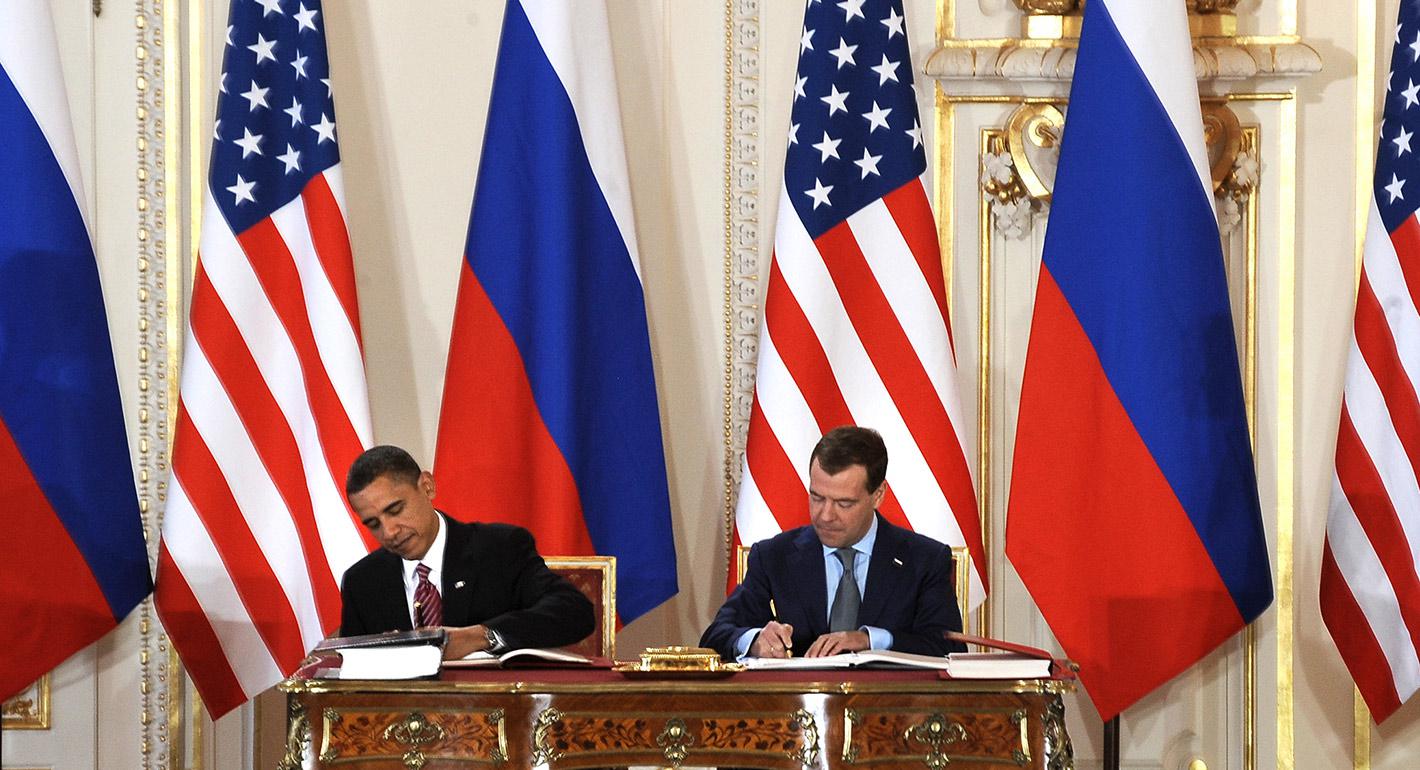
In my line of work, you have to have a long memory. Periods of success in negotiations are followed by droughts, because of politics, military upheaval, arms buildups—yes, sometimes the weapons have to be built before they can be reduced—or a sense of complacency: “We have arms control treaties in place; let’s just focus on implementing them.” In those cases, new thinking and new negotiations may slow or even stop. Yet, the national security interest of the United States continues to drive the necessity for nuclear arms control. The calculation of our own national security interest must always be front and center when we consider a nuclear negotiation. Sometimes arms control is touted as an absolute good, one that should be pursued for its own sake. We do have international obligations in this realm, most prominently the commitment under Article VI of the Non-Proliferation Treaty to reduce and eliminate nuclear weapons until we reach zero. This commitment is shared by the other NPT nuclear weapon states— France, the U.K., Russia and China; and sometimes it gets a boost, as it did when President Barack Obama strongly reiterated U.S. intent to proceed on the path to zero nuclear weapons during his speech in Prague in April 2009, the first major foreign policy speech of his presidency.
That international obligation is important, but still we must consider first and foremost our own national security interest. I think about that interest as follows: Nuclear arms control is the only way that we can attain stable and predictable deployments of these most fearsome weapons, and it is the only way that we can assure that we won’t be bankrupted by nuclear arms racing. These points are especially important now, as we contemplate a world where China has more nuclear weapons and more missiles with which to deliver them.
China now has many fewer nuclear weapons than the United States and Russia, and it has not yet shown an interest in coming to the table to negotiate constraints on them. It is constrained by its doctrine, which has held that China will not strike first with nuclear weapons and will only maintain enough secure nuclear weapons to ensure a second strike can take place if another country strikes China first. In the Chinese view, this doctrinal approach forges a kind of insurance policy for the international community. However, since China has now started to build more kinds of nuclear delivery systems, including long-range submarine-launched ballistic missiles, there is real concern that its doctrine may be changing.
So all of us need to think about the long arc of nuclear arms control—what it has accomplished, where it has failed and what it can do for our future security. In looking at the history, this article pulls the different strands from one period into the next, but does not delve into the details of any particular agreement. Nuclear arms control experts may take exception to this surface skimming, but I think it makes sense as food for thought: to remind us all how we determined the value of nuclear arms control in the first place, and how we have sustained it over time. Now we have to consider what makes sense for the future.
The full version of the article is published in the May 2020 edition of the Foreign Service Journal.

Nonresident Senior Fellow, Nuclear Policy Program
Rose Gottemoeller is a nonresident senior fellow in Carnegie’s Nuclear Policy Program. She also serves as lecturer at Stanford University’s Freeman Spogli Institute for International Studies and is a research fellow at the Hoover Institution. Ambassador Gottemoeller served as the deputy secretary general of NATO from 2016 to 2019.
Recent Work


Judy Dempsey, Alexander Gabuev, Rose Gottemoeller, …
Carnegie does not take institutional positions on public policy issues; the views represented herein are those of the author(s) and do not necessarily reflect the views of Carnegie, its staff, or its trustees.

The nuclear relationship between China and the United States is increasingly shaped by widening perception gaps rather than deliberate strategic design.

Tong Zhao

But their "principal to principal" model will only be as effective as the political strength of each leader back home.

Damien Ma

U.S. unpredictability has allowed China to capitalize on its positioning as the “responsible great power”. Paradoxically, the more China wins the perception game, the more likely expectations will rise for Beijing to deliver not just words but to demonstrate with its deeds.

Chong Ja Ian

For Malaysia, the conjunction that works is “and” not “or” when it comes to the United States and China.

Elina Noor

Regulation, not embargo, allows Beijing to shape how other countries and firms adapt to its terms.
Alvin Camba