

Article
China has showcased its engineering prowess with small modular reactor demonstration projects. But turning these technological achievements into commercial success will be a greater challenge.
Tong Zhao
{
  "authors": [
    "K.P. Krishnan",
    "Anirudh Burman"
  ],
  "type": "legacyinthemedia",
  "centerAffiliationAll": "",
  "centers": [
    "Carnegie Endowment for International Peace",
    "Carnegie India"
  ],
  "collections": [],
  "englishNewsletterAll": "",
  "nonEnglishNewsletterAll": "",
  "primaryCenter": "Carnegie India",
  "programAffiliation": "",
  "programs": [],
  "projects": [
    "Political Economy"
  ],
  "regions": [
    "South Asia",
    "India"
  ],
  "topics": [
    "Economy"
  ]
}
Source: Getty
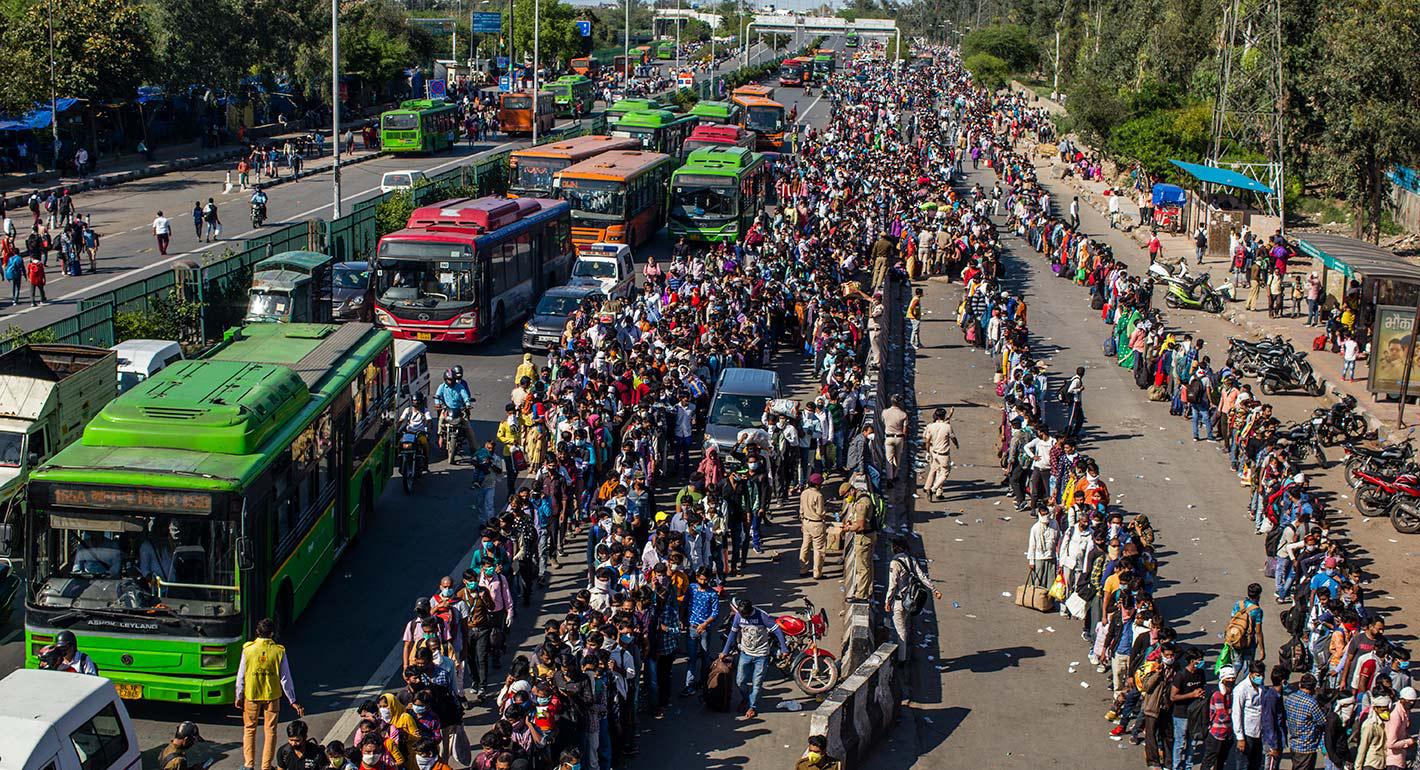
Prime Minister (PM) Narendra Modi recently announced that India must become Atmanirbhar (self-reliant).
Source: Hindustan Times
Prime Minister (PM) Narendra Modi recently announced that India must become Atmanirbhar (self-reliant). One aspect of this could be that India will remove barriers within its internal markets to truly become a single market. It will remove the hurdles to efficiency improvements and become more competitive. The Goods and Services Tax (GST) was a step in this direction. Recent decisions to remove hurdles in inter-state agricultural trade are also similar. For agricultural and industrial products, as well as capital, India is increasingly becoming a single market. The creation of a barrier-free domestic market is also an intent reflected in Article 301 of the Constitution.
The article is co-authored with Suyash Rai, a fellow at Carnegie India.
This article was originally published by the Hindustan Times.
K.P. Krishnan
K.P. Krishnan is the secretary of the Ministry of Skill Development and Entrepreneurship of the Government of India.

Former Associate Research Director and Fellow, Carnegie India
Anirudh Burman was an associate research director and fellow at Carnegie India. He works on key issues relating to public institutions, public administration, the administrative and regulatory state, and state capacity.
Carnegie does not take institutional positions on public policy issues; the views represented herein are those of the author(s) and do not necessarily reflect the views of Carnegie, its staff, or its trustees.

China has showcased its engineering prowess with small modular reactor demonstration projects. But turning these technological achievements into commercial success will be a greater challenge.

Tong Zhao

The Plaza Accord was not an externally imposed punishment of Japan but part of a broader restructuring that Japanese economists and policymakers themselves recognized was necessary. Its effects were undermined, however, when Tokyo responded to the resulting slowdown with policies that exacerbated investment, credit expansion, and the very imbalances the adjustment was intended to resolve.

Michael Pettis
China’s banking crisis in the 2000s was resolved by transferring the costs to households through financial repression—a decision that recapitalized the banks while exacerbating the structural imbalances that continue to shape the Chinese economy today.
Michael Pettis

In the latest Five-Year Plan, the Chinese president cements the shift to an innovation-driven economy over a consumption-driven one.

Damien Ma
Rather than climate ambitions, compatibility with investment and exports is why China supports both green and high-emission technologies.

Mathias Larsen