

Q&A
Jon Bateman, Steve Feldstein
{
  "authors": [
    "Jon Bateman"
  ],
  "type": "legacyinthemedia",
  "centerAffiliationAll": "dc",
  "centers": [
    "Carnegie Endowment for International Peace"
  ],
  "collections": [
    "U.S. Democracy in Comparative Perspective"
  ],
  "englishNewsletterAll": "ctw",
  "nonEnglishNewsletterAll": "",
  "primaryCenter": "Carnegie Endowment for International Peace",
  "programAffiliation": "TIA",
  "programs": [
    "Technology and International Affairs"
  ],
  "projects": [],
  "regions": [
    "North America",
    "United States",
    "Iran"
  ],
  "topics": [
    "Political Reform",
    "Democracy",
    "Security",
    "Military",
    "Civil Society"
  ]
}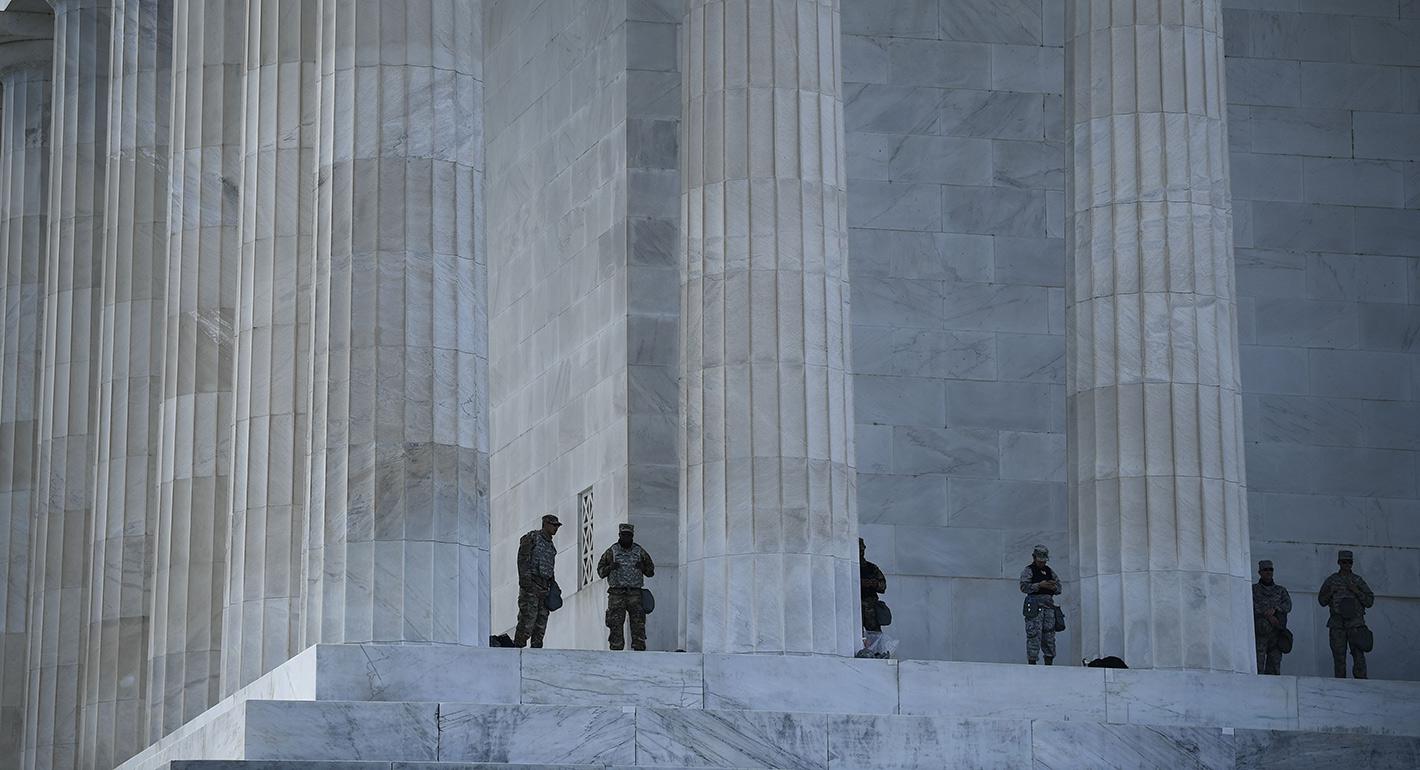
Source: Getty
The U.S. military’s constitutional guardrails and apolitical tradition have been slowly eroding in recent years.
Source: Politico
After President Donald Trump’s alarming threat to send active-duty troops into U.S. cities, many Americans were reassured by the public pushback from Secretary of Defense Mark Esper and former military leaders. Their statements seemed to indicate that strong checks still exist on the president’s use of the military.
The truth, however, is more unsettling. The U.S. military’s constitutional guardrails and apolitical tradition have been slowly eroding in recent years. It simply no longer can be assumed that the Pentagon will resist illegal orders from the president or requests from other agencies working under him. As a result, our system of government itself might be imperiled—and perhaps sooner than we think.
I witnessed this erosion up close as a special assistant to Chairman of the Joint Chiefs of Staff Gen. Joseph Dunford from 2018-19. When Trump took office, he found the Defense Department’s civilian leadership in a weakened state, having ceded influence to uniformed personnel. Trump accelerated the trend. He seems to have correctly deduced that generals and admirals are often more obedient to the president and less politically savvy than civilian appointees. In fact, he simply declined to fill up to a third of senior civilian roles at the Pentagon, preferring disempowered “acting” officials. He also has gradually replaced more independent-minded officials like former Secretary Jim Mattis.
By weakening the defense leadership cadre, Trump has had a freer hand to erode normative boundaries and push legal limits. He has used service members and hallowed grounds as partisan props, diverted scarce military resources toward political ends, corrupted military justice and flouted constraints imposed by Congress. Each violation helped to pave the way for the next.
Many uniformed and civilian leaders have done their best under impossible circumstances. They have sought to obey a duly elected commander in chief, while at the same time upholding the law and preserving institutional values. But this balancing act was doomed to fail sooner or later as Trump’s demands grew beyond what Mattis and others could bear. In turn, a rot grew within the Pentagon’s E-Ring, as a new cohort of leaders succumbed to unrelenting presidential pressure.
The extent of the rot was exposed in April by Acting Navy Secretary Thomas Modly. In an apparent effort to please the president, Modly rashly fired the commander of the USS Theodore Roosevelt, a beloved officer whose vocal requests for help during a Covid-19 outbreak on board had embarrassed the administration. Modly was so zealous in doing what he believed Trump would want that he dispensed with normal protocol and misled the public—creating his own scandals and ultimately resigning in disgrace. Farcical as it was, the episode revealed a serious problem: Some of the Pentagon’s most senior leaders had lost their way inside Trump’s political whirlwind.
On Monday, the farce was repeated as tragedy. The D.C. National Guard, acting under federal authority, participated in an obviously unconstitutional suppression of the First Amendment rights of peaceful protesters in Lafayette Park, outside the White House. After the units had cleared the park, Esper joined Trump for the now infamous photo-op outside St. John’s Church. Two days later, the Defense secretary partially distanced himself from Trump’s most egregious attempt to militarize the protest response—his threat to invoke the Insurrection Act and send in active-duty troops to restore order in America’s cities
Esper’s remarks were a much-needed public service. But, as a former Pentagon speechwriter, I paid close attention to his words. Esper has not actually condemned the clearing of the park. Nor has he apologized for participating in the photo-op. Instead, he disclaimed any responsibility for the events—first by pleading ignorance, then by finger-pointing. He “was not aware of [civilian] law enforcement’s plans for the park,” he said, “nor should I expect to be. But they had taken what actions I assume they felt was necessary.” In other words: Military leaders were simply fulfilling requests given to them by other agencies.
The argument was all too familiar. At the Pentagon, I helped craft analogous talking points in 2018, when Trump ordered thousands of troops to help secure the border. The unusual deployment of active-duty forces came weeks before a midterm election in which Trump aggressively hyped the threat from migrant caravans; it seemed like an expensive political stunt. The Pentagon downplayed its responsibility for the mission, pointing instead to civilian agencies that had requested the support and performed legal reviews of the mission.
The clearing of Lafayette Park showed the moral and constitutional limits of this argument. The military is far more powerful than civilian law enforcement, and far less trained to operate inside the homeland. There can be no offloading of responsibility when U.S. military might is used against American citizens, given the inherent dangers. And Pentagon leaders must be able to assure Americans that troops will not support any operation—civilian-led or otherwise—that violates U.S. constitutional rights.
Today there is no such guarantee. It is not difficult to imagine mass protests and civil unrest persisting into November. If federal troops remain activated in the lead-up to the 2020 election, what assurances do we have that Trump will not somehow maneuver them into influencing the outcome? It is also conceivable that Trump narrowly loses the election but labels it as “rigged.” If such claims lead to new bouts of unrest—or if the president resists a peaceful transition of power—what will the military do?
These questions, already whispered about, must now be openly asked. For those who call them far-fetched, I would cite John Allen, a retired four-star general, who wrote this week that the Lafayette Park fiasco “may well signal the beginning of the end of the American experiment.” Trump’s current and former associates have themselves raised questions about whether the 2020 election will occur on schedule or result in a peaceful handover if Trump loses.
In 1974, Secretary of Defense James Schlesinger became worried that President Richard Nixon, on the eve of impeachment, could use the military to subvert constitutional processes. Schlesinger did not dither or deflect; he made it known that no such thing would happen on his watch. In 2020, Americans cannot simply assume the Pentagon will serve the same role. To demand accountability and protect democracy, they will need to raise their own voices.

Senior Fellow and Co-Director, Technology and International Affairs Program
Jon Bateman is a senior fellow and co-director of the Technology and International Affairs Program at the Carnegie Endowment for International Peace.
Recent Work

Jon Bateman, Steve Feldstein

Jon Bateman, Anton Leicht, Alasdair Phillips-Robins, …
Carnegie does not take institutional positions on public policy issues; the views represented herein are those of the author(s) and do not necessarily reflect the views of Carnegie, its staff, or its trustees.

U.S. unpredictability has allowed China to capitalize on its positioning as the “responsible great power”. Paradoxically, the more China wins the perception game, the more likely expectations will rise for Beijing to deliver not just words but to demonstrate with its deeds.

Chong Ja Ian
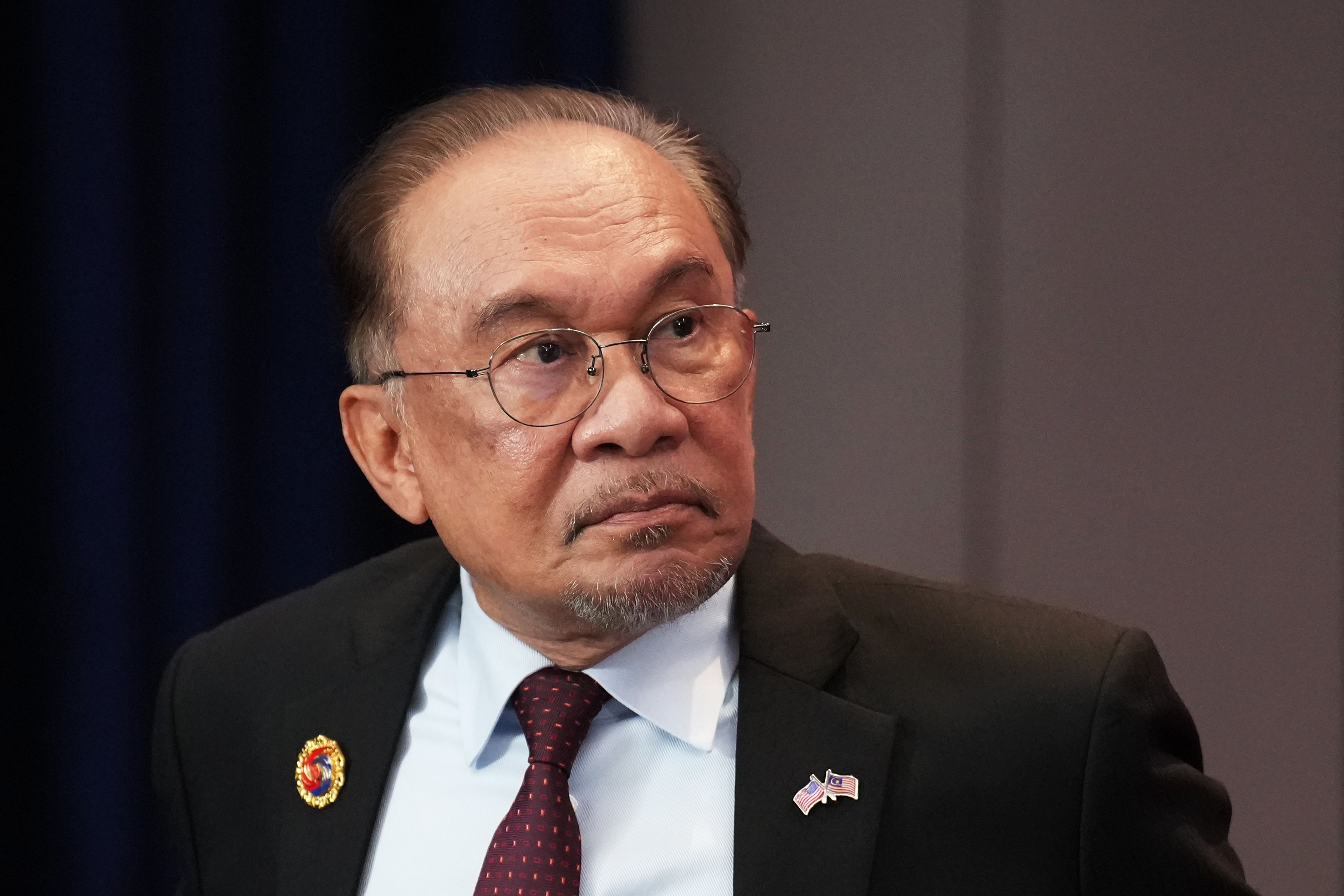
For Malaysia, the conjunction that works is “and” not “or” when it comes to the United States and China.

Elina Noor
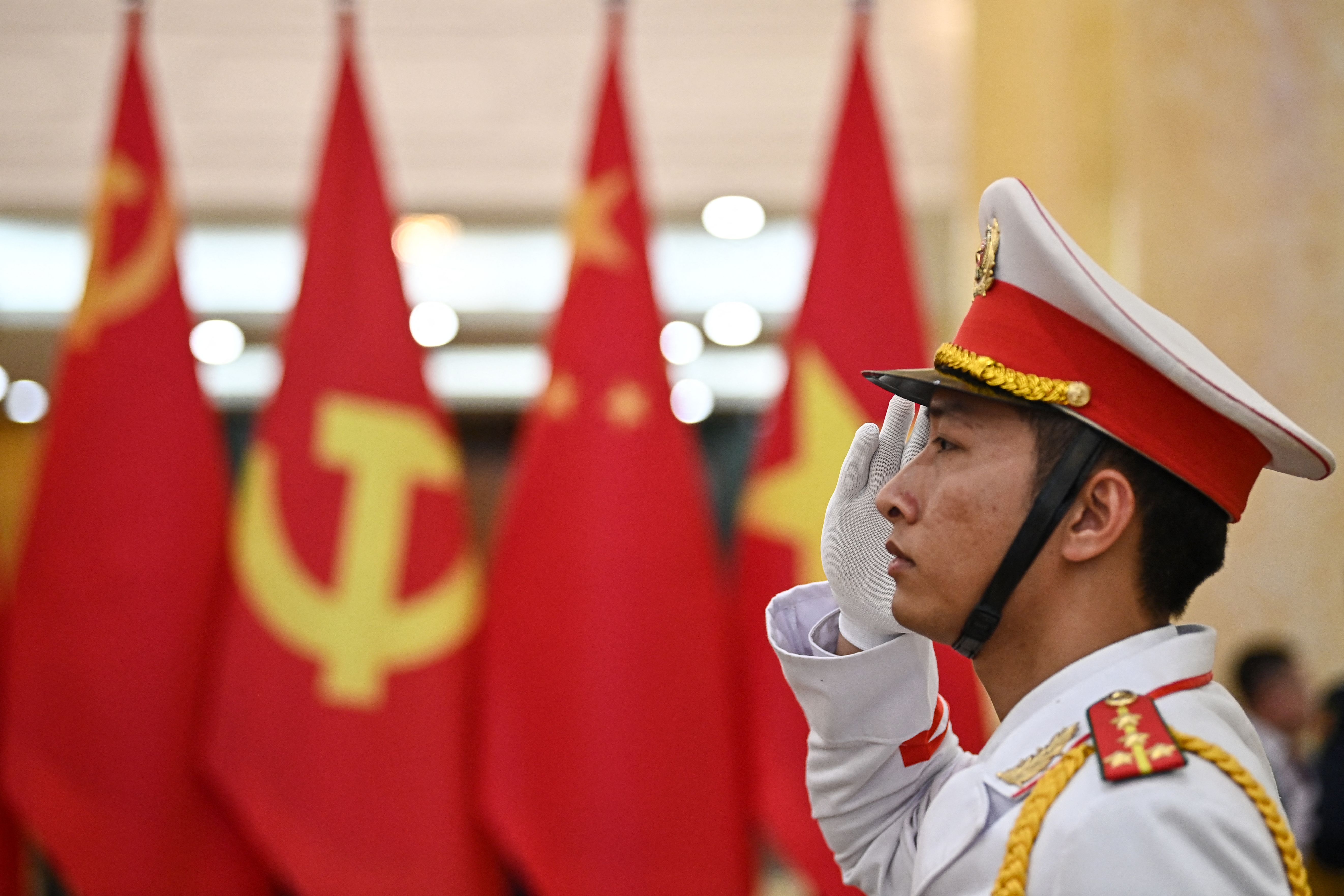
In July 2025, Vietnam and China held their first joint army drill, a modest but symbolic move reflecting Hanoi’s strategic hedging amid U.S.–China rivalry.

Nguyễn Khắc Giang

Regulation, not embargo, allows Beijing to shape how other countries and firms adapt to its terms.
Alvin Camba

The Thai-Cambodian conflict highlights the limits to China's peacemaker ambition and the significance of this role on Southeast Asia’s balance of power.

Pongphisoot (Paul) Busbarat