

Commentary
Andrei Kolesnikov
{
  "authors": [
    "Andrei Kolesnikov"
  ],
  "type": "legacyinthemedia",
  "centerAffiliationAll": "",
  "centers": [
    "Carnegie Endowment for International Peace",
    "Carnegie Russia Eurasia Center"
  ],
  "collections": [],
  "englishNewsletterAll": "",
  "nonEnglishNewsletterAll": "",
  "primaryCenter": "Carnegie Endowment for International Peace",
  "programAffiliation": "",
  "programs": [],
  "projects": [],
  "regions": [
    "Russia"
  ],
  "topics": [
    "Foreign Policy"
  ]
}
Source: Getty
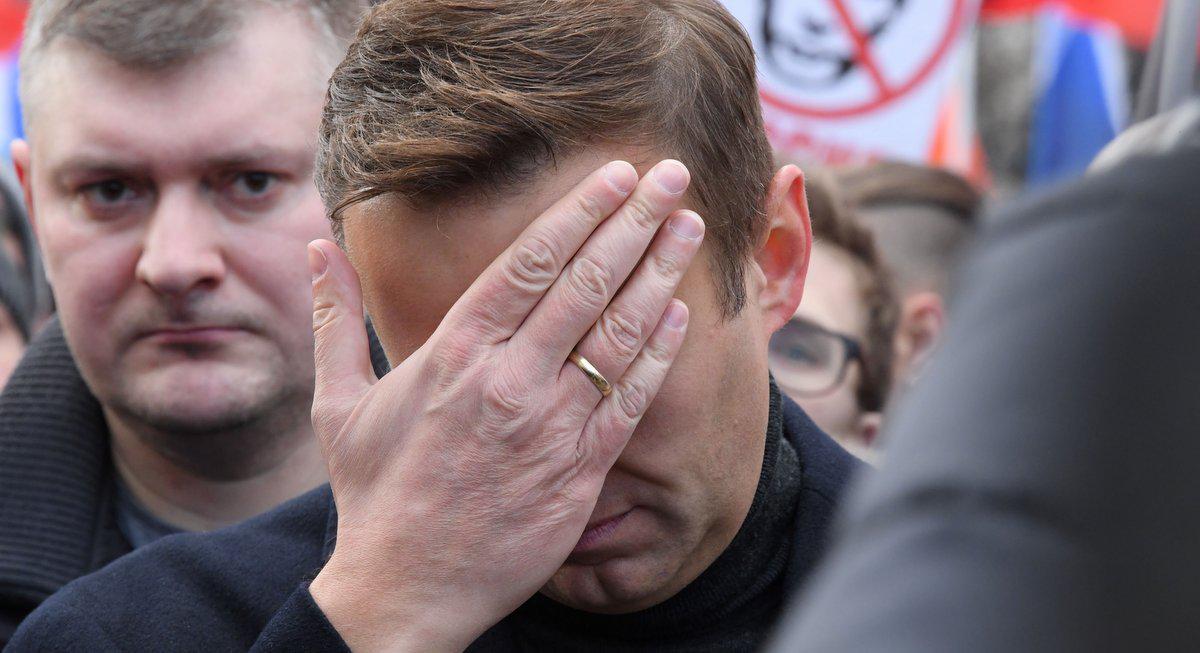
A new cold war is being waged without rules and without any kind of visible desire from the Russian side to initiate a new “détente,” or at least a “reset”.
Source: Moscow Times
Crossing red lines has become a national political sport in Russia. The annexation of Crimea, the war in the Donbass, the shooting down of Malaysian Airlines MH17, the assassination of Boris Nemtsov, cyber interference in foreign elections, the Skripal saga, the increasing participation of Wagner mercenaries in military conflicts and the resetting of presidential terms. To all of this we can now add the poisoning of Alexei Navalny.
The use of Novichok is a surprise that we could have expected. Another anticipated “surprise” is the complete denial of guilt from the Russian side. The strategy and tactics are always the same.
The state provides cover for state terror via a “state-private partnership,” in the sense that those who carry out these deeds may not formally be representatives of state structures but mercenaries. Those who order the hits are not people right at the top, but mid-level functionaries, carrying out their official duty in this rather “particular” way.
Nonetheless, it is abundantly clear that the outsourcing of killings, beatings, trolling and provocations is a growing part of the “state procurement” market.
Angela Merkel told Russia’s political regime it has questions to answer, as if in imitation of Porfiry Petrovich from Dostoyevsky’s “Crime and Punishment.”
But the reaction was not that of the protagonist Rodion Raskolnikov, who “whispered like a frightened child caught in the act.” Russia’s political class quickly went on the furious counterattack, speaking in slogans and waving around propagandistic clichés.
As the Russian system has matured from hybrid to pure authoritarianism, the propaganda has become cruder, the counter-propaganda has become more and more aggressive and the lies more and more brazen. Nobody is holding back any longer, since Russia is de facto in a cold war with the West.
Of course, it does not resemble a classical cold war. But all the worse: It is being waged without rules and without any kind of visible desire from the Russian side to initiate a new “détente,” or at least a “reset” in the manner of Dmitry Medvedev.
Instead of foreign policy we see arrogant statements from the foreign ministry’s press service. Instead of restraining their own “outsourcers” in the field in various wars — including those in the cybersphere — they offer clear encouragement.
Another round of deterioration in relations with the outside world will have an immediate impact on Russian citizens — an intensification of the struggle against external influence (which no longer really exists) and the internal “fifth column.”
Yet it is here that an existential crisis lies in wait for the Russian state. It is not so much the political opposition or “foreign agents” who are taking a stand against it, but civil society, which has no organization, leaders or strategy. They are guided only by a feeling that their human dignity is being debased and the desire to defend it by openly protesting.
Having eliminated Navalny in such radical fashion, the state has perhaps decapitated the opposition for a while.
Navalny is the most recognizable high-profile opposition politician in Russia. But at the same time the authorities are taking blows on another front — from unorganized civil society, which, as events in Khabarovsk clearly demonstrate, is becoming politicized at lightning speed, while its slogans are swiftly acquiring anti-Putin sentiment.
Even for those who have not yet been politicized, Navalny’s “smart voting” technology could be a means of taking revenge for his poisoning in the upcoming regional elections.
This does not mean that the Kremlin will lose control of the electoral situation, but there is an increased likelihood of more active protest voting and street protests. If not at these elections, then at the next ones. If not in this city, where protests are expected, then in another, where they are not.
As with the situation in Crimea, the state is inflicting harm upon itself with the Navalny affair. The markets have reacted negatively to the announcement of the causes of the poisoning and it is only too apparent that external conditions for the socio-economic development of Russia are worsening. The deterioration of the Russian economy is clearly going to enter a new phase.
Ordinary Russians and businesses are still paying for Crimea today through a reduction in their real incomes. Now they will also have to pay for de facto state terror. Their taxes are being used for unclear purposes, especially if we consider the growth in the share of federal budget funds allocated for secret expenses. Taxpayers’ money is feeding mercenaries, trolls, hackers and poisoners.
We should not expect the liberalization of the political system, it is moving in one direction only. There’s no reverse gear; the resetting of presidential term limits was a clear indication of this. And now the poisoning of Navalny.
Back in the beginning, few could have believed that the annexation of Crimea was possible, or later that autocratic rule would be prolonged in the manner of a despot, or later that such a direct attack would be carried out on the leader of the opposition. The crossing of red lines and moral barriers goes on.
Former Senior Fellow, Carnegie Russia Eurasia Center
Kolesnikov was a senior fellow at the Carnegie Russia Eurasia Center.
Recent Work
Andrei Kolesnikov
Andrei Kolesnikov
Carnegie does not take institutional positions on public policy issues; the views represented herein are those of the author(s) and do not necessarily reflect the views of Carnegie, its staff, or its trustees.

But their "principal to principal" model will only be as effective as the political strength of each leader back home.

Damien Ma

U.S. unpredictability has allowed China to capitalize on its positioning as the “responsible great power”. Paradoxically, the more China wins the perception game, the more likely expectations will rise for Beijing to deliver not just words but to demonstrate with its deeds.

Chong Ja Ian

Hanoi and Beijing have long treated each other as distant cousins rather than comrades in arms. That might be changing as both sides draw closer to hedge against uncertainty and America’s erratic behavior.

Nguyễn Khắc Giang

Across Asia, China is better positioned to withstand energy shocks from the fallout of the Iran war. Its abundant coal capacity can ensure stability in the near term. Yet at the same time, the country’s energy transition away from coal will make it even less vulnerable during the next shock.
Damien Ma

Malaysia’s chairmanship sought to fend off short-term challenges while laying the groundwork for minimizing ASEAN’s longer-term exposure to external stresses.

Elina Noor