

Commentary
In the latest Five-Year Plan, the Chinese president cements the shift to an innovation-driven economy over a consumption-driven one.
Damien Ma
{
  "authors": [
    "Stanislav Kuvaldin"
  ],
  "type": "commentary",
  "centerAffiliationAll": "",
  "centers": [
    "Carnegie Endowment for International Peace",
    "Carnegie Russia Eurasia Center"
  ],
  "collections": [],
  "englishNewsletterAll": "",
  "nonEnglishNewsletterAll": "",
  "primaryCenter": "Carnegie Russia Eurasia Center",
  "programAffiliation": "",
  "programs": [],
  "projects": [],
  "regions": [
    "Russia"
  ],
  "topics": [
    "Economy"
  ]
}
Source: Getty
Australia’s climate change policy has a lot in common with Russia’s. Is this enough for two countries, neither of whose climate plans are particularly ambitious, to become allies in international climate negotiations?
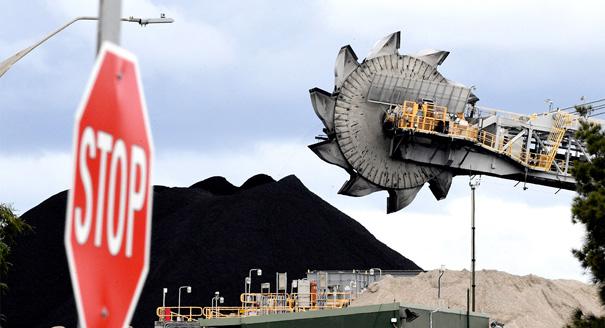
The global West is generally considered to be the part of the world that is most concerned about tackling climate change. In reality, there’s no unity among Western nations. The Australian government, for example, says openly that it’s not prepared to take drastic measures to reduce the carbon footprint of its economy. The main reason for this is that raw materials, in particular coal, form a major part of Australia’s exports, leaving the country little room for maneuver.
In this respect, Australia closely resembles Russia, where officials are also hoping for a smooth energy transition that retains as much fossil fuel use as possible. The similarity of their approaches could make Australia an important partner for Russia in international negotiations: after all, climate change has a history of creating some strange alliances. But coming together will not be easy. Russia faces serious climate-related problems, and the solutions to them will be more demanding than any of the solutions Australia needs to embrace.
Climate change is not a new topic in Australian politics, and surveys show that the number of people there concerned about the problem is growing. Yet for the moment at least, this concern has not translated into mass demand for the Australian economy to rapidly reduce its dependence on fossil fuels.
Climate change policy was one of the main topics of the 2019 election. Yet the current center-right Liberal-National coalition government ran on a platform of retaining Australia’s minimum obligations on carbon emission reduction (26–28 percent by 2030 from 1990 levels). The opposition Labor Party and the Green Party, meanwhile, have pushed for more ambitious emission reduction targets.
The position of Australia’s government and the public is understandable: any attempt to reduce emissions could end up hitting the country’s traditional sources of wealth. Australia is a commodity exporter that depends on the sale of raw materials: it’s the world’s biggest coal exporter, for example.
Prime Minister Scott Morrison has said he believes Australia’s coal industry will be around for decades to come, and he does not intend to make people pay for decarbonization. There are good reasons to believe he is right: demand for Australian coal seems unlikely to fall in the near future. Even if there is a decline in demand for coal for power generation, it will be compensated for by rising demand from metallurgy.
Another important Australian export is agricultural produce, particularly livestock: also an industry responsible for significant greenhouse gas emissions, especially methane. It was for this reason that, at the recent COP26 UN conference on climate change in Glasgow, Australia refused to commit to reducing methane emissions by 30 percent by 2030, even though this declaration was backed by the United States and the European Union. Methane has considerably more powerful greenhouse properties than carbon dioxide, but dissipates far quicker, which means that reducing output is a quick way to curb rising temperatures. Still, Australia’s refusal to sign the methane declaration does not yet make it an outcast. Major natural gas producers like Qatar and Russia didn’t sign either.
A recent statement by Morrison that Australia will seek to reduce its greenhouse emissions via technological progress and energy efficiency has loud echoes of Russia’s position. President Vladimir Putin has also spoken many times about the importance of energy efficiency.
Indeed, Australia is hoping for the emergence of new technology, such as carbon capture technology and hydrogen production, that would allow its mining industry to find a new niche. One recent Australian joint venture with Japan involves the manufacturing of hydrogen from brown coal and the capture and storage of carbon dioxide.
Again, there are similarities in this respect with Russia, where the government is trying to promote the use of existing technologies in emissions reduction and move toward hydrogen production. But will the similarities be enough for the two countries to become allies at international climate change negotiations? The answer is likely “no.”
For a start, there are important differences. Despite its reputation as a gas station, Russia still has a greater wealth of technological skills and knowledge at its disposal than Australia. For example, the Russian government is keen to use nuclear energy to reduce emissions, thereby gaining orders for its nuclear industry and support for nuclear technology development. Although Australia is an exporter of uranium, it’s not betting on nuclear energy in the same way, and is skeptical of the idea of building new nuclear power stations on Australian soil.
While Russia and Australia are both targeting hydrogen production, Russia’s hopes for hydrogen production technology are not just aimed at supplying the necessary raw materials, as Australia’s are. Instead, Russia’s state atomic agency, Rosatom, is planning to produce zero-carbon hydrogen using nuclear power or green energy, revealing how Russia is counting on using its technological know-how to enter the hydrogen market.
Russia also differs in that an important role is played in its exports by metal and chemical products, fertilizer, and cement. These are industrial goods with a large carbon footprint and will fall under the EU’s carbon border adjustment mechanism. Not only will Australia’s raw materials not be affected by this policy change; for Australia, the European market is far less important than the Asian market.
Finally, Russia’s geopolitical ambitions are radically different to those of Australia, and it will likely face far more significant consequences if it takes no action on climate change. For the moment, global warming is not an issue in the standoff between the great powers, and this leaves Russia a choice. It can seek points of contact and scope for joint work with the United States and other influential Western countries, or try to forge an alliance with those who can afford to ignore the climate agenda. Ultimately, the first option is likely to be more attractive, particularly considering that shared beliefs about fossil fuels—as with Australia—do not translate into a readiness to show solidarity with Russia on other issues, including global security.
This article was published as part of the “Relaunching U.S.-Russia Dialogue on Global Challenges: The Role of the Next Generation” project, implemented in cooperation with the U.S. Embassy to Russia. The opinions, findings, and conclusions stated herein are those of the author and do not necessarily reflect those of the U.S. Embassy to Russia.
Stanislav Kuvaldin

In the latest Five-Year Plan, the Chinese president cements the shift to an innovation-driven economy over a consumption-driven one.

Damien Ma

Rather than climate ambitions, compatibility with investment and exports is why China supports both green and high-emission technologies.

Mathias Larsen
“Involution” is a new word for an old problem, and without a very different set of policies to rein it in, it is a problem that is likely to persist.

Michael Pettis

While China's investment story seems contradictory from the outside, the real answers to Beijing's high-quality growth ambitions are hiding in plain sight across the nation's cities.

Yuhan Zhang

China's stimulus addiction cannot go on forever. Beijing still has policy space to clean up the country's massive debt issue, but time is running short.
Michael Pettis