

Commentary
But their "principal to principal" model will only be as effective as the political strength of each leader back home.
Damien Ma
{
  "authors": [
    "Cornelius Adebahr",
    "Barbara Mittelhammer"
  ],
  "type": "other",
  "centerAffiliationAll": "dc",
  "centers": [
    "Carnegie Endowment for International Peace",
    "Carnegie Europe"
  ],
  "collections": [
    "Europe’s Southern Neighborhood"
  ],
  "englishNewsletterAll": "ctw",
  "nonEnglishNewsletterAll": "",
  "primaryCenter": "Carnegie Europe",
  "programAffiliation": "EP",
  "programs": [
    "Europe"
  ],
  "projects": [],
  "regions": [
    "Middle East",
    "Europe",
    "Iran",
    "Western Europe"
  ],
  "topics": [
    "Foreign Policy",
    "EU",
    "Political Reform"
  ]
}
Source: Getty
Marginalized groups in Iran are disproportionately affected by the regime’s systemic repression and by the country’s socio-economic and ecological crises. The EU must integrate these groups’ perspectives into its policies and work with civil society to address Tehran’s human rights violations.
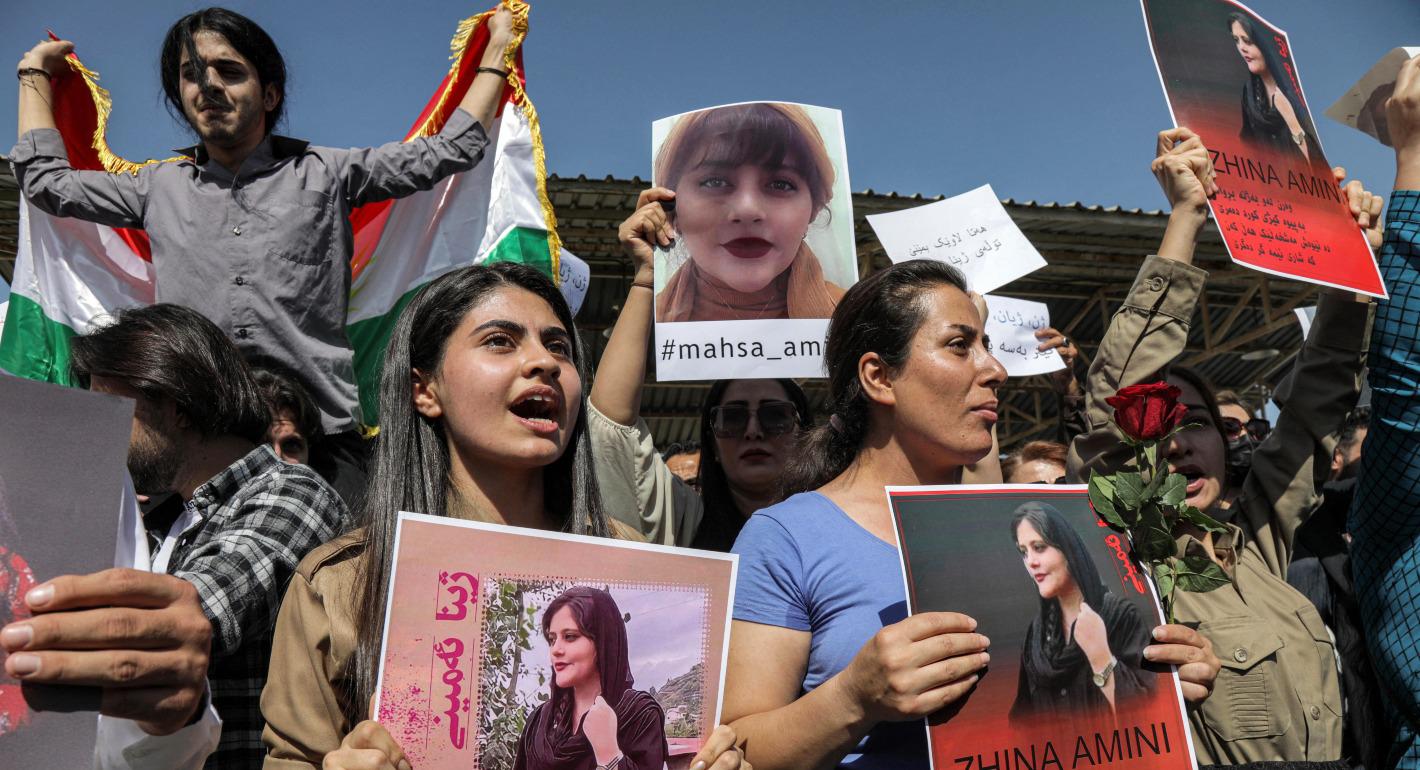
The revolt that has gripped Iran for nearly a year has exposed deep layers of systemic and violent oppression. It has also highlighted the country’s severe economic and environmental crises, which have hit people in peripheral regions especially hard. Marginalized groups face particularly violent state repression: the regime is targeting minority groups with arbitrary arrests, torture, sexual and gender-based violence, forced disappearances, and executions. As a consequence, the number of individuals with minority backgrounds among the protesters killed or sentenced to death is disproportionately high. People who face multiple layers of discrimination, such as women or members of the LGBTQ community, are confronted with both state repression and a societal backlash in their own communities.
Yet, this impact on already marginalized actors and their roles in the revolt have received scant international attention. To include their perspectives, however, is relevant for an actor like the EU not only to fully understand developments in Iran but also to grasp the overall sociopolitical context and refine the union’s response.
The Iranian regime’s violent response to the ongoing revolt builds on decades of systemic discrimination to restrict the country’s cultural, political, civic, and socioeconomic spheres. Yet, the disproportionate effects of repression on Iran’s already marginalized communities have been poorly understood internationally. To increase its political leverage, the EU should coordinate with established civil society groups to draw international attention to Tehran’s human rights violations and expand sanctions against those responsible for the persecution. In the longer term, the EU needs to develop a strategic framework to work with and support Iranian civil society, especially marginalized actors, on a sustainable basis.
Former Nonresident Fellow, Carnegie Europe
Cornelius Adebahr was a nonresident fellow at Carnegie Europe. His research focuses on foreign and security policy, in particular regarding Iran and the Persian Gulf, on European and transatlantic affairs, and on citizens’ engagement.

Barbara Mittelhammer
Barbara Mittelhammer is an independent political analyst and consultant. Her research focuses on human security, gender in peace and security, feminist foreign policy, and the role of civil society in foreign policy making.
Carnegie does not take institutional positions on public policy issues; the views represented herein are those of the author(s) and do not necessarily reflect the views of Carnegie, its staff, or its trustees.

But their "principal to principal" model will only be as effective as the political strength of each leader back home.

Damien Ma

U.S. unpredictability has allowed China to capitalize on its positioning as the “responsible great power”. Paradoxically, the more China wins the perception game, the more likely expectations will rise for Beijing to deliver not just words but to demonstrate with its deeds.

Chong Ja Ian

Hanoi and Beijing have long treated each other as distant cousins rather than comrades in arms. That might be changing as both sides draw closer to hedge against uncertainty and America’s erratic behavior.

Nguyễn Khắc Giang

Across Asia, China is better positioned to withstand energy shocks from the fallout of the Iran war. Its abundant coal capacity can ensure stability in the near term. Yet at the same time, the country’s energy transition away from coal will make it even less vulnerable during the next shock.
Damien Ma

Malaysia’s chairmanship sought to fend off short-term challenges while laying the groundwork for minimizing ASEAN’s longer-term exposure to external stresses.

Elina Noor