

Commentary
Nathan J. Brown
{
  "authors": [
    "Nathan J. Brown"
  ],
  "type": "commentary",
  "centerAffiliationAll": "",
  "centers": [
    "Carnegie Endowment for International Peace",
    "Malcolm H. Kerr Carnegie Middle East Center"
  ],
  "englishNewsletterAll": "",
  "nonEnglishNewsletterAll": "",
  "primaryCenter": "Malcolm H. Kerr Carnegie Middle East Center",
  "programAffiliation": "",
  "regions": [
    "United States",
    "Israel",
    "Palestine",
    "Levant"
  ]
}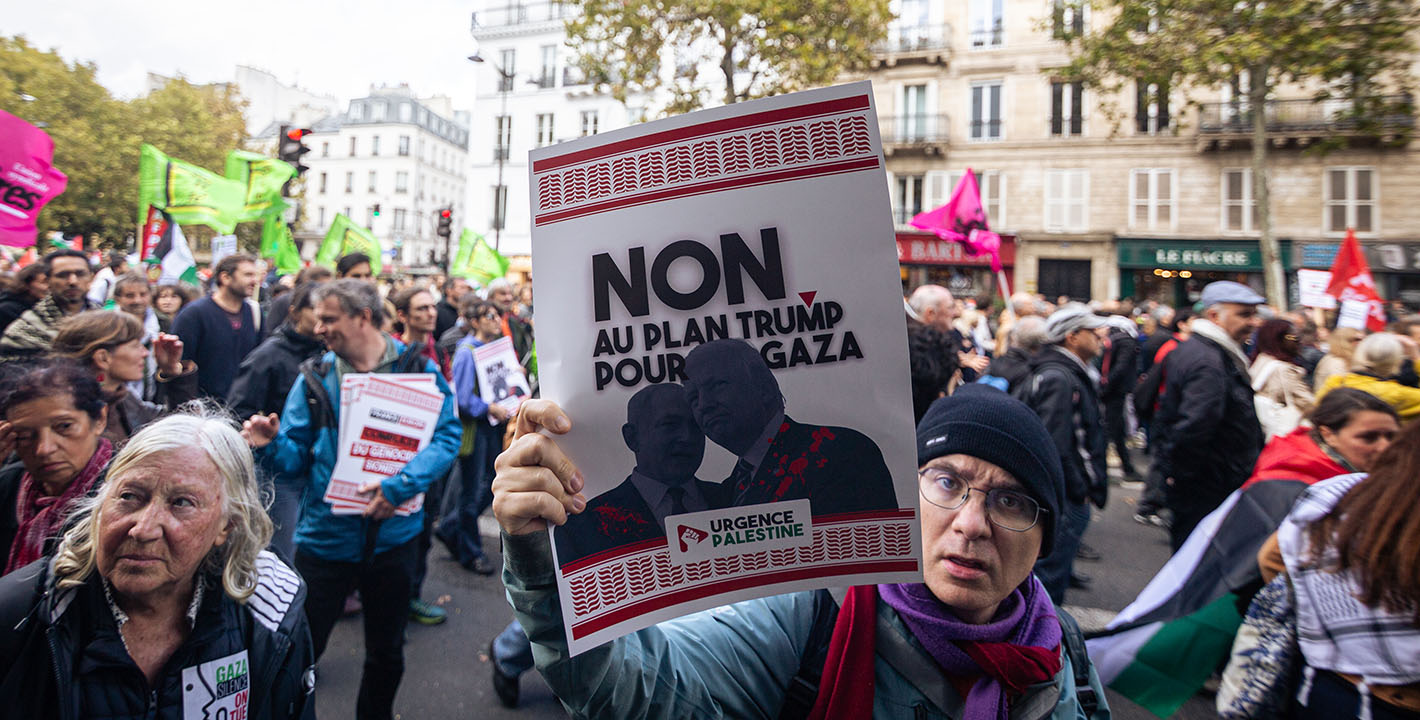
Source: Getty
The simple conclusion is that the scheme will bring neither peace nor prosperity, but will institutionalize devastation.
The conventional wisdom on Donald Trump’s Gaza plan has finally arrived at a conclusion that was too often an unspoken truth from the moment of its unveiling: it is not likely to produce peace or prosperity. But to say simply that the plan has stalled misses the point. Even as its fulsome promises dissolve, it continues to shape the political field, foreclosing alternatives, deepening Palestinian decay, and hardening a reality that is less a transition to peace than the slow institutionalization of devastation. Its significance lies less in what it is accomplishing than in the disruption, delay, and decay it is fostering.
In September 2025, Trump issued a 20-point plan that was said to constitute a “Comprehensive Plan to End the Gaza Conflict.” Three of those points—most notably a ceasefire in place and a prisoner release—retain some limited viability today, though the “ceasefire” has come to mean less a cessation of hostilities than a reduction in their intensity. Some of the remaining points voiced vague aspirations or hortatory hopes—about a “New Gaza,” “miracle cities,” and “exciting development ideas.” Others contained more specific provisions, but those were never accepted by all parties. Each actor treated the plan as a buffet, selecting phrases to embrace while expressing distaste for the rest.
So it is somewhat surprising that the sputtering of the plan has become newsworthy. The pastiche of pledges, platitudes, and long-circulating proposals simply bundled unpromising ideas together with little attention to coherence, sequence, or enforcement. Month after month, international actors have dutifully conferred and sketched plans for reconstruction, stabilization, international forces, conflict-ending diplomacy, and governance that bear little relation to what the decisive actors have been quite explicit in saying they will not do. But these pointless discussions do not make the Trump plan a dead letter. Just the opposite. The plan’s most enduring effects may lie less in the institutions it builds than in the alternatives it helps close off, and the way it hardens temporary realities into new and pernicious forms.
What has not happened is instructive. Reconstruction remains a dead letter, unless one chooses to call schooling in makeshift tents and somewhat more secure relief supplies “reconstruction.” Israel continues to occupy nearly half the territory, in clear contradiction of the plan’s provision for handover to a transitional authority backed by an international security force. And that points to two further absences: there is no real transitional authority and there is no international security force. There is a Board of Peace that has met and has a charter, but it seems to play no operational role, nor is it clear that it has money. It is certainly no alternative to the United Nations—not in the way its architects seemed to promise and its critics feared.
But these non-events have consequences. Those are most significant on the ground in Gaza. Israel has been explicit in rejecting the plan’s promise of an eventual return of the Palestinian Authority (PA) after “reform.” The United States has been almost as explicit in abandoning the PA to Israeli strangulation. It has not even shown verbal interest in clarifying what “reform” would mean. Indeed, the Trump plan has marginalized the PA while blocking the emergence of any plausible alternative. Yes, an ersatz “transitional authority” has been formed. But while it calls itself the National Committee for the Administration of Gaza, the United States has worked with Israel not only to sever any connection with the PA in Ramallah, but also to keep this body watching events from a hotel in Cairo.
Some of those close to current arrangements hint at efforts by the United States to devise wholly new administrative structures and processes disconnected from any Palestinian national leadership whatsoever. The fact that these efforts seem, for now, to be foundering suggests that their main effect is not to create a new center of authority but simply to mask the deterioration of the existing one.
However, if there is no central authority in Gaza, there are local ad hoc structures, municipalities, community groups, and remnants of administrative life struggling to reemerge. In areas not directly occupied by Israel, they often answer to Hamas, or at least operate in its shadows, only occasionally and gingerly challenging it.
Much the same can be said for security. It is not merely that the International Stabilization Force has only putative international membership, cannot stabilize, and has no force. Its very nonexistence blocks alternatives from arising, leaving Gaza divided between direct Israeli occupation and continued Hamas domination.
The arrangements now being forged are not part of a state in the modern sense of the term. Gaza has become a contested zone containing 2 million people under varying forms of control and with large gaps in governance. In fact, there is no easy term for what Gaza is becoming. The most apt words may be ones more current a millennium ago than today: “march” in the antiquated English usage of “borderlands,” or thughur, the Arabic term evoking the Muslim borders with the Byzantine Empire.
But for all the ways it serves Israeli policy, the emerging order is more complicated than a straightforward American imposition of Israeli domination. The United States has inserted itself directly into security, aid, and governance arrangements in Gaza. Or rather, a very small number of American officials have done so, leaving the rest of the U.S. government, many Israeli officials, and most international actors scrambling to accommodate themselves to a policy known in detail to perhaps half a dozen people. Largely out of public view, there is official Israeli uneasiness. Trump’s mercurial nature has served Israeli purposes rather well to date, but there is no telling what tomorrow—or a different leader—might bring.
And Hamas? The Trump plan is quite clear that its members are free to leave Gaza, obliged to disarm if they remain, and barred from any role, “direct or indirect,” in governance. Indeed, Hamas is not merely to be subject to these conditions; the Trump plan says it will agree to them. Of course, it has not. But Hamas’s refusal to disarm and fully disavow governance does not leave it unaffected. It now appears more able to operate above ground than it did before the plan. That means the Trump ceasefire has not simply frayed but is shaky, as Israeli leaders read the plan as permitting a resumption of military operations.
And what of the Board of Peace? In the language of its own charter, it was initially presented as a “more nimble and effective international peace building body,” a claim that critics took as a bid to replace the United Nations. In fact, it is proving to be neither nimble nor effective. It has accomplished little, and its structure makes it unviable as a peacebuilding body. Some accounts report drily that it “would be difficult” for the board to accomplish its first task in Gaza. In fact, it is designed for no such purpose. It is built instead as a vehicle for its chairman, Donald Trump himself, who serves in that position for as long as he wishes, determines or approves its membership, meetings, and agenda, and—if any ambiguity remained—interprets its rules.
Constructed as a personal and potentially lifetime vehicle for Trump (and indeed one that might outlive him, since he selects his own successor), the Board of Peace can serve only as a mechanism for implementing his wishes—and potentially for placing enormous funds under his personal control. While it continues to founder operationally, its finances could still prove a significant part of its legacy if states contribute directly to it. It is not clear that any have, though Trump himself declared, without elaboration, that the United States was giving his board $10 billion. This is not so much a replacement for the United Nations as a marginalization of it—welcomed, bizarrely, by the Security Council itself before anybody had a clear idea of what the board actually was.
In sum, the Trump plan is hardly irrelevant. That it will not deliver a peaceful resolution of a bloody conflict does not make it ineffectual. It is freezing in place an almost indescribable governance and security situation; codifying the irrelevance of Palestinian national leadership; keeping the door open to renewed military action; and edging out experienced international actors and multilateral bodies. And it has done so in a flurry of self-flattery and aggrandizement that, as many Egyptians have remarked to me, recalls the reign of Ramses.

Nonresident Senior Fellow, Middle East Program
Nathan J. Brown, a professor of political science and international affairs at George Washington University, is a distinguished scholar and author of nine books on Arab politics and governance, as well as editor of five books.
Recent Work
Nathan J. Brown
Nathan J. Brown
Carnegie does not take institutional positions on public policy issues; the views represented herein are those of the author(s) and do not necessarily reflect the views of Carnegie, its staff, or its trustees.
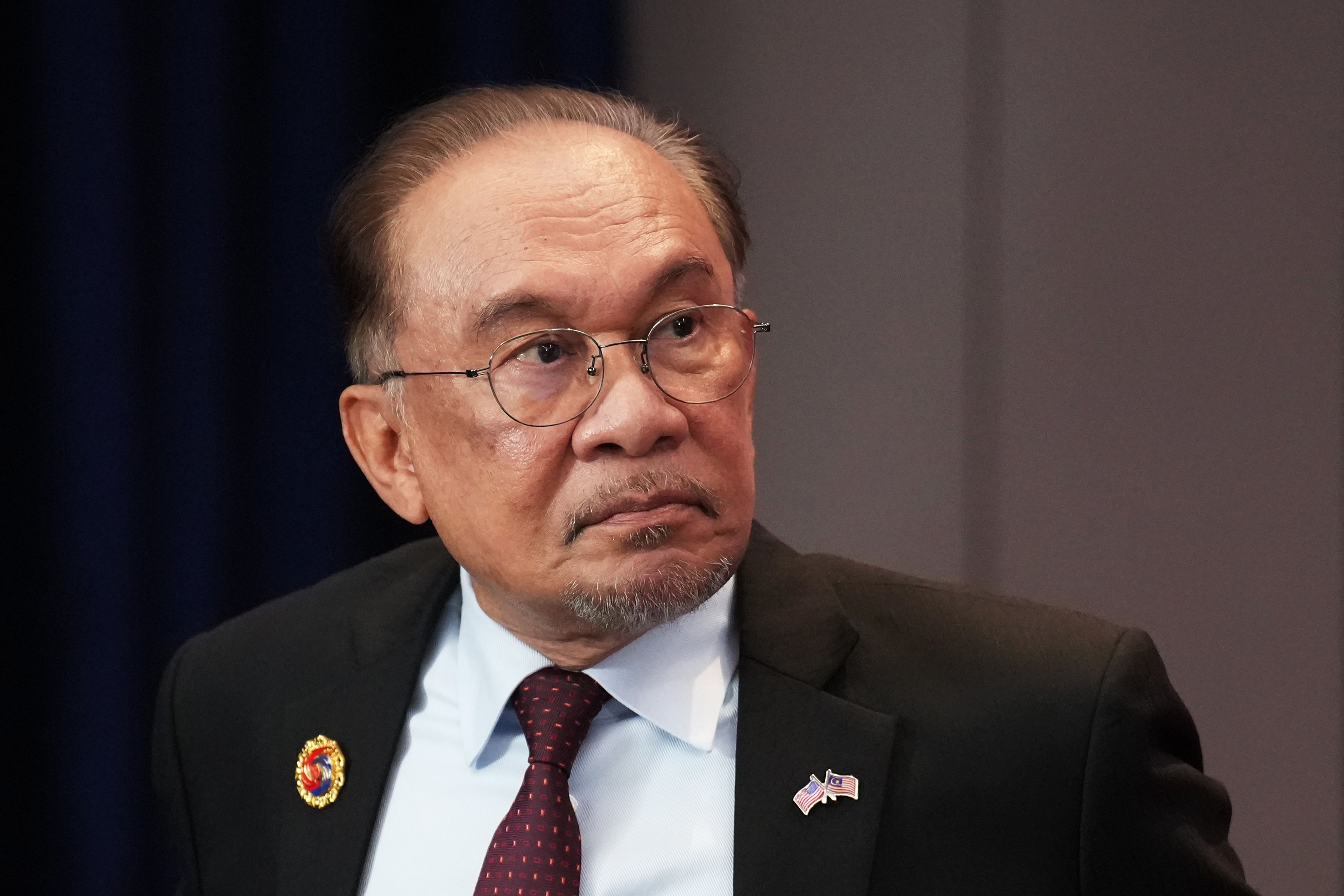
For Malaysia, the conjunction that works is “and” not “or” when it comes to the United States and China.

Elina Noor

Regulation, not embargo, allows Beijing to shape how other countries and firms adapt to its terms.

Alvin Camba
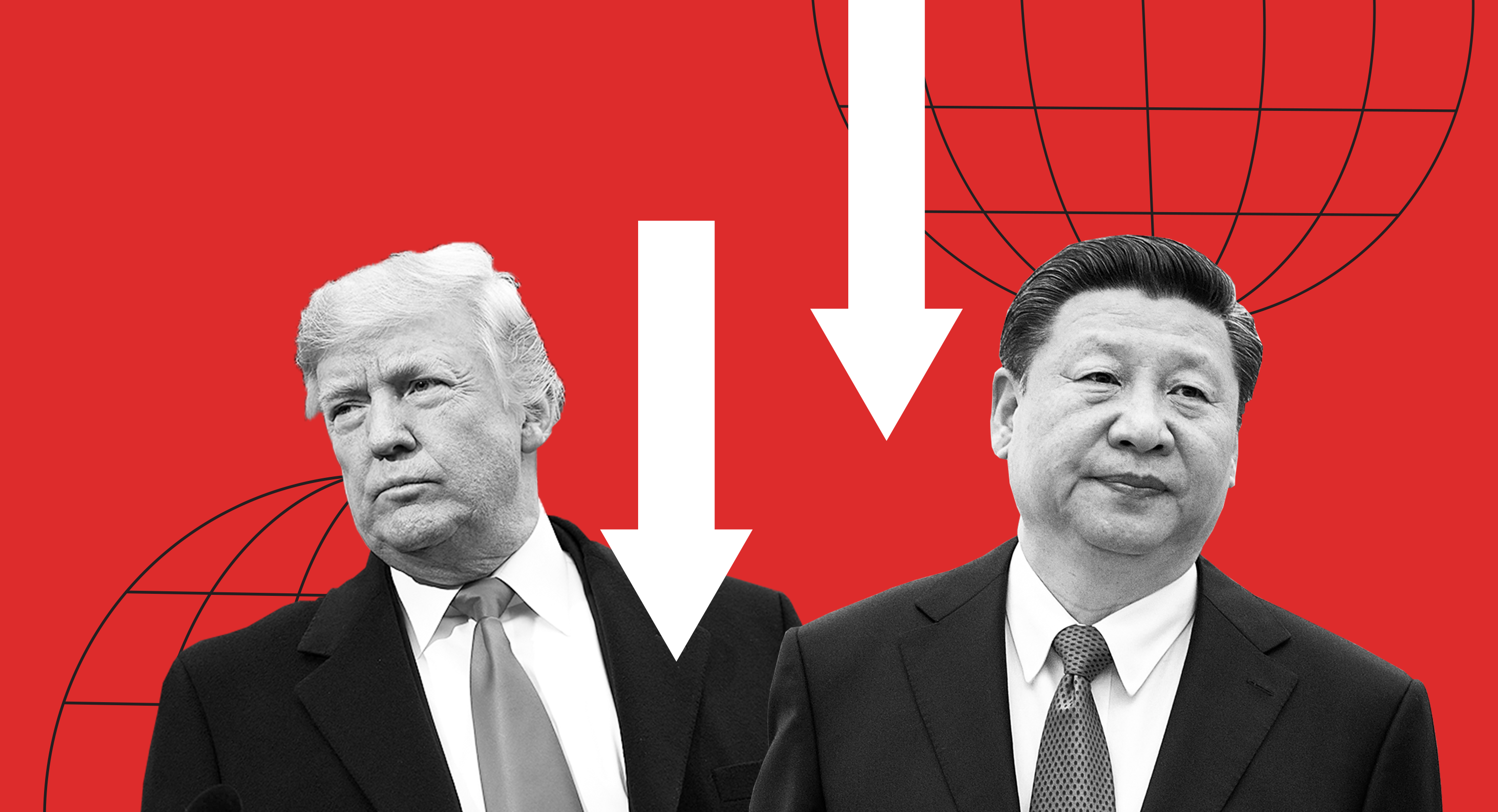
Beijing believes that Washington is overestimating its own leverage and its ability to handle the trade war’s impacts.


Rick Waters, Sheena Chestnut Greitens
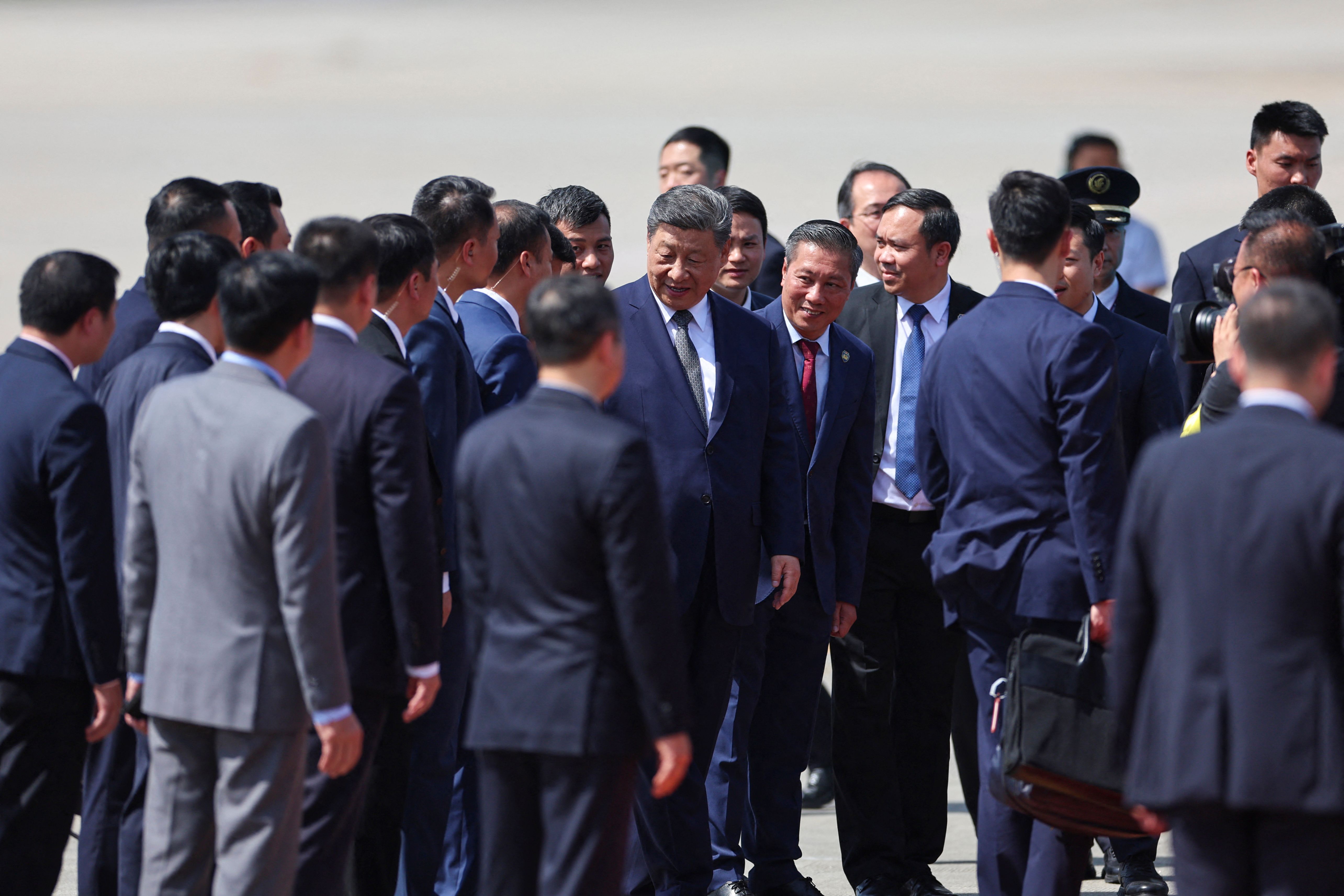
Tapping our network of China experts in the region, Carnegie China offers this latest “China Through a Southeast Asian Lens” report to offer preliminary assessments of whether the U.S. effort to reshape the global trading order will lead countries in the region to tilt toward Beijing.



Selina Ho, Khin Khin Kyaw Kyee, Joseph Ching Velasco, …
Beijing is trying to navigate the overall situation regarding Ukraine, especially the substance of interactions between Washington and Moscow.



Ellen Nakashima, Zhao Long, Pavlo Klimkin, …