

Other
Fiona Hill, Anatol Lieven, Thomas de Waal
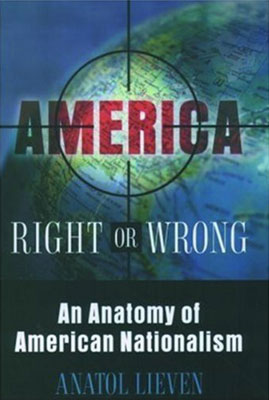
In this controversial critique of America's role in the world, Lieven contends that U.S. foreign policy since 9/11 has been shaped by the special character of our national identity, which embraces two contradictory features, the American Creed and Jacksonian nationalism.
Source: Oxford University Press

About the Author
Anatol Lieven is senior associate at the Carnegie Endowment and is author of Chechnya: Tombstone of Russian Power. A journalist, writer, and historian, Lieven writes on a range of security and international affairs issues. Previously, he was editor of Strategic Comments, published by the International Institute for Strategic Studies (IISS) in London.
Reviews
"...a book different from most of this genre...sets out to find its answers not in the dialogue of the oval office but in the US's character and history. The great virtue of this book is that it is a reminder that the policies did not spring only from Bush's convictions, but are embedded in tradition."
—TIMES Online
"...provacative and scholarly work..."
—Publishers Weekly
"...America Right or Wrong shows a serious intellectual talent...asks important questions and makes readers review some of their own most cherished convictions."
—Washington Post Book World
“A searching examination of the deep-seated sources of American behavior, Anatol Leiven’s America Right or Wrong takes on what others evade-the topics that, whether for good or ill, make us who we are and provide the engine of U. S. foreign policy."
—Andrew J. Bacevich, Author of the forthcoming The New American Militarism

Former Senior Associate
Recent Work

Fiona Hill, Anatol Lieven, Thomas de Waal
Carnegie does not take institutional positions on public policy issues; the views represented herein are those of the author(s) and do not necessarily reflect the views of Carnegie, its staff, or its trustees.

China’s political future will be shaped between now and next October. As the Communist Party enters its intense “campaign season” to prepare for a major political transition in 2027, reading Beijing's actions and responses may become more difficult as domestic politics weigh on its behavior more than usual.

Damien Ma

The nuclear relationship between China and the United States is increasingly shaped by widening perception gaps rather than deliberate strategic design.

Tong Zhao

But their "principal to principal" model will only be as effective as the political strength of each leader back home.
Damien Ma

U.S. unpredictability has allowed China to capitalize on its positioning as the “responsible great power”. Paradoxically, the more China wins the perception game, the more likely expectations will rise for Beijing to deliver not just words but to demonstrate with its deeds.

Chong Ja Ian

For Malaysia, the conjunction that works is “and” not “or” when it comes to the United States and China.

Elina Noor