• Commentary
  • Research
  • Experts
  • Events
Carnegie China logoCarnegie lettermark logo
U.S.-Russia Strategic Partnership against Nuclear Proliferation
Report

U.S.-Russia Strategic Partnership against Nuclear Proliferation

The United States and Russia should agree on concrete actions to strengthen the nonproliferation regime as a follow-up to the April 2008 Strategic Framework Declaration.

Link Copied
By Pierre Goldschmidt
Published on Jul 1, 2008

Additional Links

Full Text

Source: CSIS/IFRI Report

There are presently clear indications that we are about to see a revival of nuclear energy worldwide. It is important to make this expansion of nuclear energy for the production of electricity and desalinated water as safe and secure as possible. In the coming decade, however, the rate of this expansion will be limited by several factors: in recipient states, by the lack of an adequate industrial infrastructure or an insufficient nuclear safety culture with a truly independent control organization; and in supplier states, by a limited capacity to produce certain types of nuclear equipment, such as reactor vessels. Since there is no rush, we have time to “do” nuclear right. Doing it right means, in particular, putting stronger barriers to proliferation in place before, not after, new nuclear capabilities spread.

The present analysis has identified five areas (among many others) where the United States, Russia, and the European Union should closely cooperate in order to strengthen the nonproliferation regime: enforcing UN Security Council resolutions on Iran; addressing cases of noncompliance; improving security of supply and discouraging the spread of sensitive technologies; strengthening export criteria for the Nuclear Suppliers Group; and preparing the 2010 Nuclear Non-Proliferation Treaty review conference.

This study is part of a series being published by the joint CSIS/IFRI project “Europe, Russia, and the United States: Finding a New Balance,” which seeks to reframe the trilateral relationship for the relevant policymaking communities.

About the Author

Pierre Goldschmidt

Former Nonresident Senior Associate, Nuclear Policy Program

Goldschmidt was a nonresident senior associate at the Carnegie Endowment.

    Recent Work

  • Article
    A Realistic Approach Toward a Middle East Free of WMD

      Pierre Goldschmidt

  • Article
    Serious Deficiencies Exposed by Latest IAEA Safeguards Implementation Report

      Pierre Goldschmidt

Pierre Goldschmidt
Former Nonresident Senior Associate, Nuclear Policy Program
Pierre Goldschmidt
North AmericaUnited StatesCaucasusRussiaNuclear PolicyNuclear Energy

Carnegie does not take institutional positions on public policy issues; the views represented herein are those of the author(s) and do not necessarily reflect the views of Carnegie, its staff, or its trustees.

More Work from Carnegie China

  • Commentary
    When It Comes to Superpower Geopolitics, Malaysia Is Staunchly Nonpartisan

    For Malaysia, the conjunction that works is “and” not “or” when it comes to the United States and China.

      Elina Noor
  • Commentary
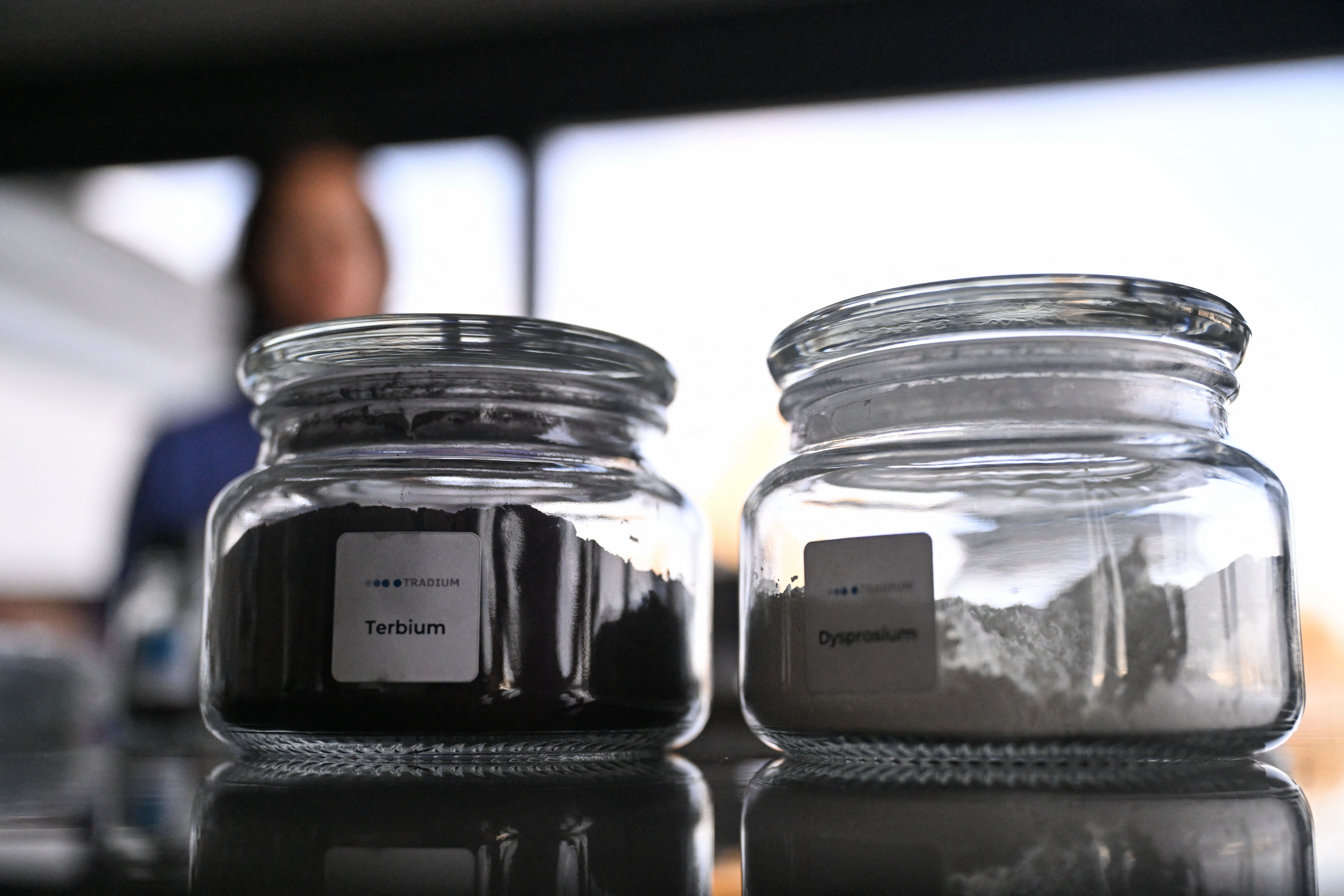
    Today’s Rare Earths Conflict Echoes the 1973 Oil Crisis — But It’s Not the Same

    Regulation, not embargo, allows Beijing to shape how other countries and firms adapt to its terms.
      Alvin Camba

  • Trump and Xi on a red background
    Commentary
    Emissary
    China Is Determined to Hold Firm Against Trump’s Pressure

    Beijing believes that Washington is overestimating its own leverage and its ability to handle the trade war’s impacts. 

      • Sheena Chestnut Greitens

      Rick Waters, Sheena Chestnut Greitens

  • Commentary
    A Second Trump Term: Will Southeast Asia Tilt Toward China?

    Tapping our network of China experts in the region, Carnegie China offers this latest “China Through a Southeast Asian Lens” report to offer preliminary assessments of whether the U.S. effort to reshape the global trading order will lead countries in the region to tilt toward Beijing. 

      • +6

      Selina Ho, Khin Khin Kyaw Kyee, Joseph Ching Velasco, …

  • Commentary
    Is China Willing to Influence Russia on the Ukraine War?

    Beijing is trying to navigate the overall situation regarding Ukraine, especially the substance of interactions between Washington and Moscow.

      • Ellen Nakashima
      • Zhao Long
      • +1

      Ellen Nakashima, Zhao Long, Pavlo Klimkin, …

Get more news and analysis from
Carnegie China
Carnegie China logo, white
Keck Seng Tower133 Cecil Street #10-01ASingapore, 069535Phone: +65 9650 7648
  • Research
  • About
  • Experts
  • Events
  • Contact
  • Careers
  • Privacy
  • For Media
Get more news and analysis from
Carnegie China
© 2026 Carnegie Endowment for International Peace. All rights reserved.