

Article
China has showcased its engineering prowess with small modular reactor demonstration projects. But turning these technological achievements into commercial success will be a greater challenge.
Tong Zhao

REQUIRED IMAGE
On February 4 the United States will join France, Germany, the United Kingdom, Russia and China to talk about Iran. This meeting will also be the first attended by the Obama administration. In the days following, the U.S. will need to resolve both substantive and procedural issues if diplomacy is to have a chance of stopping Iran short of acquiring nuclear weapon capabilities.
On February 4 the United States will join France, Germany, the United Kingdom, Russia and China to talk about Iran, one of the greatest challenges facing them all. This meeting will also be the first attended by the Obama administration. In the days following, the U.S. will need to resolve both substantive and procedural issues if diplomacy is to have a chance of stopping Iran short of acquiring nuclear weapon capabilities.
Should the U.S. seek a dialogue with Iran now, or hold back until the Iranian presidential elections?
The answer is now. In 2005, all predicted the victory of Hashemi Rafsanjani, Europeans and Americans have been as surprised as Iranians by the outcomes of their recent elections so it is absurd for outsiders to think that they can calculate how their diplomacy would tip Iranian voters. If the Ahmadinajad camp gets re-elected, negotiations thereafter would become even more problematic. Time is of the essence; the U.S. should not wait to develop and implement a strategy.
Should the U.S. approach and seek nuclear talks with Iran alone, or insist conducting nuclear diplomacy in conjunction with the EU-3 plus Russia and China?
In conjunction with the Europeans plus Russia and China. Nuclear talks with Iran alone are a trap. They would introduce unnecessary division and friction. The U.S. will lose critical leverage if it enters the talks without the support – and indeed the experience – of its European allies. It should also make every effort to win over Russia and China, since influence over Iran hinges on winning the widest possible international coalition.
If Iran agrees to join talks on the nuclear issue, should the allies put a time limit on progress or leave the nuclear diplomacy open-ended?
Put a time limit. Iranian leaders are wary of engaging the U.S. and already hint at the stalling tactics they will use to deflect the new Obama administration. Iranian leaders acknowledged that they used negotiations with Europe earlier to gain time to build nuclear capabilities. The clock is ticking as Iran continues to move toward achieving nuclear weapon capability.
Should the U.S. be open to a comprehensive agenda where the nuclear issue does not come necessarily first?
Risky. There are many issues to discuss with the Iranians. However, Tehran would likely overload the agenda to buy time and make the discussion as complex as possible, and the closer Iran gets to the bomb the more emboldened it will be on other issues. So the U.S. may address the full list of issues but must negotiate the nuclear issue first. It may start to normalize relations only after Iran has comprehensively suspended (at least temporarily) and reinstated fulsome collaboration with and intrusive verification (Additional Protocol and beyond) by the IAEA. Absent satisfaction on the nuclear issue, the U.S. must seek to strengthen sanctions quickly and should not rule out any action.
Should the U.S. pursue a dual-track strategy of seeking stronger sanctions against Iran paired with grander offers of cooperation if Iran complies with UNSC resolutions?
Absolutely. Stronger sanctions are necessary for the dialogue to succeed, and U.S. Treasury Secretary-designate Timothy Geithner already declared he would consider the full range of tools available to the U.S. Department of the Treasury, including unilateral measures. But the new administration should find ways to broaden its offers and to make them more attractive including by accepting the Iranian regime. In this respect, Barack Obama, who has never shared the idea that any nation belongs to an "axis of evil" would have more credibility than his predecessor if he proposes direct contact with Tehran or offer security assurances to the regime.
Should the U.S. continue to press for Iran to suspend now its fuel-cycle activities?
Yes. Enrichment is the essential missing link of Iran's bomb program, at a time when Iran is developing actively its missile capability. Throwing in the towel today would lift the last meaningful obstacle between Iran and the bomb. It would also signal to Iran's neighbors that we were not serious and it would increase their incentive to take whatever action they deem necessary. It would bolster the credibility of the hardliners in Tehran who from the very beginning contended that the Security Council requirements would and should be ignored. Finally, UNSC resolutions deserve respect first and foremost by its permanent members and compliance by all. The Obama administration would probably like to strengthen the UNSC in the coming years, not weaken it from the start.
The above arguments appear to be the best answer to those in the new administration who urge negotiating limits and conditions under which Iran would continue enrichment. Verification of Iran's program is already quite difficult today, and would become close to impossible if further enrichment is allowed. Last but not least, the UNSC should establish that Iranian withdrawal from the NPT would be treated as a threat to international peace and security, as would discovery of new evidence of Iranian clandestine fuel cycle or weaponization activity.
Thérèse Delpech is senior associate fellow at the Center for the Study of International Relations (CERI) in Paris, France; Ariel Levite is nonresident senior associate at the Carnegie Endowment for International Peace residing in Tel Aviv; George Perkovich is director of the nonproliferation program at the Carnegie Endowment for International Peace in Washington.
Thérèse Delpech

Senior Fellow, Nuclear Policy Program, Technology and International Affairs Program
Levite was the principal deputy director general for policy at the Israeli Atomic Energy Commission from 2002 to 2007.

Japan Chair for a World Without Nuclear Weapons, Senior Fellow
George Perkovich is the Japan Chair for a World Without Nuclear Weapons and a senior fellow in the Carnegie Endowment for International Peace’s Nuclear Policy Program. He works primarily on nuclear deterrence, nonproliferation, and disarmament issues.
Carnegie does not take institutional positions on public policy issues; the views represented herein are those of the author(s) and do not necessarily reflect the views of Carnegie, its staff, or its trustees.
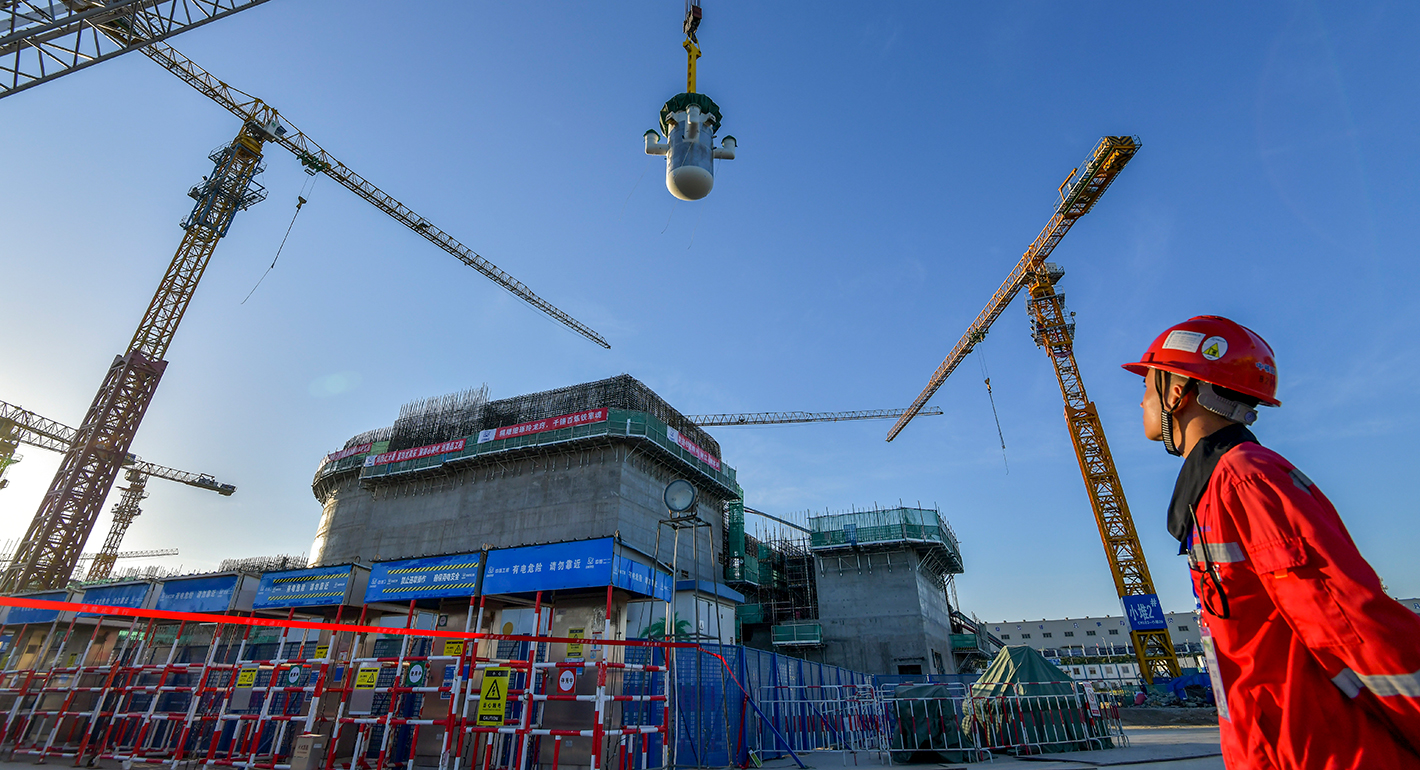
China has showcased its engineering prowess with small modular reactor demonstration projects. But turning these technological achievements into commercial success will be a greater challenge.

Tong Zhao

The nuclear relationship between China and the United States is increasingly shaped by widening perception gaps rather than deliberate strategic design.
Tong Zhao

But their "principal to principal" model will only be as effective as the political strength of each leader back home.

Damien Ma

U.S. unpredictability has allowed China to capitalize on its positioning as the “responsible great power”. Paradoxically, the more China wins the perception game, the more likely expectations will rise for Beijing to deliver not just words but to demonstrate with its deeds.

Chong Ja Ian

For Malaysia, the conjunction that works is “and” not “or” when it comes to the United States and China.

Elina Noor