

Regulation, not embargo, allows Beijing to shape how other countries and firms adapt to its terms.
Alvin Camba
Source: Getty
Rethinking the wisdom of relying on unstable Western economies for growth, the Arab world is increasingly focused on the diversification of its own economies.
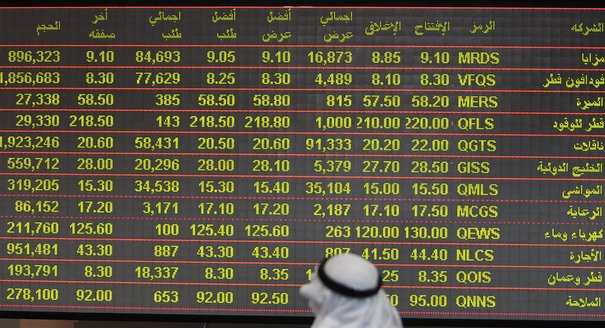
Western political and economic leaders, seeking desperately needed capital for their faltering economies, have put aside many of their concerns over Arab sovereign wealth funds (SWFs). But the Arab world is questioning the wisdom of building its financial future on the shaky foundations of Western economies, and increasingly focusing on the development and diversification of its own economies.
In this Carnegie Paper, produced in cooperation with the Arab Reform Initiative, editors Sven Behrendt and Bassma Kodmani, and a group of Arab economists, discuss the economic, political, and social influences that will determine Arab funds’ investment behavior in the years to come.
Key points:
Behrendt concludes:
“Moving forward, the investment strategies of Arab SWFs will most likely be based on a more holistic approach. Ideally, this would include taking into account the long-term financial needs of their societies, the long-term development and diversification strategies of their economies, as well as the long-term opportunities of select industries to serve in global markets in transition.”
Former Visiting Scholar, Middle East Center
Behrendt is an expert in global issues, international negotiations, conflict resolution, and corporate strategy. He previously served at the World Economic Forum in various management positions.
Bassma Kodmani
Carnegie does not take institutional positions on public policy issues; the views represented herein are those of the author(s) and do not necessarily reflect the views of Carnegie, its staff, or its trustees.
Regulation, not embargo, allows Beijing to shape how other countries and firms adapt to its terms.
Alvin Camba
Rather than climate ambitions, compatibility with investment and exports is why China supports both green and high-emission technologies.
Mathias Larsen
“Involution” is a new word for an old problem, and without a very different set of policies to rein it in, it is a problem that is likely to persist.
Michael Pettis
While China's investment story seems contradictory from the outside, the real answers to Beijing's high-quality growth ambitions are hiding in plain sight across the nation's cities.
Yuhan Zhang
China's stimulus addiction cannot go on forever. Beijing still has policy space to clean up the country's massive debt issue, but time is running short.
Michael Pettis






