The recent announcement by Algeria’s president, Abdelaziz Bouteflika, that he will end the country’s 19-year-old state of emergency law was welcome news to opposition parties and civil society groups. But unless its leaders quickly address the major structural problems plaguing its economy and increase government oversight, Algeria’s protests will likely grow.
While socio-economic conditions are similar in Algeria, Egypt, and Tunisia–including high levels of unemployment, particularly among youth, widespread corruption and bureaucracy, and lack of transparency–Algeria is different because of its rich petroleum and gas resources.
Algeria’s oil reserves exceed 10 billion barrels, with daily production estimated at 1.2 million barrels. But at a time when a barrel of oil fetches $100 (U.S.) on the global market, Algerians are not seeing the effects in their standard of living. Instead, the average citizen sees slowing economic growth, spreading poverty and unemployment, declining purchasing power, and unaffordable housing.
What angers the Algerian street is not limited to the soaring prices of basic commodities such as sugar, olive oil, and flour, which consume more than 40 percent of the average family budget and led to recent protests. The street has come to understand that there is blatant mismanagement of the revenues the country generates from oil and gas, which exceeded $55 billion during 2010.
More than fifteen years after the beginning of the structural reform program and the opening up of the private sector, the Algerian economy still suffers from multiple structural defects. The government should make firm steps to address the underlying problems.
First, Algeria relies excessively on the oil and gas sector. By the end of 2010, the hydrocarbon sector provided 35 percent of GDP, the equivalent of 98 percent of exports and 70 percent of budget revenues. Yet the oil and gas sector contributes less than 5 percent of job creation. In the meantime, the GDP share of agriculture and industry dropped from 11 percent and 10 percent to 8 percent and 5 percent, respectively, over the past decade.
Second, Algeria’s government lacks a strategic vision to develop and modernize the economy. Algeria has launched a five-year economic program for the 2010-2014 period, costing $286 billion. The program includes a large number of projects in infrastructure, education, health care, housing, and other areas.
However, this initiative boils down to a list of projects prepared by various government departments and merged together. A fragmented sectoral approach tends to prevail at the expense of a globally consistent perspective.
The program provides the impression that the Algerian government lacks a real development strategy. It focuses instead on the numbers of schools, hospitals, jobs, and houses without debating policies and qualitative targets in education, health care, employment, and housing. Yet these fields need deep change in policies and not just more of the same.
Third, public investments although necessary are insufficient to achieve steady economic development in the mid and long term. Sustainable growth depends on the private sector’s involvement in investment, production, and employment.
The government needs to create a suitable legal environment to promote private initiatives and stimulate domestic and foreign private investments. The business environment in Algeria is characterized by weak infrastructure, complex administrative procedures, lack of transparency, and unstable regulations.
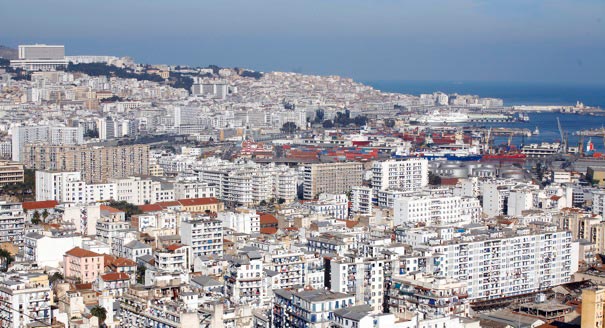
Algeria suddenly constrained foreign investments, for example, requiring at least 51 percent domestic capital for new projects. The World Bank Doing Business report of 2011 ranked Algeria 136 of 183 countries for overall ease for businesses there—behind Tunisia, Morocco, and most other countries in the Middle East and North Africa. Similarly, the Transparency International report rated Algeria poorly because of its public finance mismanagement and the prevalence of bribery. The scandals involving the national fuel company (Sonatrach) and the port of Algiers illustrate such practices.
Fourth, effective public spending cannot be achieved without strong oversight and accountability mechanisms. Parliament’s oversight role must be strengthened by scrutinizing execution of financial laws; it should also be able to form fact-finding commissions to investigate public finance scandals. The judiciary’s independence must be bolstered so it that can fully investigate cases and punish wrongdoers.
Fifth, Algeria’s banking sector, which is still largely publicly owned, is a weak contributor to the economy. The banking credit provided to the private sector does not exceed 24 percent of GDP in Algeria, while it exceeds 50 percent of the GDP in Tunisia and 78 percent in Morocco. This weakness in availing funding hinders the development of the private sector and prevents potential entrepreneurs from making large investments.
Algeria’s oil and gas export revenues have enabled its government, until now, to buy social peace by subsidizing basic commodities, providing social benefits, and increasing civil servants’ wages. Over the decades, the regime failed to respond to structural policy shifts and opted for short-term fixes, along with an increased role for the security apparatus to crack down on the opposition and curb the protests.
However, the street is demanding more from the government—including an immediate and fundamental review of policies. It is also calling for increased power for legislative and judicial authorities, and for a development strategy that trickles down to various social groups and regions. If these demands are not met, authorities may be forced to make concessions no less than what the Tunisians obtained and what the Egyptians are seeking.