• Commentary
  • Research
  • Experts
  • Events
Carnegie China logoCarnegie lettermark logo
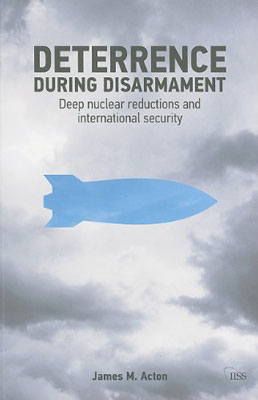
Deterrence During Disarmament: Deep Nuclear Reductions and International Security
Book

Deterrence During Disarmament: Deep Nuclear Reductions and International Security

Although Russia, the United States, and American allies have been loath to downsize their nuclear arsenals, deep reductions would not undermine a nation’s security since arsenal size has little bearing on effectiveness of deterrence.

Link Copied
By James M. Acton
Published on Mar 14, 2011

Source: International Institute for Strategic Studies

After two decades of stagnation, Russia and the United States have pledged their support for reductions in nuclear warheads. But the vision of mutual disarmament remains plagued by doubts on all sides. Russia, the United States, and American allies struggle as ever with the notion that downsizing would be a step into the unknown, and hold on to the belief that, when it comes to deterrence, size matters. Until now, the reasons behind this anxiety—and whether it is justified—have not been properly explored. Based on a series of interviews with opinion formers in Russia and the United States, this Adelphi paper by Carnegie's James Acton examines long-held concerns about the effectiveness of deterrence (including extended deterrence) at low numbers, the possible incentives to use nuclear weapons first in a crisis, the potential for rearmament, and risks surrounding nuclear multipolarity.

Deep reductions in nuclear arsenals are much less problematic than commonly perceived, as the experience of the USSR and the United States in the early Cold War, and China, France, and the United Kingdom over a longer period demonstrates. Taking into account these examples, together with potential stumbling blocks and crisis scenarios, this book contends that arsenal size has little bearing on many of the security challenges usually associated with low numbers, and accordingly, that making deep cuts would not undermine international security.

Click here for further information on ordering copies of this book.

About the Author

James M. Acton

Jessica T. Mathews Chair, Co-director, Nuclear Policy Program

Acton holds the Jessica T. Mathews Chair and is co-director of the Nuclear Policy Program at the Carnegie Endowment for International Peace.

    Recent Work

  • Other
    Unpacking Trump’s National Security Strategy
      • Cecily Brewer
      • +18

      James M. Acton, Saskia Brechenmacher, Cecily Brewer, …

  • Commentary
    Trump Has an Out on Nuclear Testing. He Should Take It.

      James M. Acton

James M. Acton
Jessica T. Mathews Chair, Co-director, Nuclear Policy Program
James M. Acton
North AmericaUnited StatesCaucasusNuclear Policy

Carnegie does not take institutional positions on public policy issues; the views represented herein are those of the author(s) and do not necessarily reflect the views of Carnegie, its staff, or its trustees.

More Work from Carnegie China

  • Commentary
    When It Comes to Superpower Geopolitics, Malaysia Is Staunchly Nonpartisan

    For Malaysia, the conjunction that works is “and” not “or” when it comes to the United States and China.

      Elina Noor

  • Commentary
    Today’s Rare Earths Conflict Echoes the 1973 Oil Crisis — But It’s Not the Same

    Regulation, not embargo, allows Beijing to shape how other countries and firms adapt to its terms.
      Alvin Camba
  • Trump and Xi on a red background
    Commentary
    Emissary
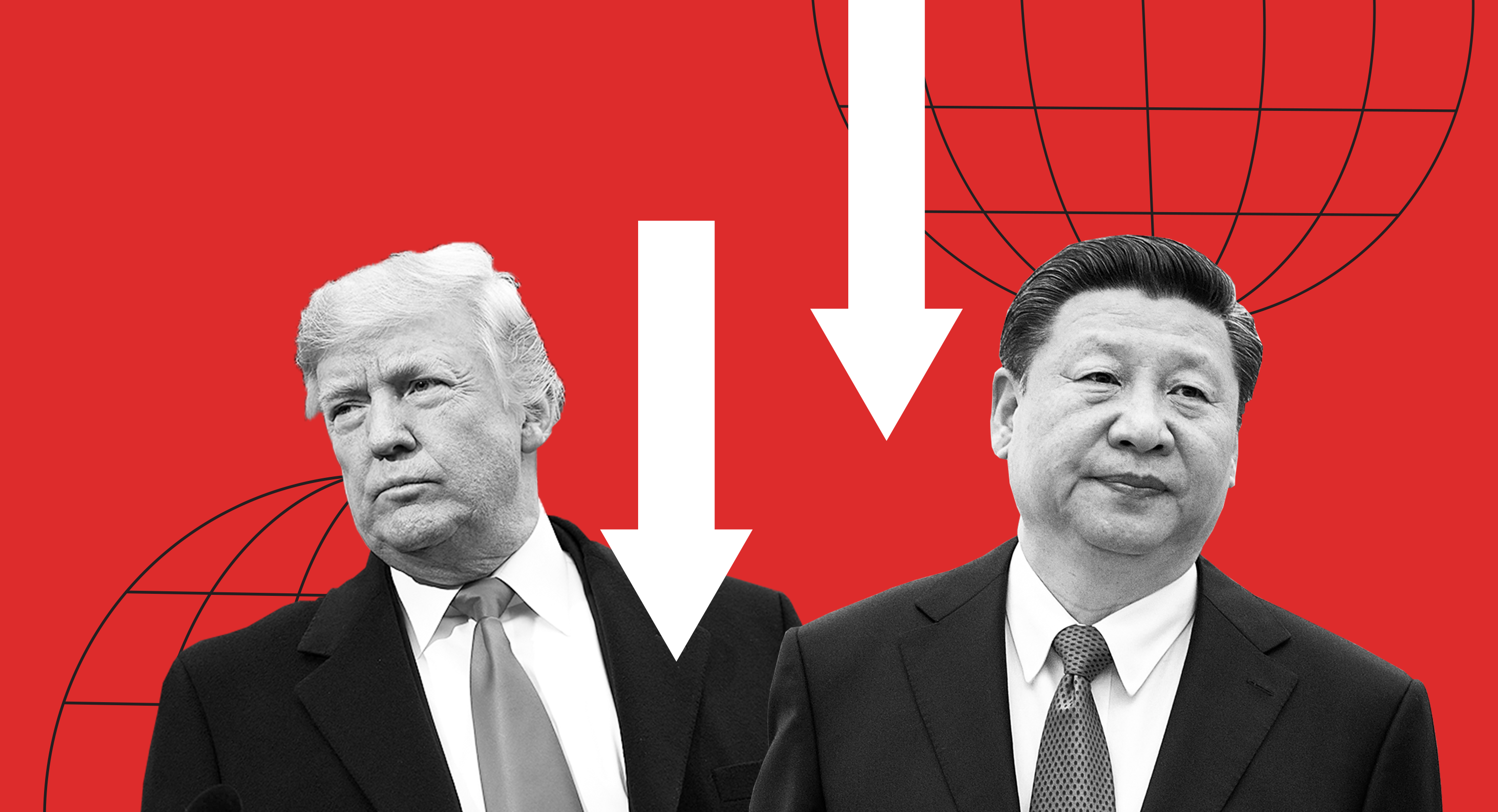
    China Is Determined to Hold Firm Against Trump’s Pressure

    Beijing believes that Washington is overestimating its own leverage and its ability to handle the trade war’s impacts. 

      • Sheena Chestnut Greitens

      Rick Waters, Sheena Chestnut Greitens

  • Commentary
    A Second Trump Term: Will Southeast Asia Tilt Toward China?

    Tapping our network of China experts in the region, Carnegie China offers this latest “China Through a Southeast Asian Lens” report to offer preliminary assessments of whether the U.S. effort to reshape the global trading order will lead countries in the region to tilt toward Beijing. 

      • +6

      Selina Ho, Khin Khin Kyaw Kyee, Joseph Ching Velasco, …

  • Commentary
    Is China Willing to Influence Russia on the Ukraine War?

    Beijing is trying to navigate the overall situation regarding Ukraine, especially the substance of interactions between Washington and Moscow.

      • Ellen Nakashima
      • Zhao Long
      • +1

      Ellen Nakashima, Zhao Long, Pavlo Klimkin, …

Get more news and analysis from
Carnegie China
Carnegie China logo, white
  • Research
  • About
  • Experts
  • Events
  • Contact
  • Careers
  • Privacy
  • For Media
Get more news and analysis from
Carnegie China
© 2026 Carnegie Endowment for International Peace. All rights reserved.