

Paper
Paul Salem
Source: Getty
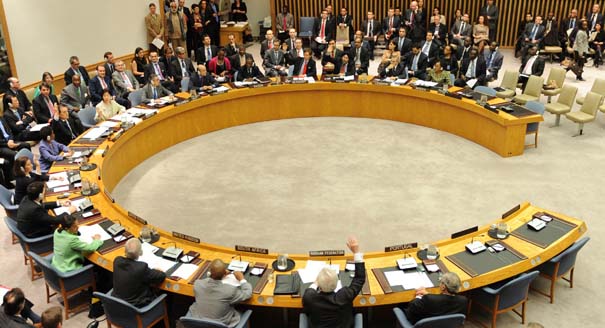
As regional and international opinion moves in favor of supporting the imposition of a no-fly zone over Libya, Egypt, Tunisia, and Turkey should all participate in its implementation.
As Libyan leader Muammar Qaddafi threatens the increased use of his air force against his own civilian population, it is becoming clear that regional and international opinion is moving in favor of supporting the imposition of a no-fly zone over Libya. Egypt and Tunisia, as well as Turkey, should participate in implementing this no-fly zone.
Qaddafi has already lost whatever flimsy legitimacy he might have had with his own people. However, through sheer military brutality, he might be able to put down the democratic uprisings against his rule, as Saddam Hussein did in southern Iraq in 1991 and as Soviet guns did in Hungary and Czechoslovakia during the Cold War. This would not only be a crime against the Libyan people—who have risked their lives to achieve what their brothers and neighbors in Egypt and Tunisia did before them—but would create a brutal and unstable Libya for years to come.
The League of Arab States, the Gulf Cooperation Council, and the Organization of Islamic Conference have indicated that they would be in favor a no-fly zone. And UN Security Council members are discussing the outlines of a potential resolution.
States and peoples in the region should take primary responsibility for protecting their brothers and sisters in Libya, and for helping to create a more democratic and stable region. They should not stand by and leave it to Western powers to handle the crisis. At the very least, Egypt and Tunisia, as well as Turkey, should play an active and visible role in implementing the no-fly zone.
The peoples of Egypt and Tunisia have been the leaders of the new ambition for democracy in the Arab world. They inspired their Libyan neighbors to revolution, and have a responsibility to stand by them in their hour of need. The Egyptian and Tunisian people have played a key role in supporting and helping the Libyan revolutionaries in the past weeks; it is important that their states also participate in protecting them.
It is clear that the Egyptian and Tunisian armed forces are overwhelmed by the new domestic responsibilities thrust upon them. However, Egyptian and Tunisian military participation in an internationally implemented no-fly zone would only require a limited and largely symbolic involvement. But it is very important that the commitment of Egypt and Tunisia be clear and visible.
As for Turkey, I have written numerous times about Turkey’s role in inspiring many in the region as a model of democratic change, and its example of responsible foreign policy in an otherwise polarized region. Turkey’s success has shown that nations in the region should play a larger role in managing their own affairs, rather than leaving them to Western or other external intervention.
Now is the time for Turkey to recognize that helping to save large sections of the civilian population in Libya from the vengeful attacks of a spent and deranged leader—and to help the Libyans bring stability and democracy to Libya—is not only a moral imperative but serves the interests of stability and democratization that Turkey has been talking about for years.
One can understand that in the first days of the Libyan uprising, Turkey was concerned about evacuating the 20,000-25,000 Turks who worked in Libya. Turkish companies also have over $10 billion of contracts in Libya. And the Turkish leadership is preparing for parliamentary elections in June.
But this is a time to put principle and long-term strategic interests of stability and regional democratization above business and other narrow interests. People in the region have always accused the West of putting economic interests above principle; Turkey has come too far in helping build a new paradigm of democratization and regional order in the Middle East to fall under the same misperception.
And if a no-fly zone becomes a necessity to protect the Libyan people, those in the region—including Egypt, Tunisia, and Turkey—should not wash their hands of it and ask the West to come do the work for them. At the very least, a no-fly zone should be implemented in full partnership with the West.
Building a democratic and stable Middle East will take regional leadership. Arab countries should not leave it to the West alone to protect the Libyan people. Egypt and Tunisia, as Libya’s inspirers and neighbors, have a leadership role to play; Turkey, as the older democracy, has an important responsibility as well.
Now is the time for states in the region to take a larger role in protecting the human rights of their peoples and a larger responsibility in building the democratic and stable Middle East that the peoples of the region have so loudly called for.
Senior Fellow at the Middle East Institute
Paul Salem is a senior fellow at the Middle East Institute.
Recent Work
Paul Salem
Paul Salem
Carnegie does not take institutional positions on public policy issues; the views represented herein are those of the author(s) and do not necessarily reflect the views of Carnegie, its staff, or its trustees.

Transactional relationships are stable but can be shallow.



Paul Haenle, Maha Yahya, Benjamin Ho, …

It’s about managing oil prices, bread prices, and strategic partnerships.



Amr Hamzawy, Karim Sadjadpour, Aaron David Miller, …
The murder of George Floyd has underscored the deep inequities that have long plagued American society. In a note to the Carnegie community, Bill Burns reflects on Carnegie’s commitment to build a more just future here at home and around the world, without which peace will remain beyond our grasp.

William J. Burns
While the world hoped this pandemic might lead to more cooperation between these two great powers, American and Chinese leaders instead fell into a blame game and allowed their increasing suspicions to guide their decision-making.
Lyu Jinghua
Biological viruses and computer malware differ in important respects. They have considerable potential to spread widely, invading, disrupting and destroying their targets.
Ariel (Eli) Levite, Lyu Jinghua