

Commentary
The Thai-Cambodian conflict highlights the limits to China's peacemaker ambition and the significance of this role on Southeast Asia’s balance of power.
Pongphisoot (Paul) Busbarat

Source: Getty
With the Iranian nuclear crisis nearing a watershed, the question of the Obama administration's "red lines" on Iran's nuclear program is the subject of considerable speculation and debate.
With the Iranian nuclear crisis nearing a watershed, the question of the Obama administration’s “red lines” on Iran’s nuclear program is the subject of considerable speculation and debate. While the details of the policy are classified, a close reading of statements by senior officials from press conferences, interviews, congressional hearings, and formal speeches conveys the administration’s public efforts to delineate what level of nuclear activity or other moves by Iran would prompt the United States to take more decisive action, most prominently the use of overt force. These are mostly carefully crafted statements intended to simultaneously deter Iran and reassure U.S. allies, while avoiding unnecessary or at least premature escalation (full list here).
Drawing from an analysis and distillation of official statements, six key observations emerge on the administration’s “red lines,” and how the United States will respond to Iranian actions that are perceived to cross them. At a time when some international actors are pressing for greater clarity on Obama’s Iran policy, these observations may help serve as a baseline.
The official position stated by the Obama administration is that it “will not allow Iran to develop a nuclear weapon.” President Obama first promised as much during the 2008 democratic primaries1, and, along with senior officials in his administration, continues to repeat this commitment.2 The red line is unmistakably the acquisition of a nuclear weapon.
The Nuclear Non-Proliferation Treaty does not define the specific activities that constitute nuclear weaponization, nor has the administration explicitly stated a definition. However, senior officials have offered one possible formulation. In a Senate Select Intelligence Committee hearing, CIA Director David Petraeus and Director of National Intelligence James Clapper both said that “enrichment of uranium to a 90 percent level would be a pretty good indicator” that Iran is developing a nuclear weapon.3 Thus, there appears to be some internal agreement that enrichment to levels near weapons grade is indicative of nuclear weapons pursuit, and thus likely an administration red line.
Administration officials have communicated in several ways—both in what they have, and have not said—that they will tolerate many sensitive nuclear activities short of acquiring a nuclear weapon. First, by drawing a line at 90 percent enrichment, the administration has signaled that it would likely tolerate uranium enrichment above current levels (20 percent), but below weapons grade (93 percent). At least this can be inferred from statements that enrichment above 90 percent would be interpreted as an actionable indicator that Iran is seeking nuclear weapons. By implication, the administration would tolerate all uranium enrichment below 90 percent regardless of pace, scope, sophistication, and whether or not it took place in contravention of International Atomic Energy Agency (IAEA) resolutions.
Second, the U.S. position appears to imply tolerance for a broad range of Iran’s current nuclear activities. Secretary of Defense Panetta recently said, for example, that “intelligence does not show that [Iran has] made the decision to proceed with developing a nuclear weapon.” In other words, Iran’s current activities as reported by the IAEA—enriching uranium to 20 percent at a previously undisclosed site, stockpiling low enriched uranium in excess of domestic needs, constructing a new heavy-water reactor that could produce plutonium, undertaking suspicious high-explosive tests, and conducting studies on integrating a nuclear warhead on a Shahab 3 ballistic missile—do not constitute actionable evidence of nuclear weapons development.4 One can infer that more of these activities, such as centrifuge modernization, the construction of more enrichment sites, and additional stockpiling of LEU, would not constitute nuclear weapons development either.
By singling out enrichment above 90 percent as a decisive indicator, and not specifying other such indicators, the administration allows the impression that it de facto would tolerate sensitive activities related to nuclear weaponization, such as nuclear weapon and warhead design, testing, or production, and the failure to comply with IAEA requirements, safeguards, and standards.5 If this impression is not correct, the administration has not offered enough specificity to ensure a clearer understanding of its position.
Equally important to the drawing of “red lines” is the question of what the administration would be willing to do if Iran crossed them. U.S. officials have stated on many occasions that “all options are on the table.”6 We understand this to mean that President Obama may be willing to resort to military means to prevent a nuclear-armed Iran. Ambiguity is carefully preserved in this formulation, but the degree to which it is constructive is a matter of much debate.
Despite the “all available options” stance of the administration, other statements indicate that the military threat may be less credible. The rhetoric used to deter Iran from closing the Strait of Hormuz offers a telling point of comparison. General Martin E. Dempsey, chairman of the Joint Chiefs of Staff, warned that the United States would “take action and reopen the strait,” which could be accomplished only by military means.7
In contrast, on Iran’s nuclear weapons, General Dempsey said in January, “We are determined to prevent them from acquiring that weapon, but that doesn't mean dropping bombs necessarily…I personally believe that we should be in the business of deterring as the first priority.”8
When the administration wanted to rule in military action, it did so plainly and explicitly. With respect to Iran’s nuclear weaponization, it has thus far remained vague. There may be understandable and good diplomatic, strategic, and political reasons for the distinction, but this is not self-evident.
Senior officials have said that they will not tolerate a nuclear-armed Iran.9 However, last week Secretary Panetta also said the administration will not tolerate “an Iran that basically spreads violence around the world, that supports terrorism, that conducts acts of violence.”10 Iran continues to spread violence and support terror and the administration has not responded, at least in publicly observable ways. The message conveyed is that the administration will not necessarily act on the commission of “intolerable acts.” (Of course, it is possible that the administration is acting or will act clandestinely in ways that Iranian leaders would know about but others might not.)
As the Obama administration’s primary goal is to find a diplomatic solution to the crisis, a certain degree of constructive ambiguity surrounding its red lines and possible responses to their crossing is to be expected.
But the more problematic inference from these statements—in terms of deterrence of Iran and reassurance of friendly states—is that the administration has not yet communicated a determination to act decisively to prevent Iran from acquiring nuclear weapons. Furthermore, perceptions that U.S. red lines have evolved as Iran’s program has advanced potentially undermine the credibility of the U.S. commitment to respond. The administration has allowed the impression that it would tolerate a host of sensitive nuclear activities that would allow Iran to move incrementally to the verge of producing nuclear weapons, at which point uncertainties in intelligence and warning time could erode confidence that decisive preventive action could be taken.
Currently, Iran’s acquisition of a nuclear weapon is still only a possibility; it is highly plausible that the president has not yet decided how he would respond should that threat materialize. Nevertheless, in the absence of a comprehensive strategy (including a more public posture) that could induce Iran to desist in its continuing moves toward nuclear weapons, doubts about the definition of red lines and the consequences of their breach may undermine both deterrence and reassurance.
Jaclyn Tandler is a Junior Fellow in Carnegie’s Nuclear Policy Program.
1. “I will do everything in my power to prevent Iran from obtaining a nuclear weapon.” Barack Obama’s Remarks at American Israel Public Affairs Committee Policy Conference, June 4, 2008, http://www.nytimes.com/2008/06/04/us/politics/04text-obama-aipac.html?pagewanted=all
2. “America is determined to prevent Iran from getting a nuclear weapon.” Remarks by President Obama in State of the Union Address, January 24, 2012, http://www.whitehouse.gov/the-press-office/2012/01/24/remarks-president-state-union-address.
“We will not allow Iran to develop a nuclear weapon.” Leon Panetta, in Donna Cassata, “Panetta: No Iranian decision yet on nukes,” Associated Press, February 16, 2012, http://www.google.com/hostednews/ap/article/ALeqM5jhGx72LKpwsOpWwSgtPTvpuZE0NA?docId=ac56ef205faf4547a4cc6f4860ef70f9.
“We are committed to preventing Iran from developing nuclear weapons.” Thomas Donilon’s Remarks at the Carnegie Endowment for International Peace Nuclear Policy Conference, March 29, 2011, http://carnegieendowment.org/files/Thomas_Donilon.pdf.
3. “What we think we would be evident if there is a decision to enrich beyond the 20 percent that they are currently enriching to—to the weapons grade would be very significant, and I think a tell-tale indicator. There's no commercial use for that arguably—in fact, not arguably.” David Petraeus’s Remarks in Senate Select Intelligence Committee Hearing on Worldwide Threats, January 31, 2012, http://www.dia.mil/public-affairs/testimonies/2012-01-31.html.
“A clear indicator would be enrichment of uranium to a 90 percent level would be a pretty good indicator of their seriousness.” James Clapper’s Remarks in Senate Select Intelligence Committee Hearing on Worldwide Threats, January 31, 2012, http://www.dia.mil/public-affairs/testimonies/2012-01-31.html.
4. “Implementation of the NPT Safeguards Agreement and relevant provisions of Security Council resolutions in the
Islamic Republic of Iran.” IAEA Board of Governors, November 8, 2011, http://isis-online.org/uploads/isis-reports/documents/IAEA_Iran_8Nov2011.pdf.
5. Especially given that the National Intelligence Estimate on Iran takes a very narrow definition of weaponization. National Intelligence Estimate, “Iran: Nuclear Intentions and Capabilities.” November 2007, http://www.dni.gov/press_releases/20071203_release.pdf.
6. “Can we guarantee that Iran takes the smarter path? No, which is why I’ve repeatedly said we don’t take any options off the table in preventing them from getting a nuclear weapon.” Barack Obama in Michael Scherer, “President Obama: Romney Foreign Policy Attacks Will Wither in ‘Serious Debate,’” Time, January 18, 2012, http://swampland.time.com/2012/01/18/president-obama-romney-foreign-policy-attacks-will-wither-in-serious-debate/.
“My biggest worry is they will miscalculate our resolve. Any miscalculation could mean that we are drawn into conflict, and that would be a tragedy for the region and the world.” Martin Dempsey in Barbara Star, “Top general says Iran shouldn’t ‘miscalculate our resolve,’” CNN, December 20, 2011, http://articles.cnn.com/2011-12-20/us/us_top-general-iran_1_nuclear-weapon-iran-nuclear-intentions?_s=PM:US.
7. Elisabeth Bumiller, Eric Schmitt, and Thom Shanker, “U.S. Warns Top Iran Leader Not to Shut Strait of Hormuz,” New York Times, January 12, 2012, http://www.nytimes.com/2012/01/13/world/middleeast/us-warns-top-iran-leader-not-to-shut-strait-of-hormuz.html?pagewanted=all.
8. Martin Dempsey, Interview with Fareed Zakaria on CNN’s Global Public Square, February 19, 2012, http://transcripts.cnn.com/TRANSCRIPTS/1202/19/fzgps.01.html.
9. “We will not tolerate an Iran that has a nuclear weapon.” Town Hall Meeting with Leon Panetta, Barksdale Air Force Base, February 17, 2012, http://www.defense.gov/transcripts/transcript.aspx?transcriptid=4982.
10. Town Hall Meeting with Leon Panetta, Barksdale Air Force Base, February 17, 2012, http://www.defense.gov/transcripts/transcript.aspx?transcriptid=4982.
Jaclyn Tandler
Former Junior Fellow, Nuclear Policy Program
Carnegie does not take institutional positions on public policy issues; the views represented herein are those of the author(s) and do not necessarily reflect the views of Carnegie, its staff, or its trustees.
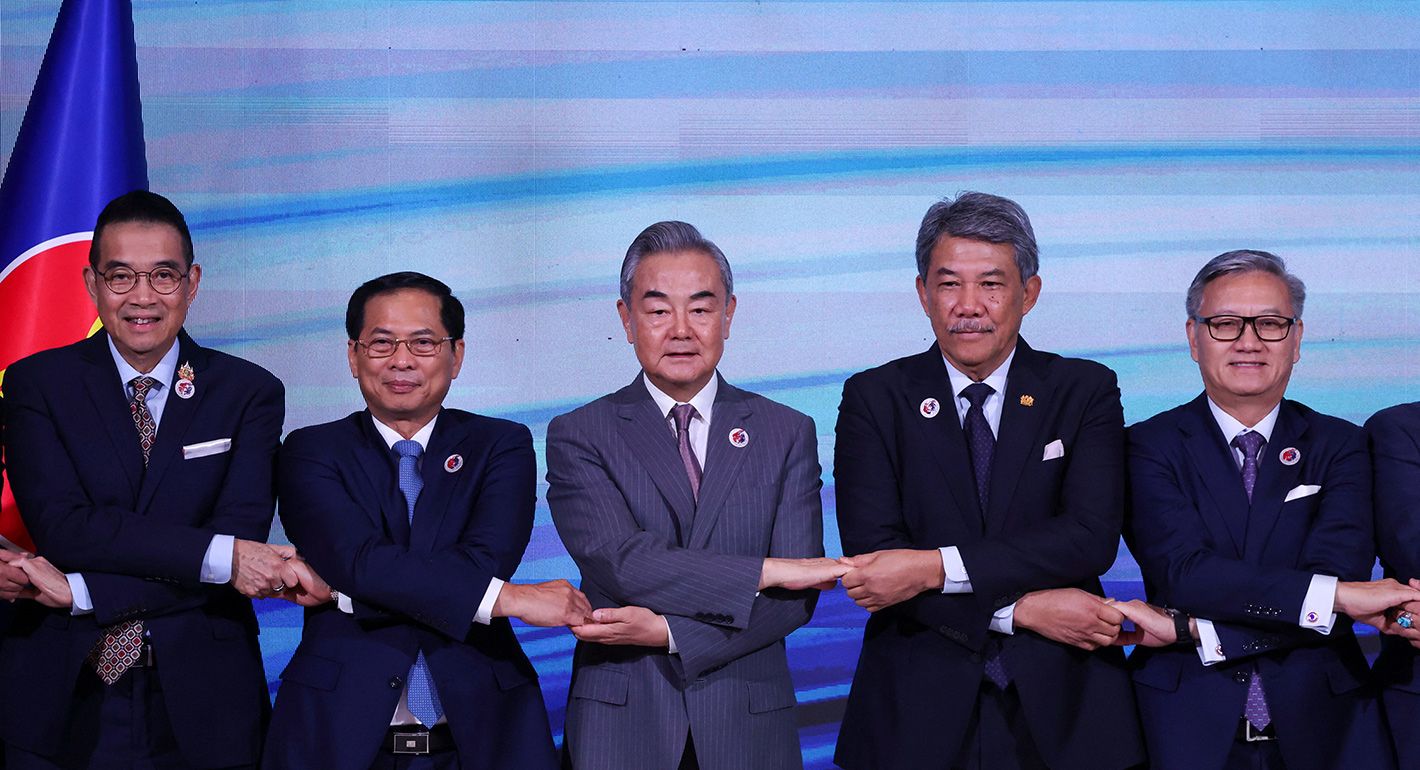
The Thai-Cambodian conflict highlights the limits to China's peacemaker ambition and the significance of this role on Southeast Asia’s balance of power.

Pongphisoot (Paul) Busbarat
Beijing believes that Washington is overestimating its own leverage and its ability to handle the trade war’s impacts.


Rick Waters, Sheena Chestnut Greitens
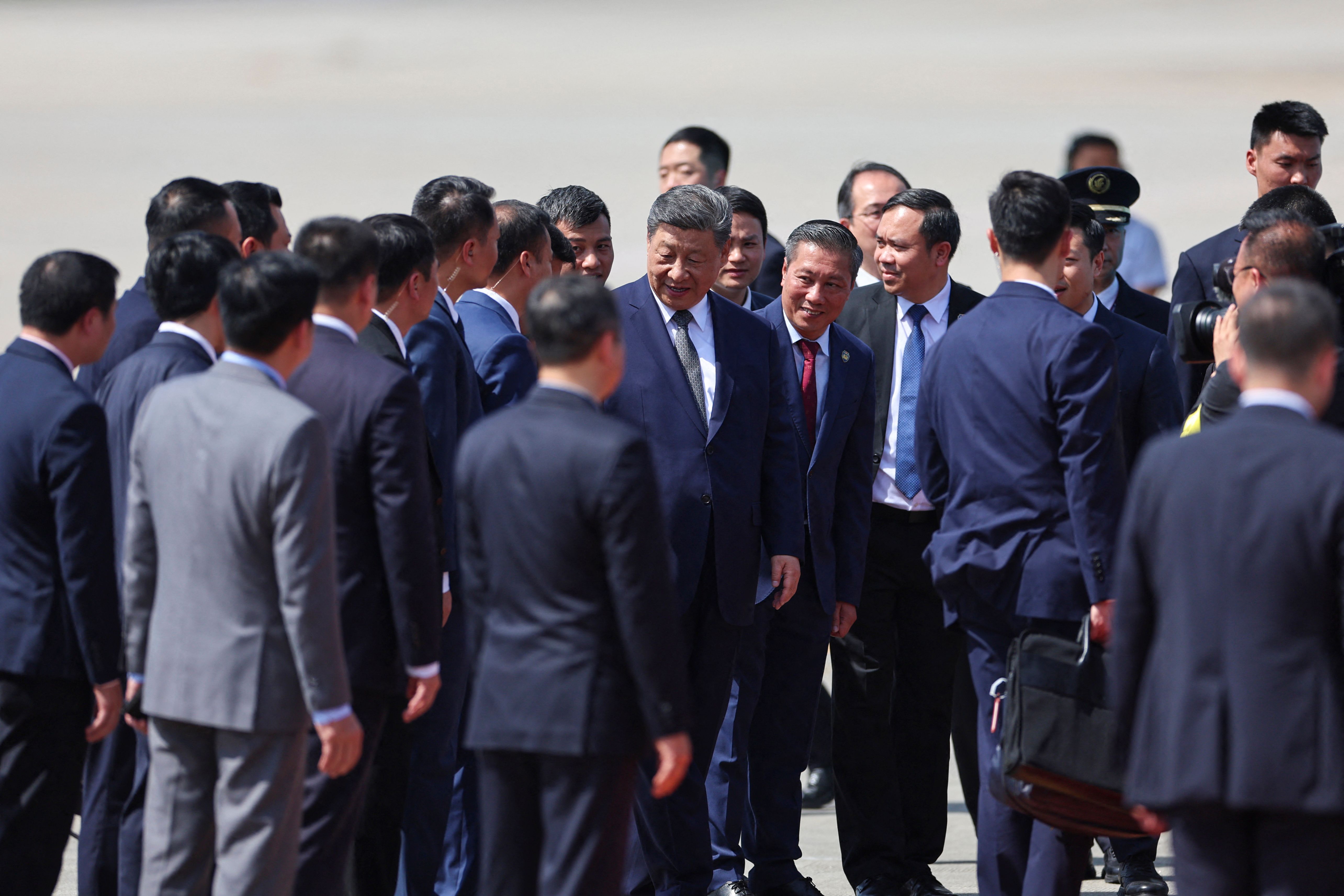
Tapping our network of China experts in the region, Carnegie China offers this latest “China Through a Southeast Asian Lens” report to offer preliminary assessments of whether the U.S. effort to reshape the global trading order will lead countries in the region to tilt toward Beijing.



Selina Ho, Khin Khin Kyaw Kyee, Joseph Ching Velasco, …

Because strategic, economic, and ideological perceptions of China contain multiple, sometimes contradictory facets in Southeast Asia, receptions of and responses to Beijing diverge across and within state lines.



Evan A. Feigenbaum, Chong Ja Ian, Elina Noor
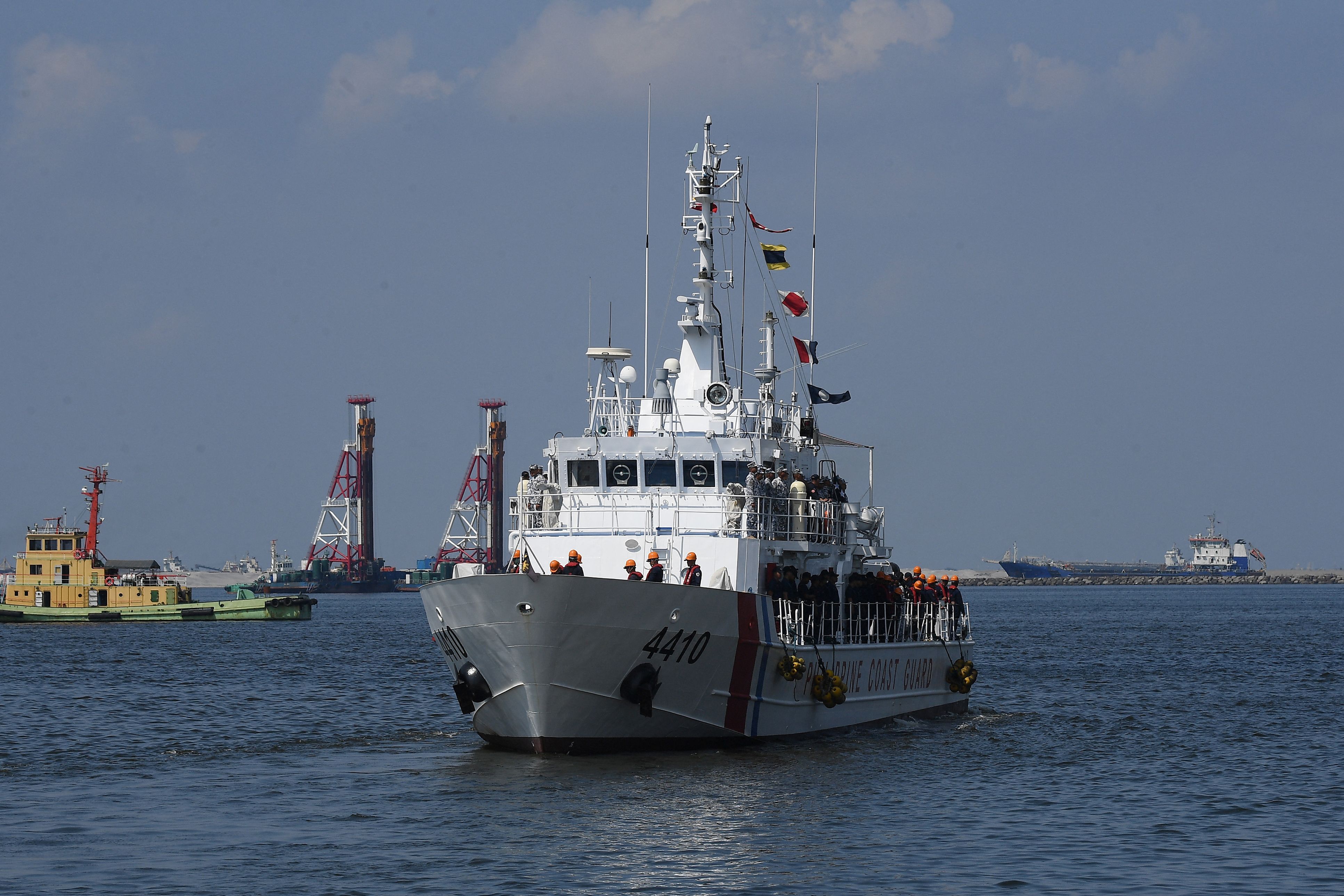
Most Southeast Asian states behave as if the actions of their Northeast Asian neighbors and the Philippines will be sufficient to maintain a regional status quo from which they can benefit.
Chong Ja Ian