
• Commentary
  • Research
  • Experts
  • Events
Carnegie China logoCarnegie lettermark logo
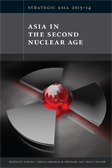
Strategic Asia 2013-14: Asia in the Second Nuclear Age
Book

Strategic Asia 2013-14: Asia in the Second Nuclear Age

It is important to understand the role of nuclear weapons in the grand strategies of key Asian states and the impact of these capabilities—both established and latent—on regional and international stability.

Link Copied
By Ashley J. Tellis, Abraham M. Denmark, Travis Tanner
Published on Oct 2, 2013

Source: National Bureau of Asian Research

Co-edited and introduced by Ashley J. Tellis, the 2013-14 Strategic Asia volume examines the role of nuclear weapons in the grand strategies of key Asian states and assesses the impact of these capabilities—both established and latent—on regional and international stability. In each chapter, a leading expert explores the historical, strategic, and political factors that drive a country's calculations vis-a-vis nuclear weapons and draws implications for American interests.

Order this book, or read the introduction by Ashley J. Tellis for free.

About the Editors

Ashley J. Tellis is a Senior Associate at the Carnegie Endowment for International Peace and Research Director of the Strategic Asia Program at NBR, served in the U.S. Department of State as senior adviser to the Undersecretary of State of Public Affairs, and previously as senior adviser to the Ambassador at the U.S. Embassy in India. He also served on the National Security Council Staff as special assistant to the President and senior director for Strategic Planning and Southwest Asia. He is the author of India’s Emerging Nuclear Posture (2001) and co-author of Interpreting China’s Grand Strategy: Past, Present, and Future (2000), as well as the co-editor of the ten most recent volumes of Strategic Asia, published by NBR.

Abraham Denmark is Vice President for Political and Security Affairs at the National Bureau of Asian Research.

Travis Tanner was the Senior Project Director and Director of the Pyle Center for Northeast Asian Studies at the National Bureau of Asian Research.

About the Authors

Ashley J. Tellis

Former Senior Fellow

Ashley J. Tellis was a senior fellow at the Carnegie Endowment for International Peace.

Abraham M. Denmark

National Bureau of Asian Research

Travis Tanner

NBR

Authors

Ashley J. Tellis
Former Senior Fellow
Abraham M. Denmark
National Bureau of Asian Research
Travis Tanner
NBR
North AmericaUnited StatesMiddle EastSouth AsiaIndiaPakistanEast AsiaSouth KoreaChinaTaiwanJapanSoutheast AsiaNorth KoreaClimate ChangeSecurityMilitaryForeign PolicyNuclear PolicyArms ControlNuclear Energy

Carnegie does not take institutional positions on public policy issues; the views represented herein are those of the author(s) and do not necessarily reflect the views of Carnegie, its staff, or its trustees.

More Work from Carnegie China

  • Commentary
    Malaysia’s Year as ASEAN Chair: Managing Disorder

    Malaysia’s chairmanship sought to fend off short-term challenges while laying the groundwork for minimizing ASEAN’s longer-term exposure to external stresses.

      Elina Noor

  • Commentary
    When It Comes to Superpower Geopolitics, Malaysia Is Staunchly Nonpartisan

    For Malaysia, the conjunction that works is “and” not “or” when it comes to the United States and China.

      Elina Noor

  • Commentary
    ASEAN-China Digital Cooperation: Deeper but Clear-Eyed Engagement

    ASEAN needs to determine how to balance perpetuating the benefits of technology cooperation with China while mitigating the risks of getting caught in the crosshairs of U.S.-China gamesmanship.

      Elina Noor

  • Commentary
    Neither Comrade nor Ally: Decoding Vietnam’s First Army Drill with China

    In July 2025, Vietnam and China held their first joint army drill, a modest but symbolic move reflecting Hanoi’s strategic hedging amid U.S.–China rivalry.

      • Nguyen-khac-giang

      Nguyễn Khắc Giang

  • Commentary
    Today’s Rare Earths Conflict Echoes the 1973 Oil Crisis — But It’s Not the Same

    Regulation, not embargo, allows Beijing to shape how other countries and firms adapt to its terms.

      Alvin Camba

Get more news and analysis from
Carnegie China
Carnegie China logo, white
  • Research
  • About
  • Experts
  • Events
  • Contact
  • Careers
  • Privacy
  • For Media
Get more news and analysis from
Carnegie China
© 2026 Carnegie Endowment for International Peace. All rights reserved.