

Paper
Ashley J. Tellis
China is poised to become a major strategic rival to the United States.
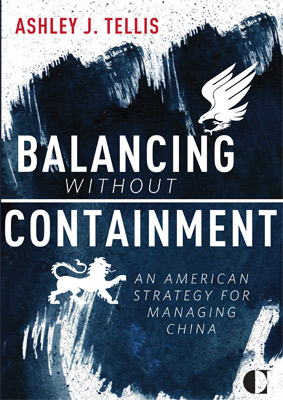
China is poised to become a major strategic rival to the United States. Whether or not Beijing intends to challenge Washington’s primacy, its economic boom and growing national ambitions make competition inevitable. And as China rises, American power will diminish in relative terms, threatening the foundations of the U.S.-backed global order that has engendered unprecedented prosperity worldwide. To avoid this costly outcome, Washington needs a novel strategy to balance China without containing it.
Bolster Regional Actors. By increasing the national power of China’s neighbors, the United States can constrain Beijing’s behavior and limit its capacity for aggressiveness. This investment is in Washington’s best interest irrespective of whether it is repaid in kind because it will diminish China’s ability to misuse its growing strength and increase American geopolitical maneuverability in the Indo-Pacific. But the United States must be wary of Chinese tactics to subvert these efforts.
Selectively Deepen Globalization. The United States should make trade liberalization a top priority. Since comprehensive global liberalization remains a distant goal, Washington should work to quickly conclude key regional trade pacts, including the Trans-Pacific Partnership and the Transatlantic Trade and Investment Partnership, which promise increased relative gains to the United States and its allies vis-à-vis China.
Bolster U.S. Military Capabilities. To preserve its military superiority in the face of growing Chinese power, Washington should invest in improving U.S. power projection capabilities that will allow it to defeat challenges posed by China’s new strategic denial systems and regain U.S. freedom of action in the Indo-Pacific.
Reinvigorate the U.S. Economy. Revitalizing the domestic economy is imperative to sustaining American hegemony. To maintain its global economic dominance, the United States must emphasize labor force renewal, promote disruptive technological innovations, increase efficiency in production, and resolve the political squabbles that prevent Washington from fixing the country’s public finances.
Former Senior Fellow
Ashley J. Tellis was a senior fellow at the Carnegie Endowment for International Peace.
Recent Work
Ashley J. Tellis
Ashley J. Tellis
Carnegie does not take institutional positions on public policy issues; the views represented herein are those of the author(s) and do not necessarily reflect the views of Carnegie, its staff, or its trustees.

The Plaza Accord was not an externally imposed punishment of Japan but part of a broader restructuring that Japanese economists and policymakers themselves recognized was necessary. Its effects were undermined, however, when Tokyo responded to the resulting slowdown with policies that exacerbated investment, credit expansion, and the very imbalances the adjustment was intended to resolve.

Michael Pettis

The nuclear relationship between China and the United States is increasingly shaped by widening perception gaps rather than deliberate strategic design.

Tong Zhao
China’s banking crisis in the 2000s was resolved by transferring the costs to households through financial repression—a decision that recapitalized the banks while exacerbating the structural imbalances that continue to shape the Chinese economy today.
Michael Pettis

Chinese biotech companies have been on the receiving end of U.S. economic coercion. Yet their responses have differed significantly because firm and state interests are not uniformly aligned. For Washington, treating all Chinese tech firms the same, irrespective of their actual interests, risks pushing them farther into Beijing’s corner.

Xue Gong

China’s latest energy plan explicitly calls for integrating data centers into the electricity system, particularly connecting them to green energy. It appears Beijing wants to use compute as a source of domestic demand to absorb renewables excess capacity.

Damien Ma