

Article
Yasmine Zarhloule
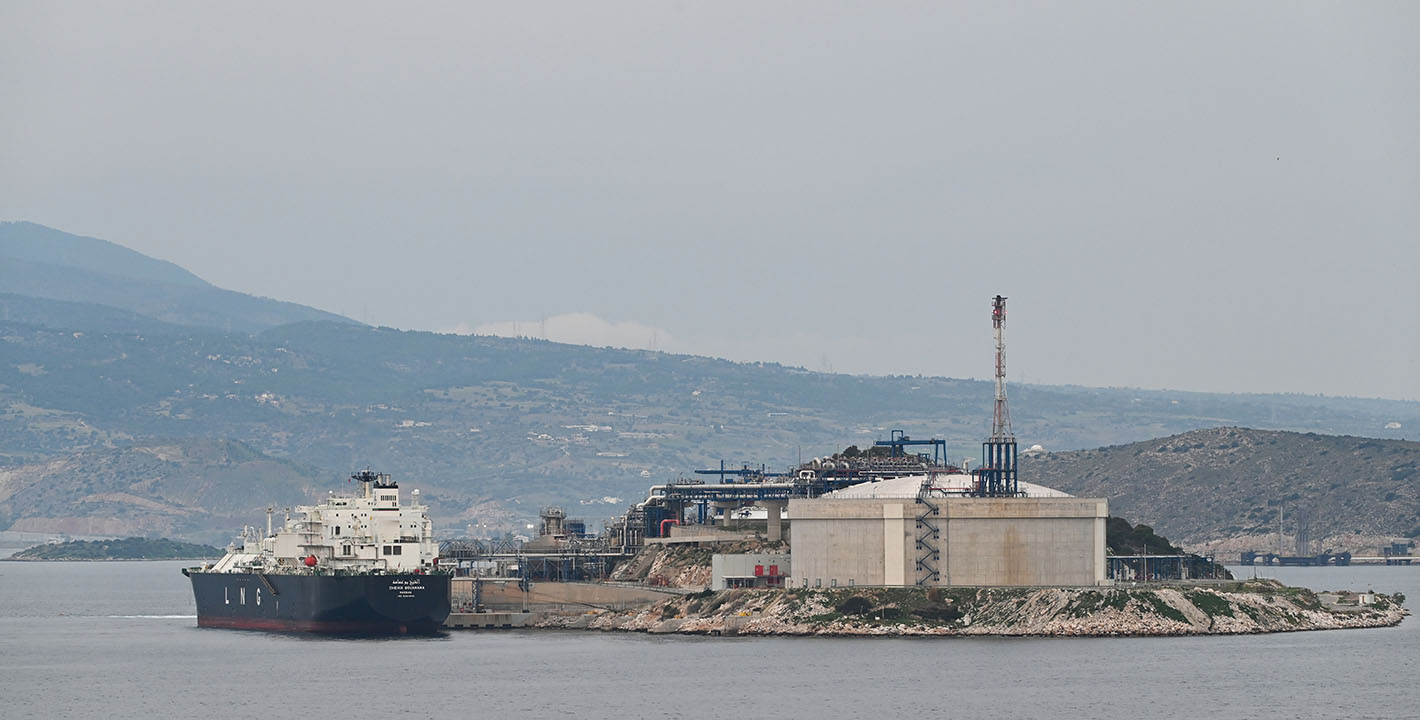
Source: Getty
Unless the European Union-led energy transition provides economic development to Algeria, Morocco, and Tunisia, the process may be perceived as a new form of extraction.
The European Union-led green transition is turning the Maghreb—Algeria, Morocco, and Tunisia—into an energy frontier, hosting megaprojects and wind, solar, and hydrogen corridors. Will going green, which presents an opportunity and a trap, generate development in the Maghreb or will it reproduce new forms of extraction? Building domestic capabilities that deliver tangible gains is crucial for stability and resilience under climate stress. Otherwise, energy exports may help Europe, but only deepen domestic burdens.
In December 2019, the European Commission presented the European Green Deal,1 the European Union’s flagship strategy to reach climate neutrality, with an initial emissions-reduction target date of 2030. However, Russia’s invasion of Ukraine in February 2022 and the ensuing energy shock rapidly entwined the objective of achieving decarbonization with that of guaranteeing a secure supply of hydrocarbons to the EU. This created a strong incentive to connect the continent to the Maghreb states—Algeria, Morocco, and Tunisia.2 The result has been bilateral agreements and memorandums of understanding that today form the backbone of the EU’s energy policy abroad. At the same time, the Maghreb states have moved toward attracting investments and securing energy sovereignty. However, the EU and the Maghreb’s objectives are not identical, having different metrics and modalities.
For the EU, diversification is essential for energy stability, particularly when it comes to ensuring supply, keeping domestic energy prices low, and appeasing the electoral base of incumbent governments amid rising energy costs. The Maghreb states, in turn, frame investment in renewables as linked to their long-term energy sovereignty. Across the region, governments refer to the transition not only in terms of decarbonization but also with explicit mentions of “reinforcing energy sovereignty” (Algeria),3 “reducing dependency vis-à-vis the outside world” (Morocco),4 and “taking back control of [our] energy destiny” (Tunisia).5 What Europe often regards as resilience of supply and price stability can sit uneasily with North African priorities such as affordability, domestic capability-building, and political legitimacy.
In its current form, this divergence of aims between diversification and sovereignty risks reproducing extractive dependencies. As debates over energy and food sovereignty are shaping public political discourse in both the EU and the Maghreb, having a clear understanding of who benefits and who bears the costs of the green transition, especially in already climate-stressed regions, is of utmost importance. Framed in these terms, the gap between the logic of providing energy corridors to Europe and the imperative of maintaining domestic stability in the Maghreb is widening. The dynamics among geopolitical alignments, shifting priorities, and local articulations obscure the important fact that the green transition is only feasible if partner states in the Maghreb can stabilize and legitimize projects. Projects survive when they create constituencies to defend them, and when their trade-offs are felt by a range of social and economic actors. The ultimate litmus test is whether energy investments in renewables can generate broad-based economic development, and if so, what types of political economy are emerging from new energy corridors.
Since the mid-2010s, the Maghreb states have adopted ambitious goals to become low-carbon economies, outlined in their Nationally Determined Contributions under the Paris Climate Agreement.6 This recognition of the need to reform structurally was followed by a wide variety of projects spanning liquified natural gas (LNG) infrastructures to renewable energy corridors and solar-powered mega plants. As geopolitical alignments have shifted, and due to its close geographical proximity to Europe as well as its abundance of resources, the Maghreb is increasingly becoming an energy frontier.
Since the mid-2010s, the Maghreb states have adopted ambitious goals to become low-carbon economies.
This comes at a time when the EU is establishing a broad framework for reducing greenhouse gas emissions, even as the conflict in Ukraine and the EU’s decision to reduce its dependency on Russian natural gas have led European countries to find alternative sources of hydrocarbons. The European Green Deal was reinforced under the EU Climate Law and the Fit for 55 package.7 The European Commission’s REPowerEU plan of May 2022 framed this explicitly. The plan outlined that cutting dependency on Russian fossil fuels while keeping energy prices affordable necessitated accelerating the deployment of renewable energy, improving energy efficiency, and scaling-up renewable hydrogen alongside new infrastructure and import corridors.8
In practice, REPowerEU has encouraged the EU to deepen energy and climate partnerships with neighboring regions. North Africa is central to this picture because it is already tied to Europe through legacy hydrocarbon trade and infrastructure. North African oil exports to Europe account for 60 percent, and gas exports for 80 percent, of the total volume of hydrocarbons imported by Europe.9 Algeria remains particularly important as a source for EU gas imports, even as the EU’s supplier mix shifted after 2022. Through a growing number of projects, including power interconnectors, hydrogen corridors, and mega-scale solar and wind stations, the EU seeks to secure cleaner energy and stabilize its price base.10 Across the Maghreb, the green transition is unfolding through distinct partnerships, shaped by political and economic considerations such as stability and geopolitical alignment on the one hand, and export strategies and domestic provision on the other.
In Morocco, the EU-Morocco Green Partnership, launched in October 2022, marks a significant step in bilateral relations that aims to advance the European Green Deal’s external dimension.11 The partnership focuses on three areas: climate and energy; the environment, including marine and maritime issues; and the green economy. It aims to support the EU and Morocco in fostering low-carbon, climate-resilient economies, while furthering job creation and cooperation to advance the global climate agenda. The partnership is also embedded in the wider EU cooperation approach toward the Southern Neighborhood—the countries of North Africa and Eastern Mediterranean—which includes programs supporting the green transition.12 Morocco moved early to leverage megaprojects and foreign partnerships to position itself as a regional hub for renewables and hydrogen.
In Tunisia, the EU has established a comprehensive partnership that focuses on several key areas, including macroeconomic stability, trade and investment, the green energy transition, people-to-people contacts, and migration.13 A memorandum of understanding, signed on July 16, 2023, aimed to open a new chapter in EU-Tunisia relations, promising enhanced cooperation across these sectors. In 2024, the Tunisian Ministry of Industry, Mines, and Energy announced that the country had set a target to expand the use of renewables to 30 percent of its energy mix by 2030.14 In the first half of 2025, foreign direct investment (FDI) surged, jumping by about 60 percent to 398 million Tunisian dinars, or approximately $136 million, with energy the second largest sector receiving FDI.15 France was the major investor, at around 421 million Tunisian dinars, or some $147 million, in the first half of 2025.16 While markedly different from Morocco because of its fiscal constraints and greater vulnerability to external pressures, Tunisia is also being recast as an export platform for green energy and electricity.17 In September 2023, the Industry, Mines, and Energy Ministry released a national green hydrogen strategy developed with international cooperation, in which Tunisia aims to produce 8.3 million tons of green hydrogen by 2050.18 The strategy also projects hydrogen exports to Europe of 6 million tons within the same timeframe.19
Algeria remains Europe’s most strategically salient energy partner in the Maghreb, primarily due to its gas infrastructure and export capacity.
Meanwhile, Algeria remains Europe’s most strategically salient energy partner in the Maghreb, primarily due to its gas infrastructure and export capacity. The state-owned oil company Sonatrach’s deal with Italy’s Eni in July 2025 underscored that even in a moment of green transition, European energy security still depends on Algerian gas. The production-sharing contract seeks to explore and develop hydrocarbons in Algeria.20 With total investments estimated at $1.35 billion, the deal is expected to produce 415 million barrels of oil equivalent, including 9.3 billion cubic meters of gas, while strengthening cooperation in the field of renewable energy and energy transition.21
In late 2019, Algeria promulgated Hydrocarbons Law 19-13, which introduced simplified fiscal and contracting procedures aimed at encouraging foreign partners and restoring investment attractiveness in the oil and gas sectors.22 At the same time, Algiers is also attempting to include renewables and hydrogen in its energy mix. While there have been delays in implementing the country’s renewable energy plans, the International Energy Agency has pointed to Algeria’s stated goal of installing 15GW of renewables by 2030, mostly from solar energy.23 In October 2025, Algeria’s energy minister outlined a broader investment plan for 2025–2029 worth $60 billion, covering oil, gas, and hydrogen.24
In this context, the turn to renewables and green energy has been visible in several projects across North Africa. These include planned green hydrogen pipelines from Egypt and Morocco to Europe, as well as the Tunisia-Italy Power Link (ELMED), a 600MW cable project seeking to connect Tunisian solar capacity with the Italian grid.25 ELMED has been framed as a flagship of Euro-Mediterranean electricity integration and a conduit for investment in Tunisia’s renewables capacity. It seeks to establish the first direct current connection between Tunisia and Italy in order to deliver a more resilient power supply while increasing the share of electricity generated from renewables.26 The project, which is currently underway, has a delivery date of 2028 and also seeks to strengthen industrial exchanges between the two countries.
In Morocco, the Noor Ouarzazate complex has become emblematic of a multi-partner state-led governance model supported by numerous funders and partnerships. It is part of Morocco’s broader ambition to become a regional frontrunner in renewable energy, with a target to reach 52 percent of renewables in its energy mix by 2030, and 70 percent by 2050.27 The country’s bid to become a regional renewables hub accelerated a push toward hydrogen in 2024–2025. In March 2025, Morocco initiated major green hydrogen projects worth approximately $32.5 billion.28 Partners include firms such as Saudi ACWA Power, United Arab Emirates-based TAQA, and Spain’s Cepsa, among others.29 These initiatives are underpinned by significant infrastructure projects that include grid expansion and port logistics, such as the LNG terminal under construction at the Nador West Med port, which itself has not yet been completed.30
Bilateral relations have been complemented by broader plans, such as REPowerEU, formulated by the EU in 2022, as noted earlier. REPowerEU, a result of the decision to shift away from Russian gas, seeks to increase the resilience of the EU-wide energy system. It is based on two pillars: The first is focused on diversifying gas supplies through higher LNG and pipeline imports from non-Russian suppliers, alongside larger volumes of renewable hydrogen production and imports.31 The second pillar is accelerating the reduction of fossil fuel consumption, notably in homes, buildings, and general industry and power systems.32 REPowerEU emphasizes developing long-distance electricity transmission lines and hydrogen import corridors, including from North Africa. According to this rationale, the region is no longer merely a hydrocarbons supplier but a prospective exporter of green electricity, green hydrogen, and derivatives via pipelines and energy corridors.
The Italy-Tunisia ELMED is one such example. Another is the SoutH2 Corridor, which also seeks transborder energy cooperation.33 The project, which has been endorsed politically by Algeria, Tunisia, Italy, Austria, and Germany, aims to transport renewable hydrogen produced in North Africa into European population centers. In January 2025, these states signed a Joint Declaration of Intent underscoring that the corridor was part of a broader European energy security and decarbonization strategy.34 The 3,300-kilometer-long pipeline received priority status, being listed on the EU’s Projects of Common Interest list, receiving fast-track permission as well as potential access to funding from the Connecting Europe Facility, an EU funding program designed to build new cross-border infrastructure or rehabilitate or upgrade existing infrastructure.35
These plans reflect the rapidly growing role of the Maghreb states as platforms for renewable energy, driven by global momentum tied to the green transition, infrastructure modernization, and burgeoning energy corridors. The idea of a hydrogen transition as a centerpiece, within the framework of the EU Green Deal, also comes as a response to lobbying from various interest groups. Trade and lobbying groups, such as Hydrogen Europe, have played a key role in shaping the EU’s rationale and trajectory.36 Hydrogen Europe formulated the 2x40GW Green Hydrogen Initiative, which claims that by 2030 the EU will have 40GW of domestic renewable hydrogen electrolyzer capacity, alongside a further 40GW electrolyzer capacity in neighboring regions, such as North Africa, which will use existing gas pipelines that already connect the region to Europe.37 As such, these initiatives are not mere energy projects; they are fundamentally restructuring the ways in which governments are pursuing industrial, infrastructural, and geopolitical alignments.
The EU and Maghreb states, by privileging export-ready projects through interconnected energy corridors, have effectively redrawn the geography and bargaining power of the Maghreb states. Although EU frameworks set the direction, project timelines and feasibility are largely determined by individual, or shifting coalitions of, EU member states. The EU and Maghreb states do not always move in sync, and coherence can be difficult to achieve considering the overlapping interests and initiatives pursued by actors within member states.38
For example, in the Tunisian ELMED case, cooperation has stalled not only because of Tunisian politics but also because of the conflicting goals of the actors on both sides.39 Multiple European actors have been involved: the EU, which funds the project via the Connecting Europe Facility; development banks, which also finance the project; and national actors, such as Italy’s TERNA, which operates electricity transmission systems, being in charge of implementation. The project is also supported by several initiatives such as labor-migration and skill-sharing schemes and development agencies involved in setting up regulatory frameworks in Tunisia. As such, conflicting interests, overlapping aims, and siloed governance impact the scale at which projects are feasible.40 Additionally, even where the construction of flagship infrastructure is underway, for instance the SoutH2 Corridor, countries such as Germany, Austria, and Italy still need to align their political choices, overcome demand uncertainty, and bridge different levels of readiness.41
The push for green hydrogen is also shaping how African governments now conceive of their role in the energy transition.
The push for green hydrogen is also shaping how African governments now conceive of their role in the energy transition. The Africa Green Hydrogen Alliance (AGHA), which was formed in May 2022 by Egypt, Morocco, Mauritania, Kenya, Namibia, and South Africa, and later joined by others, including Algeria, positions itself as a government-led platform to “supercharge” the development of green hydrogen through cooperation.42 This cooperation extends to financing, regulation, capacity-building, and certification, and encourages collaboration with the private sector and civil society in order to present a united voice on green hydrogen from the continent. AGHA reflects a concerted effort to accelerate the turn toward hydrogen and position Africa as a competitive supplier to growing export markets in the EU, Japan, and South Korea.43
Taken together, all these projects and initiatives mark a shift toward a transition that ties in the EU’s energy stability after 2022 with the development of renewables in the resource-rich Maghreb. Across the Maghreb, oil, wind, and solar power are readily available and, in the context of the energy transition, are increasingly valuable not only for foreign partners but also domestically. Moreover, Africa’s geographical proximity to Europe has enabled mutual political and cultural flows for centuries. These factors are essential for understanding how the Maghreb is being recast as an indispensable partner in Europe’s energy transition.
However, energy cooperation is not a neutral form of partnership, nor can it be reduced to technical matters. It is rooted in wider financial and political relationships, shaped not only by state strategies but also by business coalitions that define which projects are considered viable and profitable. While these initiatives present significant opportunities, their durability and sustainability depend on their ability to provide broad-based development at home. This is shaped, in turn, by financing arrangements, shifting policy environments, and domestic social and political pressures.
The green energy transition in the Maghreb is not only about expanding projects and geoeconomic necessity, it is also about who pays, who benefits, and who is left exposed. The terms of the green transition are increasingly being shaped by financing arrangements that can shift projects’ associated risks onto states and households, while the EU’s regulatory power can impose new compliance burdens that determine who can compete and on which terms. Yet an equitable distribution of costs and benefits remains a central factor in determining how these plans are judged domestically. This will play out through three lenses: financing modalities and risk-sharing; regulatory mechanisms; and domestic stability.
In the Maghreb, financing modalities highlight a core constraint of export-oriented energy projects, namely who ultimately absorbs the costs when risks and losses arise. While external finance can strengthen the energy sector by assisting strained utilities providers, this remains dependent on whether the Maghreb states can leverage such financing to strengthen domestic provision, or whether they accept conditions that prioritize external market needs. Renewables, and megaprojects more broadly, are increasingly funded through a mix of arrangements, from loans to public-private partnerships. As such, financing channels are as much about lowering costs and ensuring a project’s viability as they are about who actively shapes what is built, for whom, and where.
International institutions, including the European Investment Bank, the World Bank, and the African Development Bank, have introduced financial mechanisms such as green cooperation frameworks, EU-based energy investments, and private-public partnerships to finance the North African green transition.44 Financial mechanisms often have conditionalities attached to them, such as structural reforms that expand private-sector participation and promote market liberalization. In practice, this widens the scope of private investors’ operations while shifting the state’s role from direct provider to regulator and guarantor, even though energy remains a politically strategic sector, which means that the state continues to significantly steer its direction.
These dynamics are not new. They have a longer historical trajectory, beginning in the 1980s, particularly for Tunisia and Morocco, when structural adjustment programs made external financing conditional on liberalization packages.45 These often involved a mix of cutting public spending, restructuring state-owned sectors, and widening the scope of the private sector according to the conditions of foreign funders. Economic adjustment provided a mechanism through which “peripheral” economies had to align their development choices with the needs and priorities of major industrialized states.46 The contemporary green transition has been highlighted for reproducing this pattern of economic imposition.47 The reality is that although states remain the main political actors, and their decisions should be sovereign, their margin of maneuver has been eroded as the terms on which investments are made and projects financed can lean toward externally defined priorities.
Tunisia, for example, has obtained approximately 390 million euros ($456 million) in loans to finance its share of the SoutH2 Corridor project, further exacerbating the country’s debt crisis.48 In 2024, Tunisia’s public debt continued to rise, reaching approximately 84.5 percent of GDP.49 The country also faces a severe energy deficit such that, as of January 2024, it imported some two-thirds of its primary energy needs. While renewable energy is marginal in the national energy mix, accounting for barely 5 percent, the tension between loan conditionalities and national requirements creates a conundrum for how to fulfill national energy deficits while maintaining sovereignty and prioritizing domestic needs.50
The ELMED project, for example, in its attempts to integrate Tunisia into a wider electricity market, may lead to exports being prioritized over domestic energy needs. The country is already struggling to meet domestic demand, with outages experienced during the summer months. The Tunisian Electricity and Gas Company (Société Tunisienne de l’Électricité et du Gaz, or STEG), the state’s public power company, routinely rations electricity to prevent the grid from collapsing during periods of high demand, typically driven by surges in air-conditioner usage.51 STEG’s approach is a consequence of long-running reform choices and underinvestment that have left it financially strained, even as reforms have been designed to make the sector attractive to private investors.52 European-funded projects could support the overdue modernization of the grid and strengthen provision. Until the domestic reliability of electricity production is made a priority, households will remain the primary cost bearers as they are exposed to outages and rationing.53
Similarly, the Noor Ouarzazate solar plant is described as an initiative that will end Morocco’s dependency on hydrocarbon imports. The project, part of a wider effort to put the kingdom on a “green path,” generates electricity for over 1 million Moroccans.54 It was financed through approximately $3 billion in international loans, as part of a wider solar power project estimated at $9 billion, financed by the World Bank, the European Investment Bank, and the French Development Agency, among others.55 The loan is backed by state guarantees, and the project is structured as a public-private partnership. Yet, it has recorded annual deficits of around 80 million euros (approximately $93 million) since its launch in 2020.56 While the losses were partly caused by technical glitches and disputes that paused the plant’s work,57 the financing structure and loan conditionalities attached to it raise a different question than sovereignty, namely how the costs of disruption are distributed.
The EU’s decarbonization trajectory increasingly operates as a rule-setting environment for the Maghreb states that impacts not only renewables but industrial sectors as well. The ability to impose new rules and costs creates an uneven trajectory whereby Maghreb states have to constantly adapt to a shifting regulatory landscape to remain competitive.
Mechanisms such as the Carbon Border Adjustment Mechanism (CBAM), which places a fair price on carbon from a range of carbon-intensive imports, not only determine carbon pricings, but can also reshape competitiveness through compliance and regulatory demands.58 The scheme was conceived within the European Commission’s Fit for 55 package, which sets 2030 as a target date to cut emissions by 55 percent, with the transitional phase beginning in 2023.59 It introduces a cap and trade system at the borders that sets a limit, or cap, on greenhouse gas emissions for certain sectors and allows companies operating outside the EU to either comply with their assigned cap, buy allowances from less-polluting companies, or sell allowances if their emissions are below the threshold allotted to them. The scheme is complementary to the EU’s Emission Trading Scheme (ETS), currently in its fourth phase (2021–2030), which puts in place a cap-and-trade scheme to lower greenhouse gas emissions, but on companies within the EU. CBAM aims to apply a carbon charge on imports of high-emitting sectors in a similar way as the ETS does on domestic producers in the EU.60 This is intended to equalize the playing field between EU and non-EU countries by imposing a levy at the borders, and encouraging trading partners abroad to bolster their decarbonization efforts.
In other words, if EU producers pay a carbon price under the ETS, energy importers are now set to face a comparable carbon cost so that production is not shifted abroad. The European Parliament has decided that the CBAMs would initially apply to six product groups, notably cement, electricity, fertilizers, iron and steel, hydrogen, and aluminum.61 The scheme also adds a new layer of regulations and certifications whose costs are borne by producers outside the European common market.
These requirements raise concerns about potential increases in the cost of exports for African products and the capacity of African countries to meet all regulatory and administrative requirements accurately and effectively.62 Exports from the Maghreb are not dominant in sectors covered by CBAM. Estimates put the share of total exports exposed to CBAM at 4.36 percent for Morocco, 3.7 percent for Algeria, and 2.95 percent for Tunisia.63 Yet CBAM sets a clear direction in that access to the EU market is increasingly necessitating certified decarbonization. For example, starting in 2026, electricity will fall under CBAM regulations, requiring carbon certificates for access to the EU market.64 This shifts the bargaining power toward the EU and highlights the latter’s significance as a regulator of imports from countries to its south, those in the Maghreb in particular.
The immediate difficulty for non-EU producers is not merely the future carbon price to be paid, but also the administrative and compliance capacities that they need to develop in order to remain competitive. As such, decarbonization is more than just a climate goal, it is about who shapes the terms on which competition is based. For example, the EU is Morocco’s main trading partner and in 2024 it accounted for 59 percent of the kingdom’s trade in goods and 67.7 percent of its exports.65 These exports mainly included machinery and appliances, transport equipment, mineral products, and base metals. As such, CBAM could pose problems should it expand to include more products, indirect emissions, or downstream goods, putting pressure on the competitiveness of key sectors, particularly agriculture and the automotive and aerospace industries. For now, however, Morocco’s Economic, Social, and Environmental Council has noted that the country’s short-term exposure to CBAM is limited, mostly impacting fertilizers.66
Another example, this time related to job losses possibly incurred by CBAM, is that of Tunisia. While CBAM-sector exports to the EU remain relatively low, labor markets are projected to be impacted. Tunisia could see job losses of 0.2 percent to 0.4 percent of total employment, with better paid jobs more likely to be impacted.67 The social impact of job losses is highly dependent on the social protection systems in place. However, it does not entirely remove the risk of hardship in specific industries such as iron and steel production.
Additionally, CBAM implementation may be inconsistent with the principle of “common but differentiated responsibilities and respective capabilities” (CDRC) outlined in the United Nations Framework Convention on Climate Change.68 The principle recognizes that countries’ capabilities make for burden-sharing in the fight against climate change. The Paris Agreement recognizes a similar principle, whereby developed countries must lead and assist others in their adaptation and mitigation efforts against climate change.69 The CDRC also acknowledges that the least-developed countries are also the most exposed to climate change, despite producing lower emissions, but are also those most unable to adapt to climate-related pressures. This is often due to the relatively slow pace of expanding access to renewable energy, as well as costs of production that remain relatively high for domestic industries, particularly for small- and medium-sized enterprises.70
The EU-led green transition is increasingly operating as a structuring environment for policy in the Maghreb.
The EU-led green transition is increasingly operating as a structuring environment for policy in the Maghreb. The hurdles here unfold in several ways. First, the direct cost of carbon pricing and compliance procedures can strain the competitiveness of sectors that fall under CBAM, requiring a proactive approach from energy producing countries. Second, adaptation to CBAM requirements demands institutional capacity in which monitoring and reporting remain constant and at a level to satisfy EU rules. While larger firms may be able to absorb such demands, the situation is different for smaller producers. Consequently, market access, financial mechanisms, and infrastructural directions and logics are reshaped in a way that adapts to policies made in Brussels, making the EU’s Maghreb partners vulnerable to policy shifts they do not control. Over time, this can reproduce an uneven bargain whereby decarbonization gains and market leverage are concentrated in Europe, while financial, administrative, and ecological burdens are felt more sharply in the southern shore.
The success of “green” projects hinges on their ability to deliver broad-based development. However, as such projects intensify pressures on water, land, and everyday living costs, questions about who bears the burden locally are sharpened. Despite recurrent protest cycles since 2011, regime continuity has largely held across the Maghreb, which tends to bolster investor confidence and has so far helped to position the region as an emerging energy frontier. Yet the transition can sit uneasily with domestic realities, particularly planned hydrogen production that is water-intensive, in a region marked by water scarcity.
Water scarcity has historically been a factor affecting domestic stability in the Maghreb states.71 Water resources, if linked to protest cycles, can determine the feasibility of energy transition processes, not least because economic growth strategies often promote water-intensive industries.72 This represents a significant challenge for how resources are allocated and whose needs are prioritized, particularly as climate-related pressures are felt throughout the region. Rationing, unequal access to clean water infrastructures, and contestation over how water resources are used place debates over green energy at the heart of questions of governance and stability in the region.
Hydrogen, for example, is produced through electrolysis, or the splitting of water molecules into hydrogen and oxygen.73 Electrolysis is a resource-intensive process, requiring both electricity and purified water. In water-stressed contexts, desalination has been suggested as a workaround to providing purified water. However, desalination itself is energy-intensive and carries ecological risks, particularly with regards to the discharge of brine into maritime environments. Additionally, electricity production today remains heavily reliant on fossil fuels. For hydrogen to be sustainable and “green,” electricity generated by renewables must be scalable. For it to be affordable, renewable energy sources must themselves maintain relatively low costs while ensuring that demand is met. These tradeoffs are particularly acute in the Maghreb and amid current shifts in the energy positioning of its states. In already resource-stressed contexts, export-oriented green megaprojects can appear particularly unfair and sharpen perceptions of injustice.
For example, Tunisia’s national strategy to become a major hydrogen exporter, particularly to Europe, raises concerns in a country facing problems of access to clean water.74 The strategy is supported by the German Agency for International Development, or GIZ, and preliminary estimates suggest that largescale green hydrogen production could consume up to 9 liters of water per kilogram of hydrogen produced.75 Real-world production, which adopts a different, more accurate, standard of measurement, demands significantly more, with estimates ranging from 20–30 liters per kilogram when factoring in purification and cooling processes.76 The water demand is set to significantly burden Tunisia’s already overstretched water reserves. These challenges have been highlighted by civil society organizations, such as Tunisia’s Observatory of Water and the Tunisian Forum for Economic and Social Rights, which have warned that valuable resources could be diverted from agricultural and domestic use to meet European energy needs.77
Water scarcity is only one of Tunisia’s vulnerabilities, which also extend to environmental justice and industrial pollution.
Water scarcity is only one of Tunisia’s vulnerabilities, which also extend to environmental justice and industrial pollution. In October 2025, protesters marched through the streets of Tunis denouncing the environmental crisis linked to the coastal industrial hub of Gabes.78 They highlighted the significant pollution and perceived failures to protect public health from a plant belonging to the Groupe Chimique, a state-owned company.79 The protests turned Gabes into an emblem of how ecological harm could become a national political issue. In this context, large export-oriented green hydrogen projects risk being perceived domestically through a lens of injustice, whereby resources are diverted abroad while local communities bear the brunt of pollution, water scarcity, and high health costs.
A similar pattern is visible in Morocco and Algeria. In southern Morocco, the thirst protests in Zagora in 2017—one in a wider cycle of water-linked protests across the kingdom—remain a reference point for how water scarcity has become politically volatile.80 Situating energy projects in peripheral regions also sharpens existing center-periphery divides, often in ways that impact local communities negatively. Communities experience costs locally (in the repercussions on land and water), while the benefits of renewables projects are felt elsewhere. At the same time, project guidelines and financing rationales tend to portray peripheral sites as sparsely populated areas where infrastructure projects have little adverse impacts. To justify intervention in these areas, those behind the projects often label them as marginalized or underutilized.81 In a study conducted in 2018, for example, the World Bank stressed that the “sandy and arid terrain” in Midelt, a Moroccan town located in the Draa-Tafilalet region, “allows only for small scrubs to grow, and the land is unsuitable for agricultural development due to lack of water.”82 The report also asserted that land acquisition had limited ramifications on the livelihood of communities. However, this perspective failed to consider the transhumant and nomadic tribes that, for centuries, have been using the land for grazing purposes.83
Algeria also offers cautionary tales, two in particular. First, water scarcity itself is politically destabilizing, as seen in 2024 when mounting anger and protests in Tiaret highlighted long-term rationing.84 Second, in recent years protests have focused on sovereignty and resource protection. This was visible, for instance, in the mass mobilization against shale gas in 2015, whose slogans against resource appropriation continued to echo during the Hirak—the popular movement that took to the streets in 2019 in opposition to then president Abdelaziz Bouteflika’s candidacy and to demand political reforms.85 Underwriting large energy projects is therefore reinforcing existing tensions that have conditioned state-society relations. Export-oriented energy corridors could bolster such dynamics, potentially generating contestation if local costs and benefits remain unbalanced.
Protests or broader narratives of abandonment are not inevitable outcomes of greening the economy. They are stark reminders of the constraints, both social and political, on the modalities and pace at which the energy corridor–based transition is proceeding. Domestic stability is not a secondary factor to consider following the economic and geopolitical spinoffs of green projects. Financing institutions have highlighted that a constructive solution would be to focus on benefit-sharing mechanisms, which would see the distribution of project benefits to local communities as well as the communities’ inclusion in the decisionmaking process.86 However, these are unlikely to prove sufficient considering the structural inequalities and challenges that peripheries face. Resolving these challenges remains a primary step for guaranteeing that the turn to renewables can create ecosystems that benefit the wider society, and to build constituents ready to defend these projects as they are able to feel the trickle-down benefits of renewable energy plants and energy corridors. As such, local communities should be included not only in the consultation and decisionmaking stages, but also as key long-term shapers of the energy transition.
In this regard, the energy transition offers the Maghreb both an opportunity and a trap. On the positive side, the region benefits from consequential renewable resources, proximity to European markets, and, in cases such as Morocco, institutions experienced in building and implementing large projects. Regional states can leverage the transition to build industrial capabilities geared toward ensuring long-term energy sovereignty and improving community resilience. This is not just about sustaining projects through a discourse legitimizing them; it is also about whether a just transition is feasible in practice. For Maghreb states, this goes to the heart of guaranteeing stability in the face of climate pressures.
However, the trap is that the transition is organized around Europe’s security and industrial needs, which may reproduce extractive dynamics at the expense of local stability and communities. Financing models often distribute the costs and losses associated with projects among governments and ordinary people and customers. Managing this socialized risk entails recognizing that a project can also impact the broader population through higher prices or weaker service provision, as with STEG’s electricity rationing for example. At the same time, the EU’s regulatory power can impose external constraints on countries that are not yet fully equipped to shoulder the costs of adapting to climate change. Resource pressures, especially involving water and land, can translate into domestic crises, particularly in marginalized regions that are already environmentally burdened.
Avoiding green dependency is therefore primarily about whether states can turn investments into broad-based development at home. In practice, this entails ensuring that domestic electricity is reliable and affordable even as export-oriented projects expand. It also means building the kinds of domestic capabilities that ensure projects can run long term.
An important component in the promotion of renewables and green energy is job creation. While megaprojects often generate substantial employment during construction, permanent jobs after operations begin may be more limited, thereby failing to secure the enduring reduction in unemployment that Maghreb states need. The International Labor Organization places significant weight on the creation of green jobs, which it defines as “decent jobs that contribute to preserve or restore the environment,” whether in traditional sectors such as manufacturing or in the renewable energy sector.87
Under this definition, it is employment, labor quality, and distribution across sectors and populations that matter. In countries where there is oil and gas production, some skills can transfer into parts of the energy transition with limited retraining.88 However, this may not automatically translate into broad-based job absorption. As such, if renewables and hydrogen production are mainly available for export, lasting domestic job creation may still be limited unless they are paired with deliberate efforts to build local skills and businesses. These include vocational pathways and targeted technical training that can equip local workers with skills needed to operate and maintain new systems over time. Additionally, in a geopolitical context in which supply chains are volatile and friendshoring, or the situating of supply chains in friendly countries, is increasingly being used to safeguard access, countries that significantly rely on imported goods and services remain exposed to price shocks and delays. Building and consolidating industrial ecosystems that use energy while creating jobs can strengthen domestic production and reduce vulnerability to shocks and fluctuations.
At the same time, the EU’s legitimacy as a shaper of the decarbonization agenda will fray if projects and incentives are perceived locally as extractive. This was already the case in the Algerian protests tied to resource sovereignty in 2014, as well as several protests that followed. Strengthening transparency around how resources are used and whether local communities experience tangible gains is likely to determine the durability and sustainability of these projects. Without such steps, “greening the Maghreb” might end up reproducing extractive dynamics, which, though cleaner in form, may not necessarily be fairer or safer.
The green transition in the Maghreb should be understood less as a linear trajectory toward decarbonization than as a contest over what kind of political economy is being assembled around new energy projects. On both sides of the Mediterranean, justice must be approached not as an elusive add-on to ongoing initiatives, but as a structuring condition for their feasibility and sustainability. Megaprojects are likely to continue proliferating, driven by a need to secure resources and shape the region’s repositioning in a shifting global order. But a key question will be about what such megaprojects produce politically in the way of new forms of sovereignty, governance, dependencies, or distributions of costs and benefits.
One way of thinking about what is unfolding is that we are seeing a widening gap between the logic of energy corridors and the everyday provision of energy resources. Energy corridors privilege connectivity, diplomatic partnerships, and strategic positioning through key infrastructural projects, as the case of ELMED highlights. Everyday energy provision, in turn, is primarily about whether electricity is reliable, whether water scarcity can be managed without deepening social inequalities, and whether ordinary citizens experience the energy transition as something that actually improves their livelihoods. Resource-intensive activities, such as electrolysis, environmental degradation, and water scarcity, particularly in “peripheral” regions, will determine whether projects are perceived as contributing to national renewal or are a form of exploitation under a new guise.
The future of the Maghreb’s turn to green energy will, therefore, depend on whether states can convert the rationale of energy corridors into domestic capacity, and whether they can do so without reproducing the old pattern in which projects are built for external markets while social costs accumulate at home. This, in turn, is in part dependent on whether the EU can formulate a coherent energy strategy across its member states, or whether its own political fragmentation will remain mirrored in its external policies.

Nonresident Scholar, Malcolm H. Kerr Carnegie Middle East Center
Yasmine Zarhloule is a nonresident scholar at the Malcolm H. Kerr Carnegie Middle East Center.
Recent Work
Yasmine Zarhloule

Issam Kayssi, Yasmine Zarhloule
Carnegie does not take institutional positions on public policy issues; the views represented herein are those of the author(s) and do not necessarily reflect the views of Carnegie, its staff, or its trustees.
Because strategic, economic, and ideological perceptions of China contain multiple, sometimes contradictory facets in Southeast Asia, receptions of and responses to Beijing diverge across and within state lines.



Evan A. Feigenbaum, Chong Ja Ian, Elina Noor
The message from Chinese officials has become increasingly clear: the United States and China should first stabilize their political relationship before taking on nuclear issues.

Tong Zhao

It’s about managing oil prices, bread prices, and strategic partnerships.



Amr Hamzawy, Karim Sadjadpour, Aaron David Miller, …
Chinese economic players in Myanmar initially relied on ties to the government and ruling elites. Faced with controversy, they turned to actors that local communities trust and listen to as de facto partners and informal advisers.

Xue Gong
China is on course to lead the world in the deployment of nuclear power technology by 2030. Should it succeed, China will assume global leadership in nuclear technology development, industrial capacity, and nuclear energy governance.

Mark Hibbs