

Commentary
Malaysia’s chairmanship sought to fend off short-term challenges while laying the groundwork for minimizing ASEAN’s longer-term exposure to external stresses.
Elina Noor
{
  "authors": [
    "Robert Kagan"
  ],
  "type": "legacyinthemedia",
  "centerAffiliationAll": "",
  "centers": [
    "Carnegie Endowment for International Peace"
  ],
  "collections": [],
  "englishNewsletterAll": "",
  "nonEnglishNewsletterAll": "",
  "primaryCenter": "Carnegie Endowment for International Peace",
  "programAffiliation": "",
  "programs": [],
  "projects": [],
  "regions": [
    "Iraq"
  ],
  "topics": [
    "Foreign Policy"
  ]
}
REQUIRED IMAGE
Source: Carnegie
Originally published June 6, 2003 in the Washington
Post.
There is something surreal about the charges flying that President Bush lied when he claimed Saddam Hussein had weapons of mass destruction. Yesterday The Post continued the barrage, reporting that Defense Intelligence Agency analysts claimed last September merely that Iraq "probably" possessed "chemical agent in chemical munitions" and "probably" possessed "bulk chemical stockpiles, primarily containing precursors, but that also could consist of some mustard agent and VX," a deadly nerve agent.
This kind of "discrepancy" qualifies as front-page news these days. Why? Not because the Bush administration may have -- repeat, may have -- exaggerated the extent of knowledge about what Hussein had in his WMD arsenal. No, the critics' real aim is to prove that, as a New York Times reporter recently put it, "the failure so far to find weapons of mass destruction in Iraq may mean that there never were any in the first place."
The absurdity of this charge is mind-boggling. Yes, neither the CIA nor the U.N. inspectors have ever known exactly how many weapons Hussein had or how many he was building. But that Iraq possessed weapons of mass destruction and the ability to produce more? That has never been in doubt.
Start with this: The Iraqi government in the 1990s admitted to U.N. weapons inspectors that it had produced 8,500 liters of anthrax and a few tons of VX. Where are they? U.N. inspectors have been trying to answer that question for years. Because Hussein refused to come clean, the logical presumption was that he had hidden them. As my colleague, nonproliferation expert Joseph Cirincione, put it bluntly in a report last year: "Iraq has chemical and biological weapons." The only thing not known was where they were and how far the Iraqi weapons programs had advanced since the inspectors left in 1998.
Go back and take a look at the report Hans Blix delivered to the U.N. Security Council on Jan. 27. On the question of Iraq's stocks of anthrax, Blix reported "no convincing evidence" that they were ever destroyed. But there was "strong evidence" that Iraq produced more anthrax than it had admitted "and that at least some of this was retained." Blix also reported that Iraq possessed 650 kilograms of "bacterial growth media," enough "to produce . . . 5,000 litres of concentrated anthrax." Cirincione concluded that "it is likely that Iraq retains stockpiles of anthrax, botulinum toxin and aflatoxin."
On the question of VX, Blix reported that his inspections team had information that conflicted with Iraqi accounts. The Iraqis claimed that they had produced VX only as part of a pilot program but that the quality was poor and the agent was never "weaponized." But according to Blix, the inspections team discovered Iraqi documents that showed the quality of the VX to be better than declared. The team also uncovered "indications that the agent" had been "weaponized." According to Cirincione's August 2002 report, "it is widely believed that significant quantities of chemical agents and precursors remain stored in secret depots" and that there were also "thousands of possible chemical munitions still unaccounted for." Blix reported there were 6,500 "chemical bombs" that Iraq admitted producing but whose whereabouts were unknown. Blix's team calculated the amount of chemical agent in those bombs at 1,000 tons. As Blix reported to the Security Council, "in the absence of evidence to the contrary, we must assume that these quantities are now unaccounted for."
Today, of course, they and many other known weapons are still unaccounted for. Does it follow, therefore, that they never existed? Or does it make more sense to conclude that the weapons were there and that either we'll find them or we'll find out what happened to them?
The answer depends on how broad and pervasive you like your conspiracies to be. Because if Bush and British Prime Minister Tony Blair are lying, they're not alone. They're part of a vast conspiratorial network of liars that includes U.N. weapons inspectors and reputable arms control experts both inside and outside government, both Republicans and Democrats.
Maybe former CIA director John Deutch was lying when he testified before the Senate Intelligence Committee on Sept. 19, 1996, that "we believe that [Hussein] retains an undetermined quantity of chemical and biological agents that he would certainly have the ability to deliver against adversaries by aircraft or artillery or by Scud missile systems."
Maybe former defense secretary William Cohen was lying in April when he said, "I am absolutely convinced that there are weapons. . . . I saw evidence back in 1998 when we would see the inspectors being barred from gaining entry into a warehouse for three hours with trucks rolling up and then moving those trucks out."
Maybe the German intelligence service was lying when it reported in 2001 that Hussein might be three years away from being able to build three nuclear weapons and that by 2005 Iraq would have a missile with sufficient range to reach Europe.
Maybe French President Jacques Chirac was lying when he declared in February that there were probably weapons of mass destruction in Iraq and that "we have to find and destroy them."
Maybe Al Gore was lying when he declared last September, based on what he learned as vice president, that Hussein had "stored secret supplies of biological and chemical weapons throughout his country."
Finally, there's former president Bill Clinton. In a February 1998 speech, Clinton described Iraq's "offensive biological warfare capability, notably 5,000 gallons of botulinum, which causes botulism; 2,000 gallons of anthrax; 25 biological-filled Scud warheads; and 157 aerial bombs." Clinton accurately reported the view of U.N. weapons inspectors "that Iraq still has stockpiles of chemical and biological munitions, a small force of Scud-type missiles, and the capacity to restart quickly its production program and build many, many more weapons." That was as unequivocal and unqualified a statement as any made by George W. Bush.
Clinton went on to insist, in words now poignant, that the world had to address the "kind of threat Iraq poses . . . a rogue state with weapons of mass destruction, ready to use them or provide them to terrorists . . . who travel the world among us unnoticed." I think Bush said that, too.
So if you like a good conspiracy, this one's a doozy. And the best thing about it is that if all these people are lying, there's only one person who ever told the truth: Saddam Hussein. And now we can't find him either.
Carnegie does not take institutional positions on public policy issues; the views represented herein are those of the author(s) and do not necessarily reflect the views of Carnegie, its staff, or its trustees.
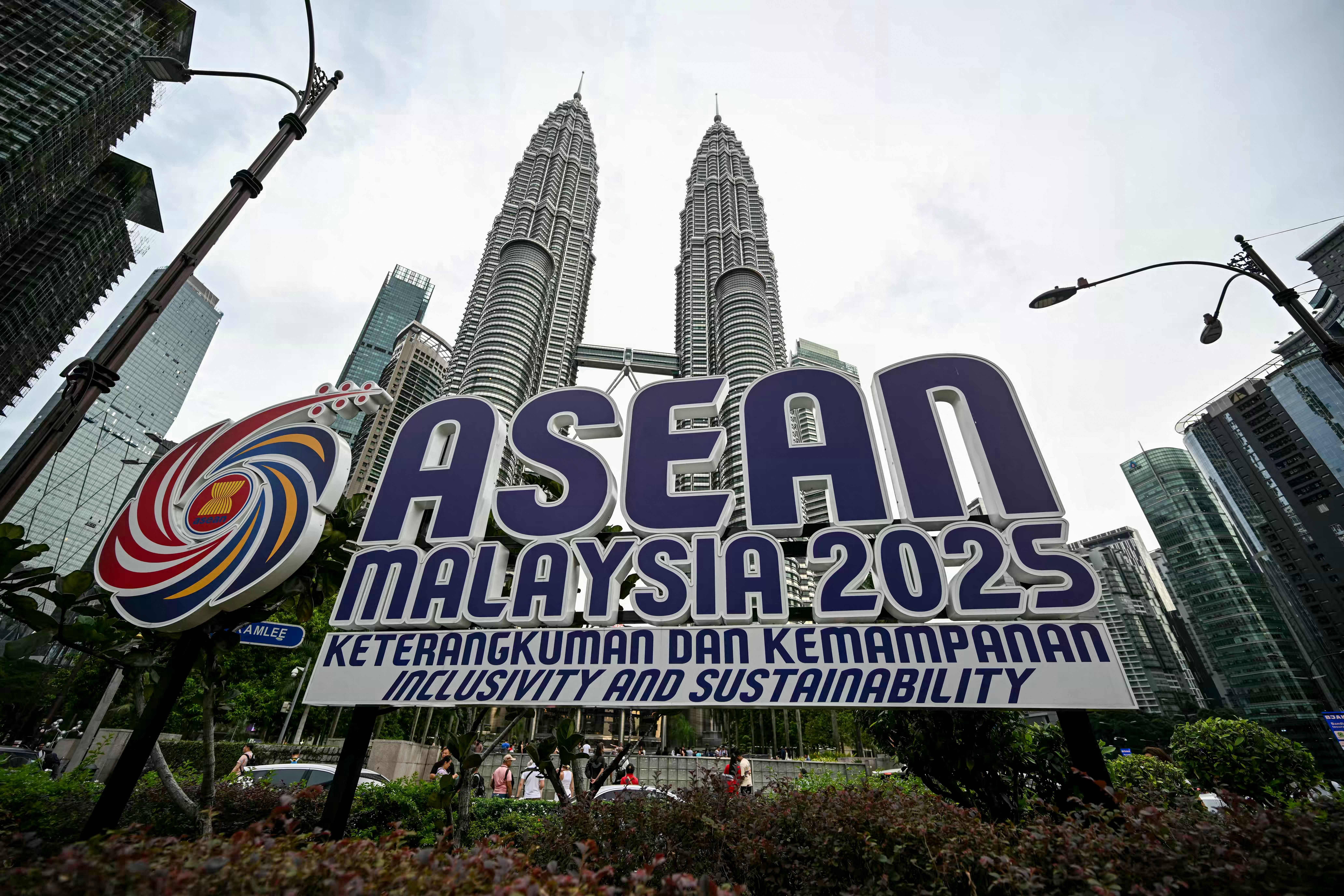
Malaysia’s chairmanship sought to fend off short-term challenges while laying the groundwork for minimizing ASEAN’s longer-term exposure to external stresses.

Elina Noor

For Malaysia, the conjunction that works is “and” not “or” when it comes to the United States and China.
Elina Noor
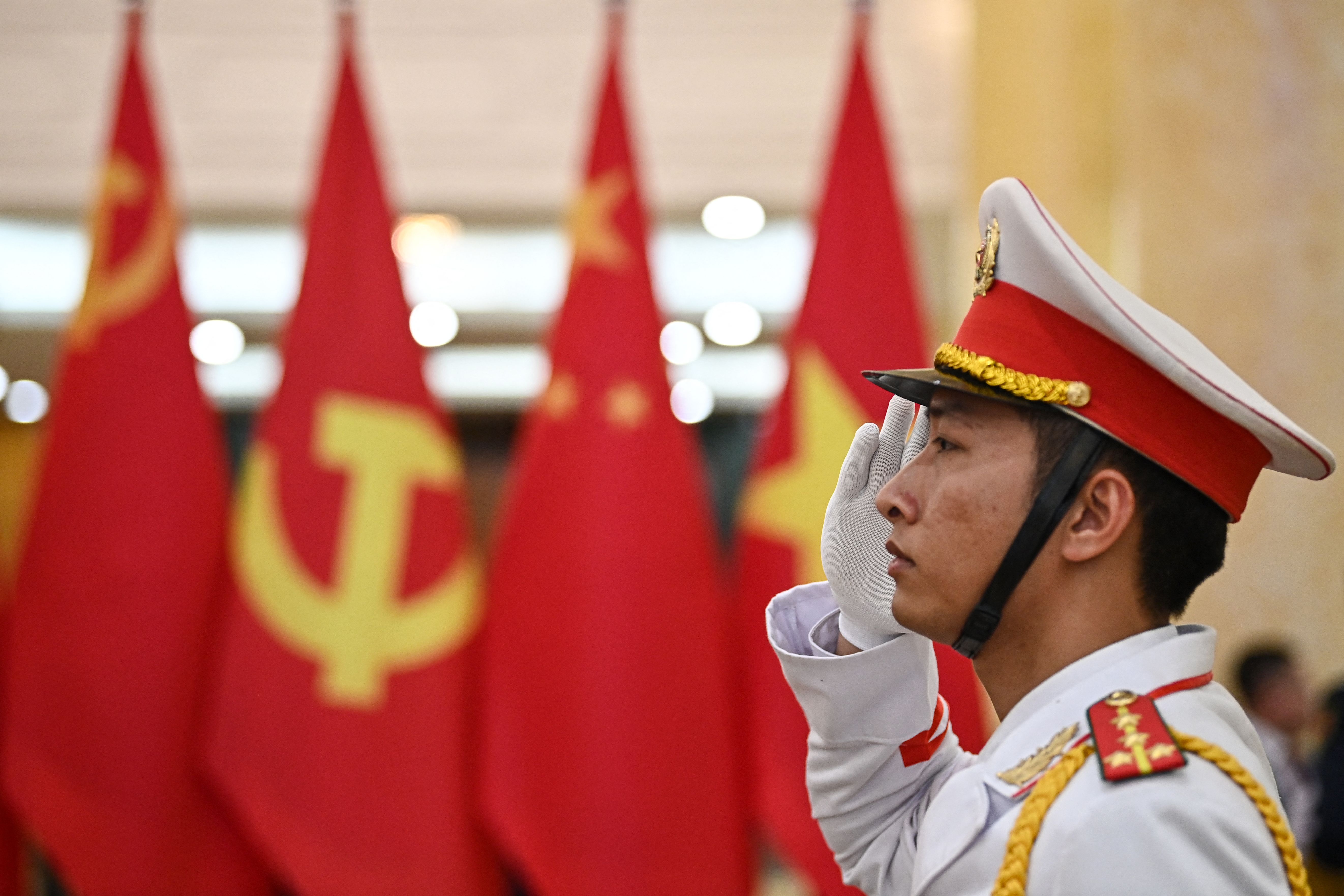
In July 2025, Vietnam and China held their first joint army drill, a modest but symbolic move reflecting Hanoi’s strategic hedging amid U.S.–China rivalry.

Nguyễn Khắc Giang
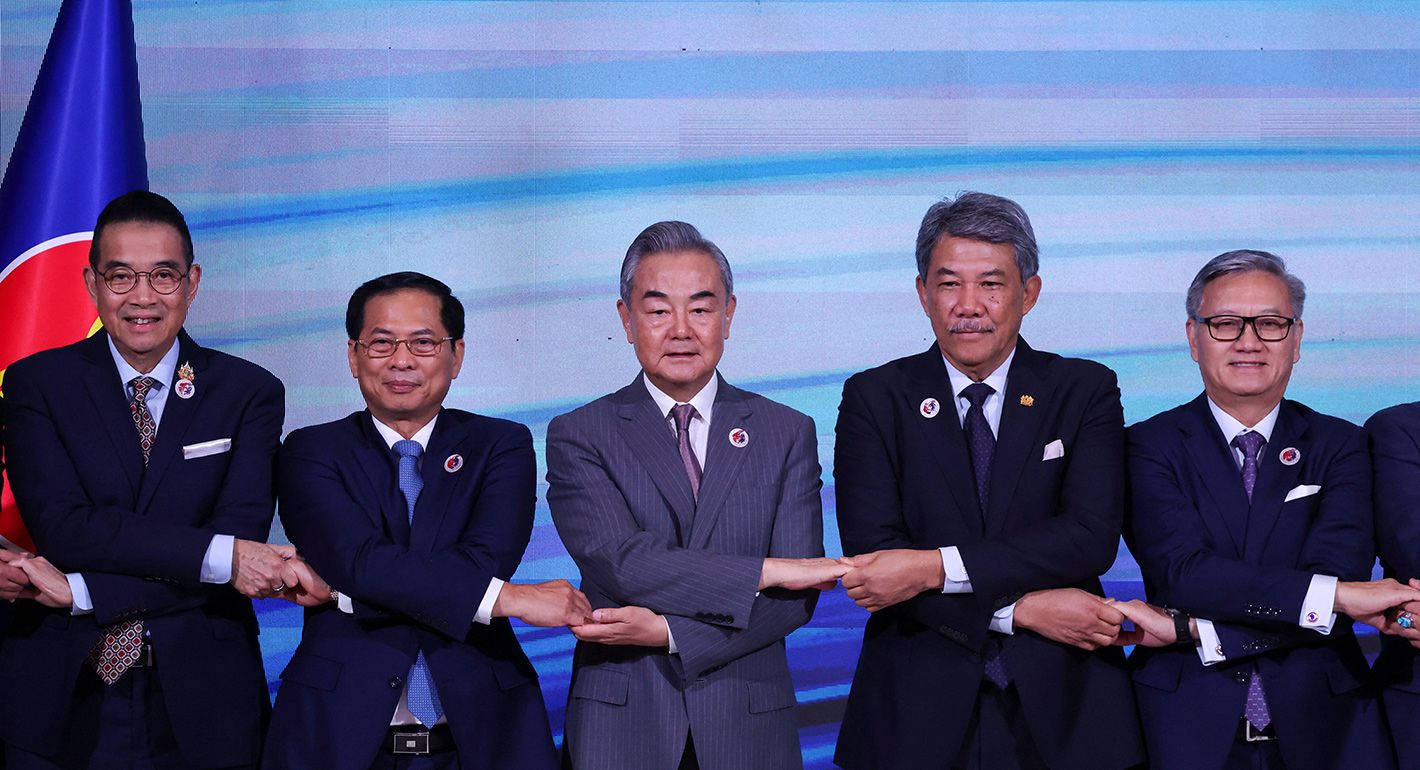
The Thai-Cambodian conflict highlights the limits to China's peacemaker ambition and the significance of this role on Southeast Asia’s balance of power.

Pongphisoot (Paul) Busbarat
Beijing believes that Washington is overestimating its own leverage and its ability to handle the trade war’s impacts.


Rick Waters, Sheena Chestnut Greitens