

Paper
Ashley J. Tellis
{
  "authors": [
    "Ashley J. Tellis"
  ],
  "type": "legacyinthemedia",
  "centerAffiliationAll": "dc",
  "centers": [
    "Carnegie Endowment for International Peace",
    "Carnegie Europe"
  ],
  "collections": [],
  "englishNewsletterAll": "ctw",
  "nonEnglishNewsletterAll": "",
  "primaryCenter": "Carnegie Endowment for International Peace",
  "programAffiliation": "SAP",
  "programs": [
    "South Asia"
  ],
  "projects": [],
  "regions": [
    "South Asia",
    "Afghanistan",
    "Southeast Asia",
    "Asia"
  ],
  "topics": [
    "Economy",
    "Military",
    "Foreign Policy"
  ]
}
Source: Getty
The next president of the United States will inherit the challenge of persuading the Pakistani leadership that it needs to continue prosecuting an unpopular, but necessary, war. Two fundamental changes need to be made by the next administration - it will have to strengthen the civilian government in Islamabad, while still maintaining a cooperative relationship with the Pakistani military.
Source: International Herald Tribune

Zardari will not likely be able to remedy these problems anytime soon, so the next president of the United States will inherit the challenge of persuading the Pakistani leadership that it needs to continue prosecuting an unpopular, but necessary, war. The fact remains that if the United States wants to wipe out Al Qaeda, it will need Islamabad's help, and if it wants to consolidate a stable democratic government in Afghanistan, it will need Islamabad to go after senior Afghan Taliban leaders and their Pakistani associates like Gulbuddin Hekmatyar and Jalaluddin Haqqani.
If Pakistan is to undertake these tasks, the next administration will need to make fundamental changes in its approach: It will have to strengthen the civilian government in Islamabad, while still maintaining a cooperative relationship with the Pakistani military.
These two objectives may frequently be at odds, and they embody genuine dilemmas for Washington. The war on terror necessitates continued U.S. engagement of the Pakistani military but, if not conducted appropriately, such a partnership could weaken civil authority in Islamabad and strengthen the national security state in Pakistan, which has historically been the chief cause of Pakistan's problems.
The alternative strategy of emphasizing Pakistani civilian supremacy, on the other hand, could - if not managed carefully - undermine the Pakistani military cooperation necessary for the success of counterterrorism operations and could in fact become a double whammy if the Zardari regime fails to govern responsibly.
Unfortunately, Washington can neither escape this dilemma nor resolve it by seizing only one of its horns. After all, the United States has as much of an interest in defeating terrorism as it does in helping Pakistanis build a lasting democratic government. The next U.S. administration, therefore, will have to juggle the twin tasks of supporting democratic consolidation in Pakistan while simultaneously remaining engaged with its military, however contradictory in principle and difficult in practice this may be.
This will of necessity require broad and patient engagement with Pakistan. It will require working with Pakistan's civilian leaders to overcome the pressing food and energy shortages through targeted assistance, while aiding them to repair their weakened democratic institutions. It will require increased U.S. assistance for education, particularly public education, which remains the best weapon against Pakistan's atavistic feudal structures and its religious radicalization. The Biden-Lugar bill, which aims to expand civilian over military aid, is a worthwhile initiative that deserves the support of the incoming administration (even if Biden isn't part of it), but it will necessitate enlarged U.S. monitoring capacity to succeed. It will require encouraging India and Pakistan to complete the reconciliation process they began several years ago. And it requires pressing Pakistan to increase its trading links with India so that the latter's dynamic economy can help raise Pakistan's economic growth as well.
Even as these efforts are underway, Washington must continue to assist Pakistan to fight the war on terror despite the fact that the Pakistan Army is tired, overextended and ill-equipped to fight terrorism and insurgency. The first objective here must be to get the army and its intelligence organization, the Inter-Services Intelligence, out of the terrorism business altogether. The second objective must be to assist the army with equipment and training to do something it has never done before: recognize that Pakistan's real enemies are to be found within the country and not across its eastern border in India.
Helping the army make this conceptual leap will be a great achievement. But neither Pakistan nor the United States can afford to wait for a full transformation in the army's mind-set. Both countries are confronted by a pressing threat of terrorism now, and success requires that the Pakistan Army get back into the fight as early as possible.
This will require responsible conduct by the military and intelligence services and the development of an appropriate civil-military relationship. Whereas most countries have an army, in Pakistan the army has a country. Pakistan's military consumes the single largest share of its gross domestic product, and defense expenditure crowds out investments in social spending and economic development, producing the popular resentment that feeds instability and terrorism.
The United States not only has an interest in defeating these dangers, it also has the influence to shape Pakistan's choices in helpful ways. Washington should press for substantial political reform that gradually changes the incentive structures in Pakistan. By strengthening civilian rule and encouraging private sector economic growth and development that benefits the Pakistani people more directly, it can help senior military officials conclude that their own interests are better served by a prosperous state that is at peace within and with its neighbors.
A shift of this sort will take many years to materialize, but the next American president could do much to encourage it by showing the Pakistanis that the United States will not neglect them if they are willing to do their part.
Ashley Tellis is a senior associate at the Carnegie Endowment for International Peace.
This article originally appeared in the International Herald Tribune
Former Senior Fellow
Ashley J. Tellis was a senior fellow at the Carnegie Endowment for International Peace.
Recent Work
Ashley J. Tellis
Ashley J. Tellis
Carnegie India does not take institutional positions on public policy issues; the views represented herein are those of the author(s) and do not necessarily reflect the views of Carnegie, its staff, or its trustees.

This piece examines India’s response to U.S. sanctions and tariffs, specifically assessing the immediate market consequences, such as alterations in import costs, and the broader strategic implications for India’s energy security and foreign policy orientation.
Vrinda Sahai
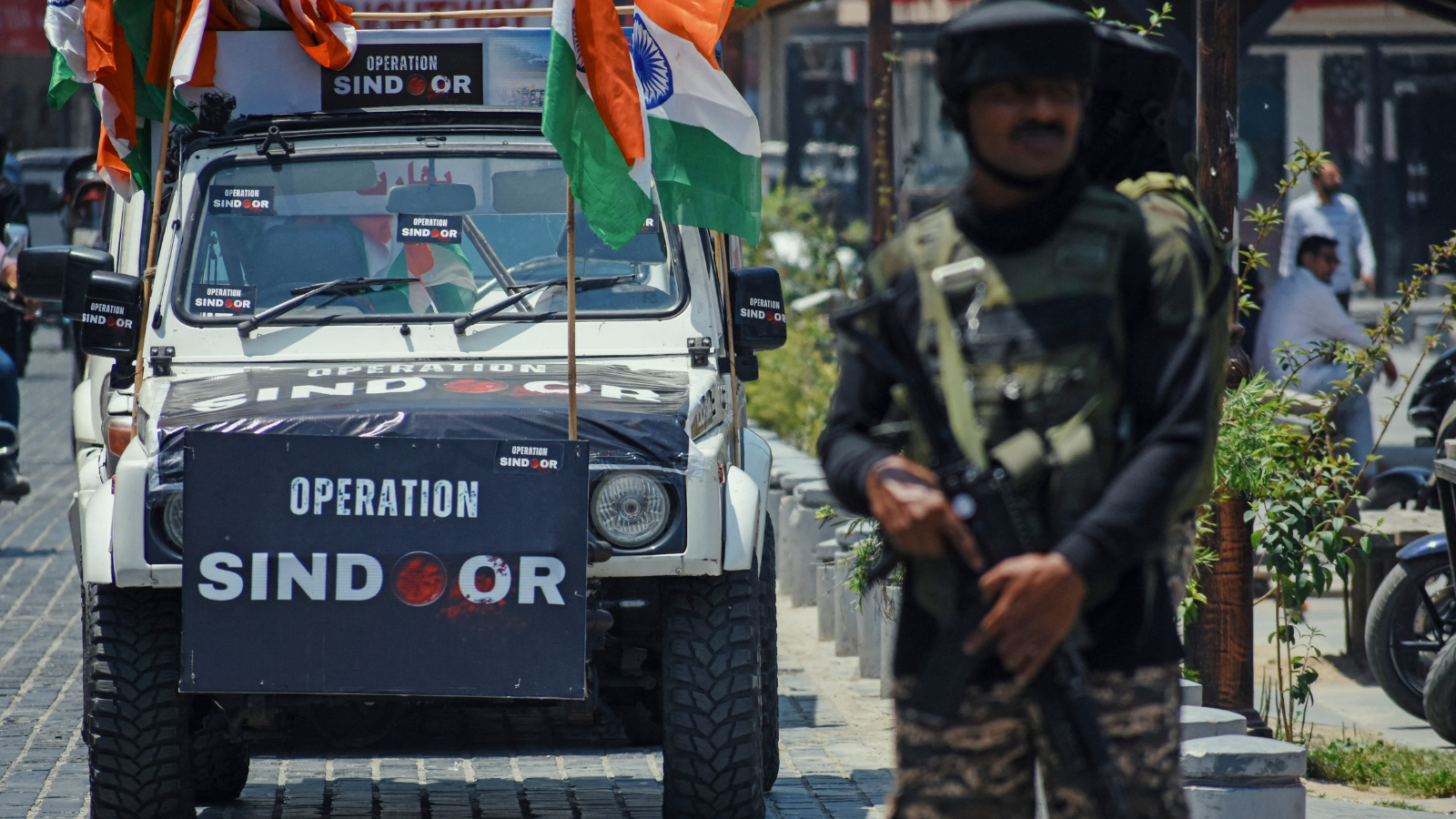
The India-Pakistan conflict that played out between May 6 and May 10, 2025, offers several military lessons. This article presents key takeaways from Operation Sindoor and breaks down how India’s preparations shaped the outcome and what more is needed to strengthen future readiness.

Dinakar Peri

This paper examines the evolution of India-China economic ties from 2005 to 2025. It explores the impact of global events, bilateral political ties, and domestic policies on distinct spheres of the economic relationship.

Santosh Pai
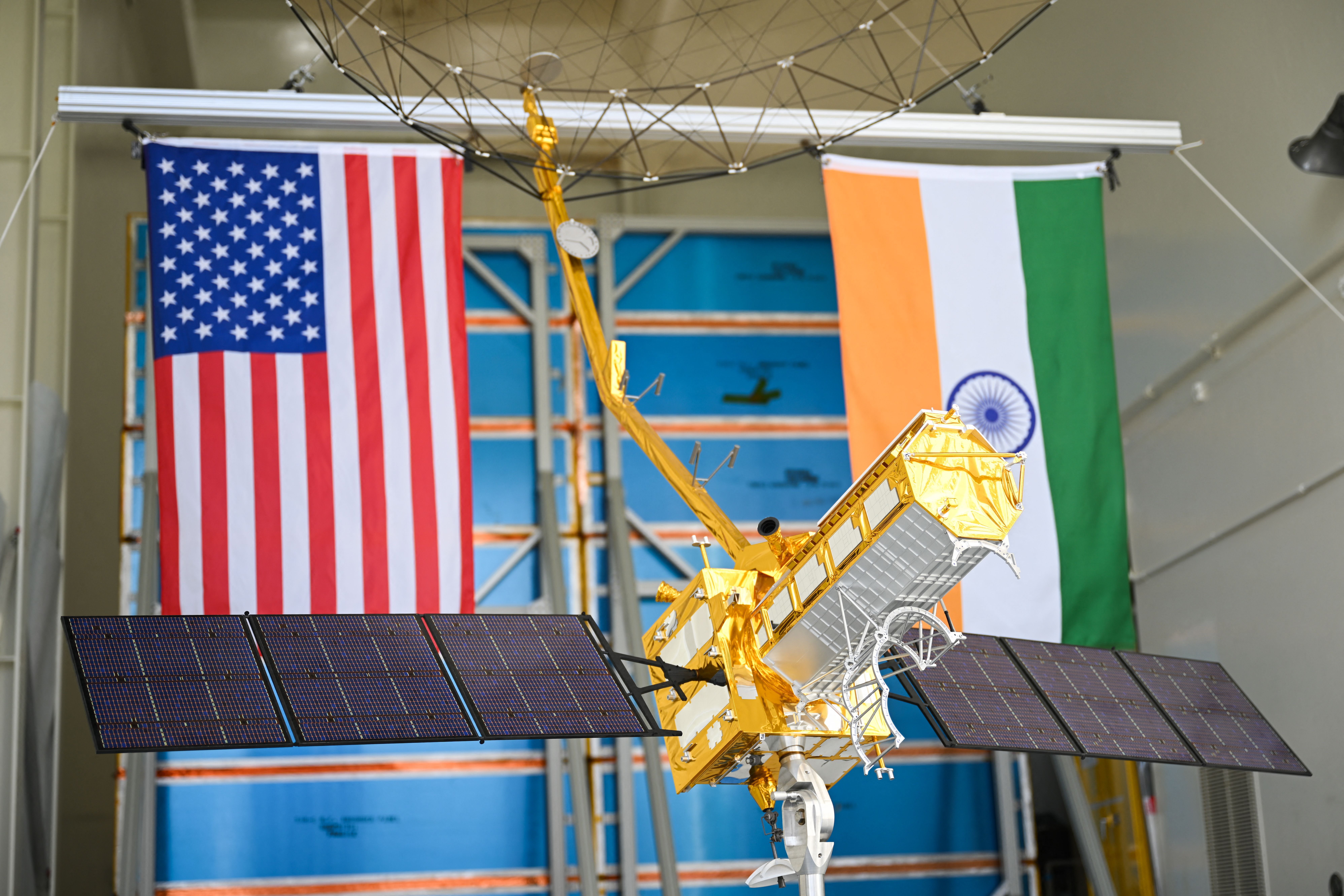
On July 30, 2025, the United States announced 25 percent tariffs on Indian goods. While diplomatic tensions simmered on the trade front, a cosmic calm prevailed at the Sriharikota launch range. Officials from NASA and ISRO were preparing to launch an engineering marvel into space—the NASA-ISRO Synthetic Aperture Radar (NISAR), marking a significant milestone in the India-U.S. bilateral partnership.

Tejas Bharadwaj
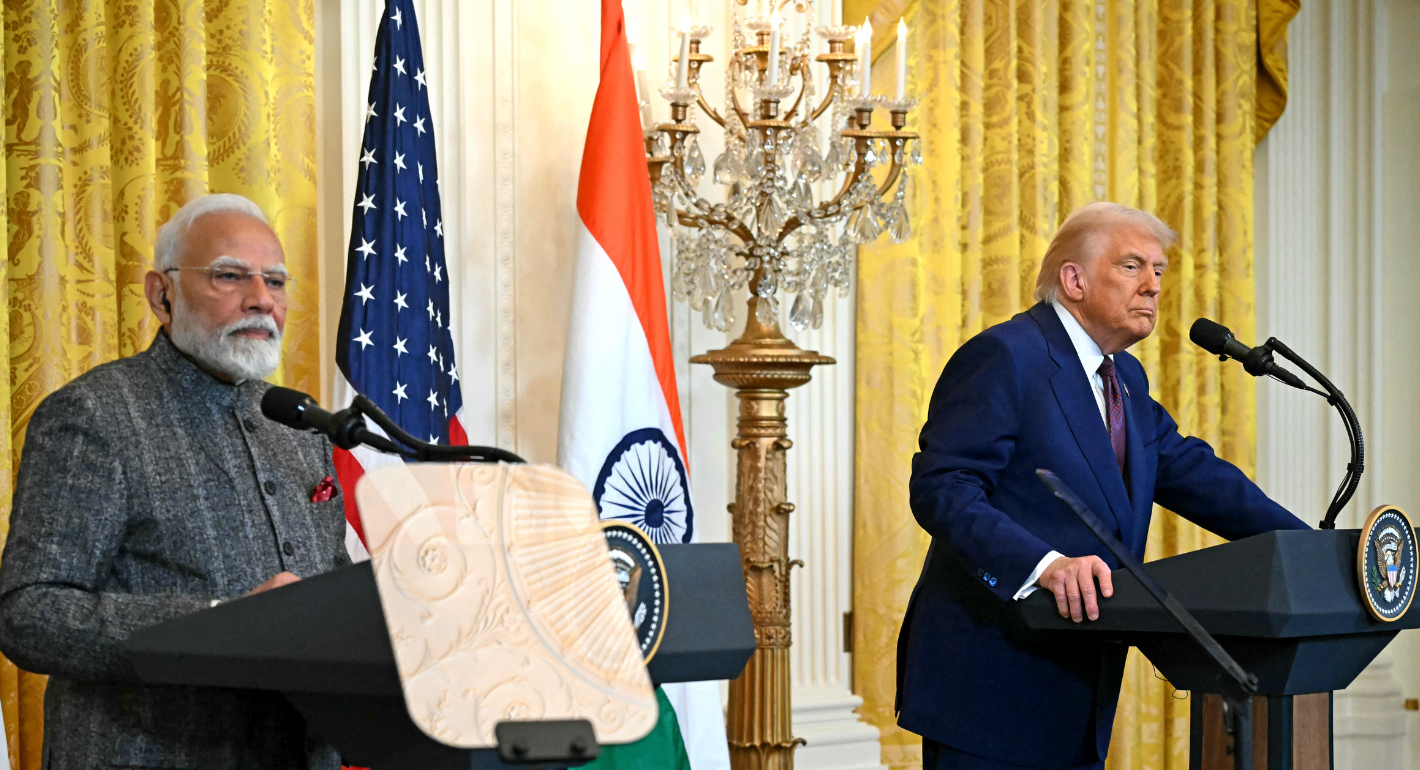
The India-U.S. relationship currently appears buffeted between three “Ts”—TRUST, Tariffs, and Trump.
Arun K. Singh