Source: Russia Direct
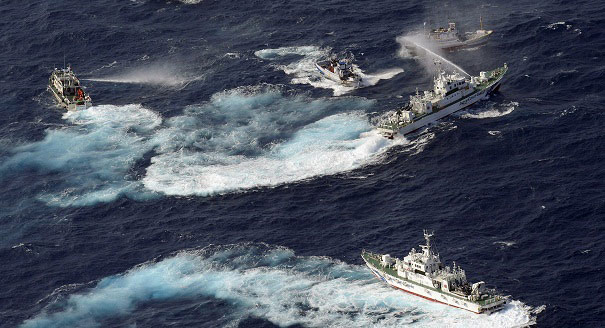
The Asia-Pacific region often attracts the attention of Russia and the United States, mainly because of the presence of the central power in the region – China – and that government’s relations with its neighbors. Tensions between China and Japan, as a result of territorial disputes, continue to increase concern in the region and beyond.
In this regard, two possible scenarios cause the greatest concerns. First of all, there is a concern that this tension could escalate into an armed conflict. Second, in order to protect itself from the Chinese threat, Japan may decide to develop its own nuclear weapons. Both the first and second scenarios are characterized by great ambiguity.
The first question relates to the role of the United States. If this conflict should escalate, how would the U.S. behave? Beijing knows that Washington has made firm commitments to Tokyo, implying the use of force (including nuclear weapons) in case of any aggression against Japan. Undoubtedly, for China this serves as a deterrent, while in Tokyo, they certainly understand that the U.S. has not always acted in accordance with its undertaken obligations.
For example, during the Pakistan-India war in 1971, the U.S., contrary to the Mutual Defense Assistance Agreement signed in 1954, did not provide assistance to Pakistan. Moreover, the Americans imposed an arms embargo on both India and Pakistan. Given their close economic interdependence today, would the U.S. risk aggravating its relations with China for the sake of their obligations to Japan? This question has no simple answer.
There has been talk in Japanese expert circles to the effect that, in response to the growing Chinese threat, Japan will use appropriate means. If all the usual (conventional) means cannot stop the aggression of China, then a decision will have to be made as to the creation of nuclear weapons.
This approach has its fair share of uncertainties and unknowns. First, it is not a foregone conclusion that China will increase its threats against Japan. It is obvious that Beijing is interested in using the territorial dispute with Japan to put pressure on that country, and also to mobilize the masses inside China under nationalist slogans.
However, is it really in the interest of China to engage in a full-scale armed conflict with Japan? Hardly.
Second, if we imagine an apocalyptic scenario, in which China and Japan, which would have acquired a nuclear arsenal, exchange nuclear strikes against each other’s territories, it is clear that China will have a chance to survive this, but Japan has absolutely no way to emerge from such a conflict.
Third, in Japan there are many people who, remembering the disaster of Hiroshima and Nagasaki, continue to strongly oppose the creation of nuclear weapons.
An important obstacle to the escalation of tensions in the Asia-Pacific region is the position of third-party countries, including Russia, which is interested in developing relations with China and also its neighbors. Escalation of conflicts in the region, interruption of trade and economic relations between regional countries – all this goes against Russia’s interests.
In its relations with countries in the Asia-Pacific region, Russia mainly focuses on the economic aspects, avoiding emphasis on political issues. In such a way, Russia avoids getting involved in regional disputes between countries. It is unlikely that there is any other acceptable alternative to this approach for Russia.
This does not mean that Moscow will be turning a blind eye to the dangerous trends developing in the region. First of all, a cause for concern is the situation on the Korean Peninsula and North Korea’s attempts to acquire nuclear weapons (Pyongyang is trying to convince everyone that it has already become a nuclear power, but its missile and nuclear tests put these claims to doubt).
No one in Russia supports those forces in Japan and South Korea that are seeking the creation of nuclear weapons. In addition, Russia is interested in greater transparency in China’s nuclear arsenal.
These clear positions can of course be adjusted under the influence of immediate needs of Russia. Thus, after the escalation of the crisis in Ukraine and Crimea joining Russia, Moscow needed the support of Beijing and was ready to pay any price for it.
Chinese officials made a number of statements in support of Russia’s position. China condemned the sanctions imposed against Russia. Probably, at this stage, Russia will not be focusing on the need for greater openness in China’s nuclear policy.
Russia will refrain from taking any steps that might displease China. However, we should not perceive this as a long-term strategy for Russia in the Asia-Pacific region. This is a temporary strategy that Moscow was forced to adopt in light of recent events.
In the long term, relations with China cannot be regarded as problem-free. That is why, while Russia holds regular military exercises with China, it is also gradually increasing the numbers of troops stationed in the eastern part of the country.
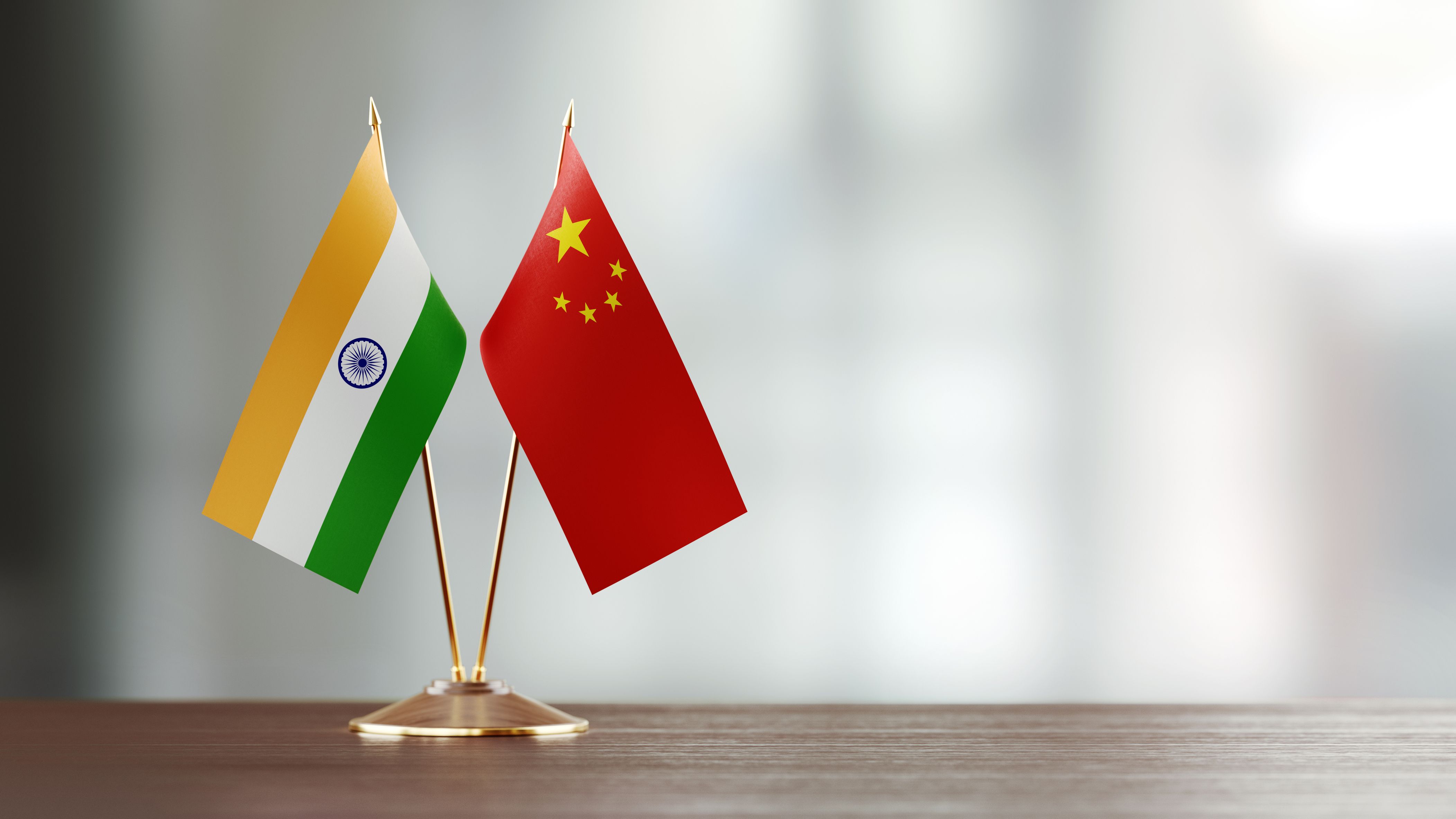
Therefore, we can see that Russia is actively developing good relations not only with China, but also with the countries that are wary of China – Vietnam, India, South Korea and Japan. Russia is helping India acquire a nuclear submarine fleet, whose main goal is to contain China in the Indian Ocean.
Taking a long-term perspective, Russia could find common ground with the United States when it comes to China. However, in the short term, Moscow and Washington are hardly ready for this.
This article originally appeared in Russia Direct.