• Research
  • About
  • Experts
Carnegie India logoCarnegie lettermark logo
Technology
{
  "authors": [
    "Zaha Hassan"
  ],
  "type": "commentary",
  "centerAffiliationAll": "",
  "centers": [
    "Carnegie Endowment for International Peace"
  ],
  "collections": [
    "Rebuilding Gaza: The Human Dimension",
    "Palestine/Israel Projects"
  ],
  "englishNewsletterAll": "",
  "nonEnglishNewsletterAll": "",
  "primaryCenter": "Carnegie Endowment for International Peace",
  "programAffiliation": "",
  "programs": [
    "Middle East"
  ],
  "projects": [],
  "regions": [
    "Palestine",
    "Middle East"
  ],
  "topics": []
}
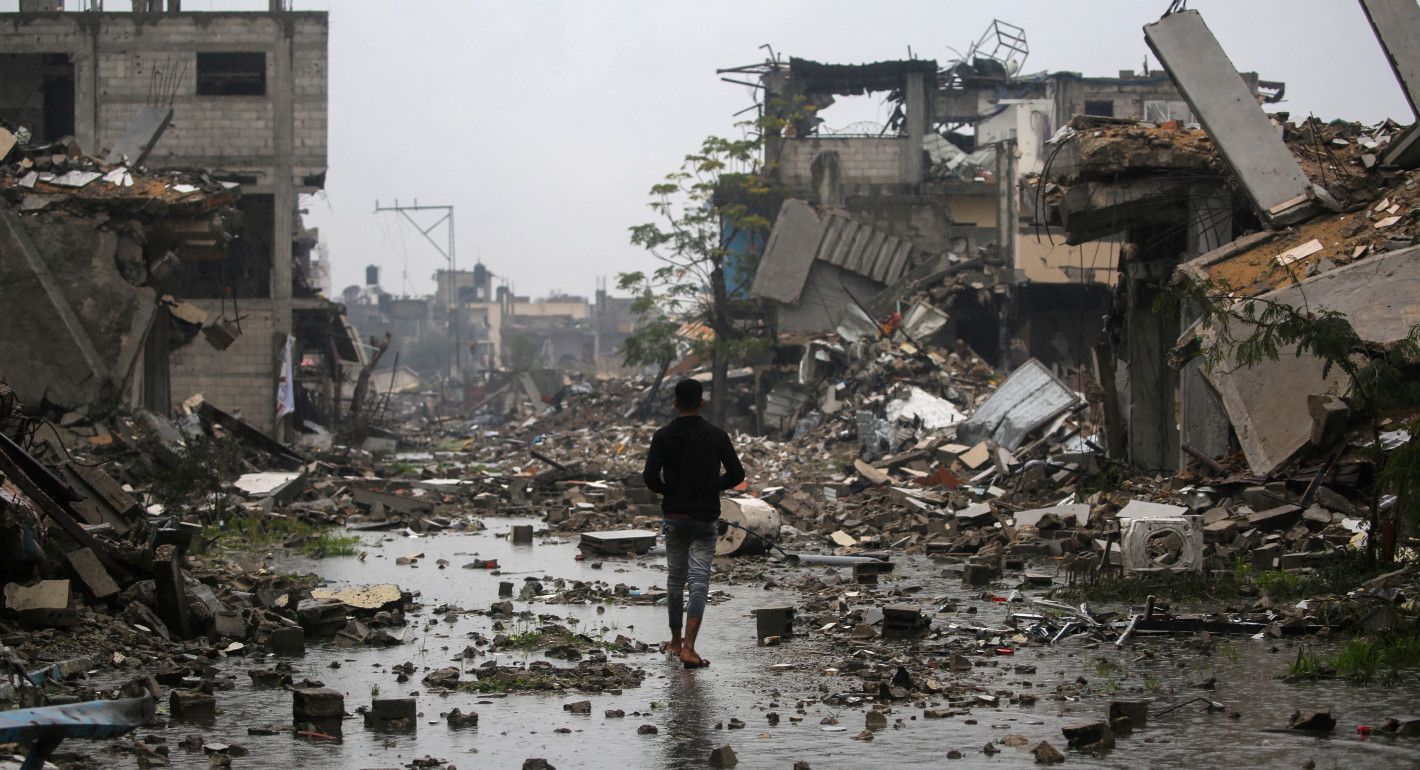
A teenage boy walks in the rain amid the remains of destroyed buildings

Bureij, central Gaza Strip, on January 23. (Photo by Eyad Baba/AFP via Getty Images)

Commentary

What the Gaza Ceasefire Means

The deal is extremely fragile, but there’s some reason for hope.

Link Copied
By Zaha Hassan
Published on Jan 24, 2025

After more than fifteen months, Israeli military operations inside Gaza have largely abated, as has the constant hum from surveillance drones and quadcopters. The three-phrase ceasefire deal between Israel and Hamas—negotiated by Qatar, Egypt, and the United States in May 2024 and enshrined in a UN Security Council resolution one month later—was finally pushed over the finish line just ahead of the inauguration of U.S. President Donald Trump.

The deal is extremely fragile—and long overdue and much too late for some held captive in Gaza and the tens of thousands of Palestinians who have been killed or severely wounded. Phase one allows six weeks of quiet, the withdrawal of Israeli troops from Palestinian population centers, a surge in humanitarian relief and supplies, and a return of the displaced to what is left of their homes. Each week, certain categories of Israeli captives will be exchanged for Palestinian prisoners and detainees held without charge. By the sixteenth day, negotiations will begin over the terms for a second phase that could include Israeli troops moving out of Gaza and a permanent ceasefire taking hold. In the third phase, Gaza’s reconstruction and rehabilitation would begin.

Israeli Prime Minister Benjamin Netanyahu has stated that Israel is only committed to a temporary ceasefire. But the Trump administration’s Middle East envoy, Steve Witkoff, has said he prefers diplomacy over war and has indicated the wish for negotiations to continue with Hamas.

Achieving a diplomatic solution will require sustained U.S. and international engagement to encourage both Israel and Hamas to fully implement their commitments. Much hinges on a successful phase one—and the volatile dynamics in Netanyahu’s governing coalition—to support negotiations leading to phase two. Will restrictions on the entry of goods and aid workers to Gaza be permitted? Will adequate humanitarian relief be distributed throughout Gaza? Will healthcare be accessible for the injured and infirm? And will foreign passport holders, students, and patients needing specialized care in the West Bank and abroad be able to travel?

There is some reason to be hopeful. In the first three days of the ceasefire, 2,400 aid trucks entered Gaza, up from a daily average of fifty-one earlier in the month. Palestinian police are again providing security for the humanitarian relief efforts, including the safe entry and distribution of food, water, and essential supplies. But more than aid and calm are needed to move Gaza into the next phases.

In this series, experts on humanitarian relief and healthcare delivery in conflict zones and postconflict environments share their insights on the challenges ahead for Gaza and offer recommendations for early stabilization efforts toward rebuilding communities:

  • The Immediate Priorities for Rebuilding Gaza’s Health System
  • Restoring Palestinians’ Access to and From Gaza Should Be a Ceasefire Priority
  • Inside Gaza’s Hospitals: The Crisis and Lack of Medical Supplies
  • To Look Toward Recovery, Gaza First Needs a Surge in Humanitarian Aid
  • What Gaza’s Children Need During the Ceasefire
  • What’s Next for Gaza?
Zaha Hassan
Senior Fellow, Middle East Program
Zaha Hassan
PalestineMiddle East

Carnegie India does not take institutional positions on public policy issues; the views represented herein are those of the author(s) and do not necessarily reflect the views of Carnegie, its staff, or its trustees.

More Work from Carnegie India

  • Article
    Risk and Retaliation: Israel, Iran, and the Evolving Situation in West Asia

    An Israeli response to Iran’s October 1 attack is imminent. The key question is of its intensity and potential fallout, both within Iran, in terms of nuclear security policy changes, and across the broader region. The coming days are likely to reshape West Asia irreversibly.

      Gaddam Dharmendra

  • Commentary
    India’s View on Soleimani, Iran, and the United States

    For India, the equation is pretty simple: better diplomatic relations between the United States and Iran would let New Delhi deal more smoothly with both countries. A decline in the relationship adversely affects Indian interests.

      Rudra Chaudhuri

  • Commentary
    What Would a Larger Chinese Presence Mean for the Middle East?

    The recent developments around the Strait of Hormuz have once again highlighted the importance of maritime chokepoints and their connection to regional geopolitics.

      Darshana M. Baruah

  • Commentary
    As US-Iran Tensions Mount, What India Can Learn from the Oil ‘Tanker War’ in 1980s

    Last week, Britain impounded an Iranian oil tanker in Gibraltar, claiming that the vessel was carrying oil to Syria in violation of the European Union’s sanctions.

      Srinath Raghavan

  • Commentary
    Under Modi, India Has Shed its Traditional Defensiveness Towards the Middle East

    It has been a rather long learning curve for New Delhi to separate presumed transcendental religious solidarity and the logic of national self-interest in engaging the Middle East.

      C. Raja Mohan

Get more news and analysis from
Carnegie India
Carnegie India logo, white
Unit C-4, 5, 6, EdenparkShaheed Jeet Singh MargNew Delhi – 110016, IndiaPhone: 011-40078687
  • Research
  • About
  • Experts
  • Projects
  • Events
  • Contact
  • Careers
  • Privacy
  • For Media
Get more news and analysis from
Carnegie India
© 2026 Carnegie Endowment for International Peace. All rights reserved.