
• Research
  • About
  • Experts
Carnegie India logoCarnegie lettermark logo
Technology
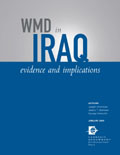
WMD in Iraq: Evidence and Implications
Report

WMD in Iraq: Evidence and Implications

A groundbreaking report details what the U.S. and international intelligence communities understood about Iraq's weapons programs before the war and outlines policy reforms to improve threat assessments, deter transfer of WMD to terrorists, strengthen the UN weapons inspection process, and avoid politicization of the intelligence process.

Link Copied
By Joseph Cirincione, Jessica Tuchman Mathews, George Perkovich, with Alexis Orton
Published on Jan 8, 2004

Additional Links

Table 6. Summary: Missile and Delivery SystemAppendicesNotesFull Text (PDF)Guide to Key Findings and Summary of RecomendationChapter I: IntroductionChapter II: Iraq's WMD CapabilitiesChapter III: Findings and RecomendationsTable of ContentsTable 1. Summary of WMD Search TeamsTable 2. Key NIE DissentsTable 3. Summary of Iraq's Nuclear Weapon ProgramTable 4. Summary of Iraq's Chemical Weapon ProgramTable 5. Summary of Iraq's Biological Weapon ProgrTranscript: Authors present findings

Summary
This new study details what the U.S. and international intelligence communities understood about Iraq's weapons programs before the war and outlines policy reforms to improve threat assessments, deter transfer of WMD to terrorists, strengthen the UN weapons inspection process, and avoid politicization of the intelligence process.

The report distills a massive amount of data into side-by-side comparisons of pre-war intelligence, the official presentation of that intelligence, and what is now known about Iraq's programs.

Click on the link above for full text or the links to the right for specific sections of this Carnegie report.

About the Authors
Joseph Cirincione is a senior associate and director of the Non-Proliferation Project. Jessica T. Mathews is president and George Perkovich is vice president for studies of the Carnegie Endowment. Alexis Orton is a Junior Fellow with the Non-Proliferation Project.

This is a web-only publication.

Authors

Joseph Cirincione
Former Senior Associate, Director for NonProliferation
Joseph Cirincione
Jessica Tuchman Mathews
Distinguished Fellow
Jessica Tuchman Mathews
George Perkovich
Japan Chair for a World Without Nuclear Weapons, Senior Fellow
George Perkovich
with Alexis Orton
Middle EastIranIraqSecurityNuclear PolicyNuclear Energy

Carnegie India does not take institutional positions on public policy issues; the views represented herein are those of the author(s) and do not necessarily reflect the views of Carnegie, its staff, or its trustees.

More Work from Carnegie India

  • Commentary
    The Impact of U.S. Sanctions and Tariffs on India’s Russian Oil Imports

    This piece examines India’s response to U.S. sanctions and tariffs, specifically assessing the immediate market consequences, such as alterations in import costs, and the broader strategic implications for India’s energy security and foreign policy orientation.

      Vrinda Sahai
  • Article
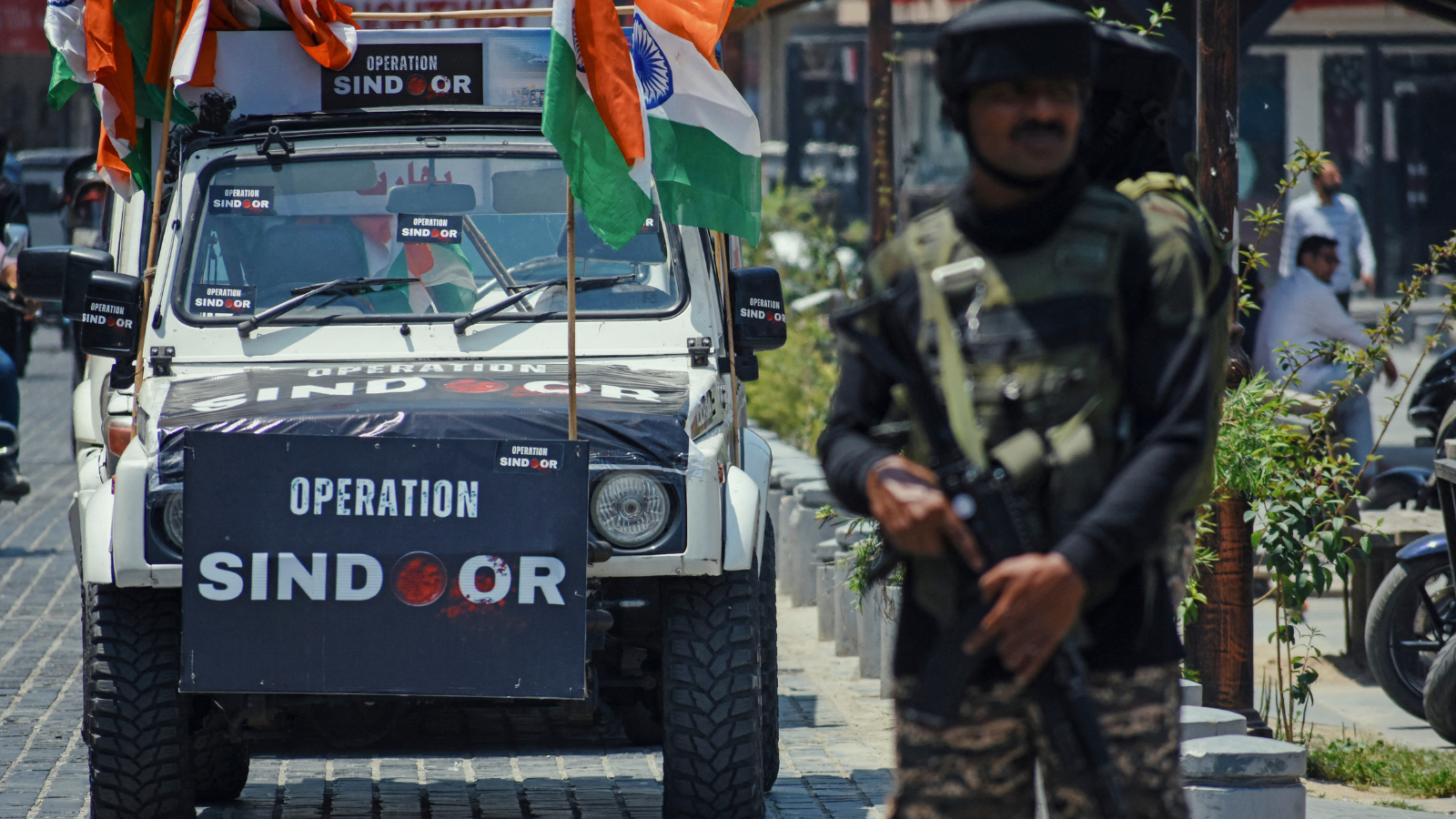
    Military Lessons from Operation Sindoor

    The India-Pakistan conflict that played out between May 6 and May 10, 2025, offers several military lessons. This article presents key takeaways from Operation Sindoor and breaks down how India’s preparations shaped the outcome and what more is needed to strengthen future readiness.

      Dinakar Peri

  • Book
    India and the Sovereignty Principle: The Disaggregation Imperative

    This book offers a comprehensive analysis of India's evolving relationship with sovereignty in a complex global order. Moving beyond conventional narratives, it examines how the sovereignty principle shapes India's behavior across four critical domains—from traditional military power to contemporary data governance.

      Rudra Chaudhuri, Nabarun Roy

  • Article
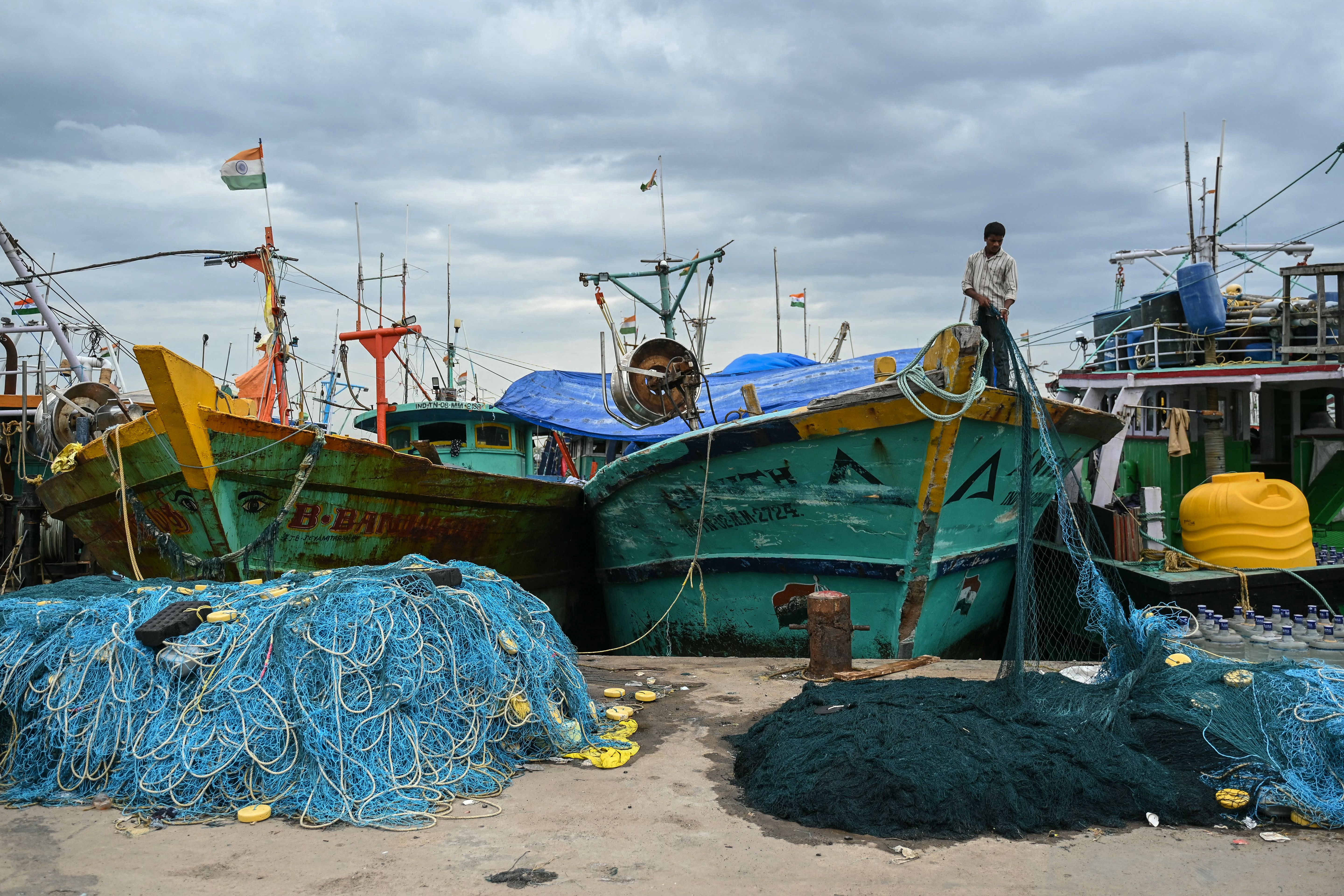
    Hidden Tides: IUU Fishing and Regional Security Dynamics for India

    This article examines the scale and impact of Chinese IUU fishing operations globally and identifies the nature of the challenge posed by IUU fishing in the Indian Ocean Region (IOR). It also investigates why existing maritime law and international frameworks have struggled to address this growing threat.

      Ajay Kumar, Charukeshi Bhatt

  • Book
    Violence and Development Along the India-Pakistan Border in Jammu and Kashmir

    This book examines the impact of cross-border violence on communities living along the Line of Control and the International Border in Jammu and Kashmir, India.

      Deep Pal, Surya Valliappan Krishna, Saheb Singh Chadha

Get more news and analysis from
Carnegie India
Carnegie India logo, white
Unit C-4, 5, 6, EdenparkShaheed Jeet Singh MargNew Delhi – 110016, IndiaPhone: 011-40078687
  • Research
  • About
  • Experts
  • Projects
  • Events
  • Contact
  • Careers
  • Privacy
  • For Media
Get more news and analysis from
Carnegie India
© 2026 Carnegie Endowment for International Peace. All rights reserved.