

Commentary
A coalition of states is seeking to avert a U.S. attack, and Israel is in the forefront of their mind.
Michael Young
{
  "authors": [
    "George Perkovich"
  ],
  "type": "legacyinthemedia",
  "centerAffiliationAll": "",
  "centers": [
    "Carnegie Endowment for International Peace"
  ],
  "collections": [],
  "englishNewsletterAll": "",
  "nonEnglishNewsletterAll": "",
  "primaryCenter": "Carnegie Endowment for International Peace",
  "programAffiliation": "",
  "programs": [
    "Nuclear Policy"
  ],
  "projects": [],
  "regions": [
    "Iran"
  ],
  "topics": [
    "Security",
    "Foreign Policy",
    "Nuclear Policy"
  ]
}
REQUIRED IMAGE
The United States is currently pushing the International Atomic Energy Agency to press charges against Iran for technical violations of the Nuclear Nonproliferation Treaty. But the answer to this nuclear challenge is in Iraq, not Vienna. Post-war, Iran's leaders are nervous enough to look for accommodations with Washington.
Source: Carnegie
The following is drawn from George Perkovich's article, "Wooing Iran Away From the Axis of Evil," which appeared June 8, 2003, in the San Diego Union-Tribune. George Perkovich is vice president for studies at the Carnegie Endowment.
The United States is currently pushing the International Atomic Energy Agency to press charges against Iran for technical violations of the Nuclear Nonproliferation Treaty. But the answer to this nuclear challenge is in Iraq, not Vienna. Post-war, Iran's leaders are nervous enough to look for accommodations with Washington. The Iranian government worries that even if it begins to meet these demands the Bush administration will try to overthrow it anyway. So, "why deal?" Iranians ask.
This is where the Iraq answer comes in. Now that Saddam is gone, President Bush should seize the opportunity to convince Iran that it doesn't need nuclear weapons. Iraq was the gravest threat to Iran,
followed by the United States and Israel. America helped Iran immensely by removing the Iraq threat and the anti-Iranian Taliban. The administration should convince the Iranians that they will not be a target of Israeli or U.S. military attack if it does not acquire weapons of mass destruction and threaten Israel's existence.
Iranian Defense Minister Ali Shamkhani seemed to recognize this logic in a February 2002 statement: "The existence of nuclear weapons will turn us into a threat to others that could be exploited in a dangerous way to harm our relations with the countries of the region."
Regional Affairs
Washington can and should offer to deal Iran back in on regional affairs. As a first step, the United States, Iran, and other Gulf states should be convened in a regional dialogue on the future of the Persian Gulf region. Recognizing Iran's respect for the United Nations and its refusal to kowtow to Washington, the United States should quietly encourage Kofi Annan to call for such a dialogue.
The dialogue should initiate a diplomatic process for devising principles, rules and confidence-building measures to improve relations among Iraq, Iran, all the smaller regional states, and the United States. The smaller states can affirm to Iran that they will need a strong U.S. military presence as long as Iran appears to seek weapons of mass destruction and support terrorist organizations. If Iran posed no such threats, the United States would not need to have a major military presence in the region, which is such an affront and threat to Iran.
Iranian Nationalism
Iran's nationalist politics are as difficult to handle as nitroglycerine. The United States must squeeze Iran (and its suppliers) enough to block Iran's acquisition of nuclear weapon capabilities without shaking so hard that Iranian nationalists rebel.
Unfortunately, Washington's policies inflame Iranian nationalism. Nothing fuels nationalism like public diktat by arrogant, perhaps hypocritical outsiders. As the pre-revolutionary finance minister, Jahangir Amuzegar, noted recently, many Iranians took the "axis of evil" harangue "as a deep insult to their national dignity. Any U.S. strategy that even remotely raises the specter of foreign interference in Iran is doomed to fail."
An Iranian-American who is passionately anti-Ayatollah notes similarly, "If Israel, the arch-enemy of Iran, has a huge WMD arsenal and the West just ignores it, others in the region will try to get one, too. If the West wants to prevent Iran from gaining access to the bomb, it has to de-nuclearize the whole region."
In other words, Israel's weapons have to be brought into the picture, too. Secretary of State Colin Powell recently said, "It has always been a United States goal that conditions could be created in this part of the world where no nation would have a need for any weapons of mass destruction."
Iranians also need to see that they will gain from ending activities that now isolate them internationally. Ineffective U.S. sanctions should be replaced with a strategy to demonstrate the benefits of economic cooperation with this nation.
An Offer Too Good To Refuse
A cunning U.S. policy would be to make an offer that no Iranian faction can refuse. Giving hard-liners no realistic choice but to do business with the United States would unfreeze official relations with Iran and give reformers operating space.
The simplest first step would be for the United States to drop its objection to Iran joining the World Trade Organization. If free trade improves the qualities of governance and life of all states that participate, why would the United States not want Iran to improve itself this way? Indeed, the greatest resistance to economic reforms sought by Iranian progressives comes from the bazaar, the old-economy conservatives who also back the political-security hard-liners. Prospective WTO membership would give progressives a lever to push reforms necessary to satisfy WTO terms and integrate Iran more deeply into the international political economy.
The political and nonproliferation logic of all the openings suggested here would show that Washington recognizes that the Iranian people want to become fully integrated in the international community. Because of the cross-hatched organization of power and authority in Iran, Washington should convey to the head of each important political institution that the United States is determined not to be the obstacle to Iran's integration into world civilization. Each of these overtures should be communicated directly to the religious leader Ayatollah Sayyed Ali Khamenei, President Mohammad Khatami, the chairman of the Expediency Council and the speaker of the Majlis. The strategy is to give hard-liners an unrefusable opportunity to satisfy the Iranian public's desire for relations with the United States.
The United States and its friends should use every possible means to block nuclear weapon-related supplies coming into Iran. But ultimately the solution to the proliferation problem lies in persuading Iranians - reformers and hard-liners alike - that they do not need nuclear weapons and will be better off without them.
Carnegie does not take institutional positions on public policy issues; the views represented herein are those of the author(s) and do not necessarily reflect the views of Carnegie, its staff, or its trustees.
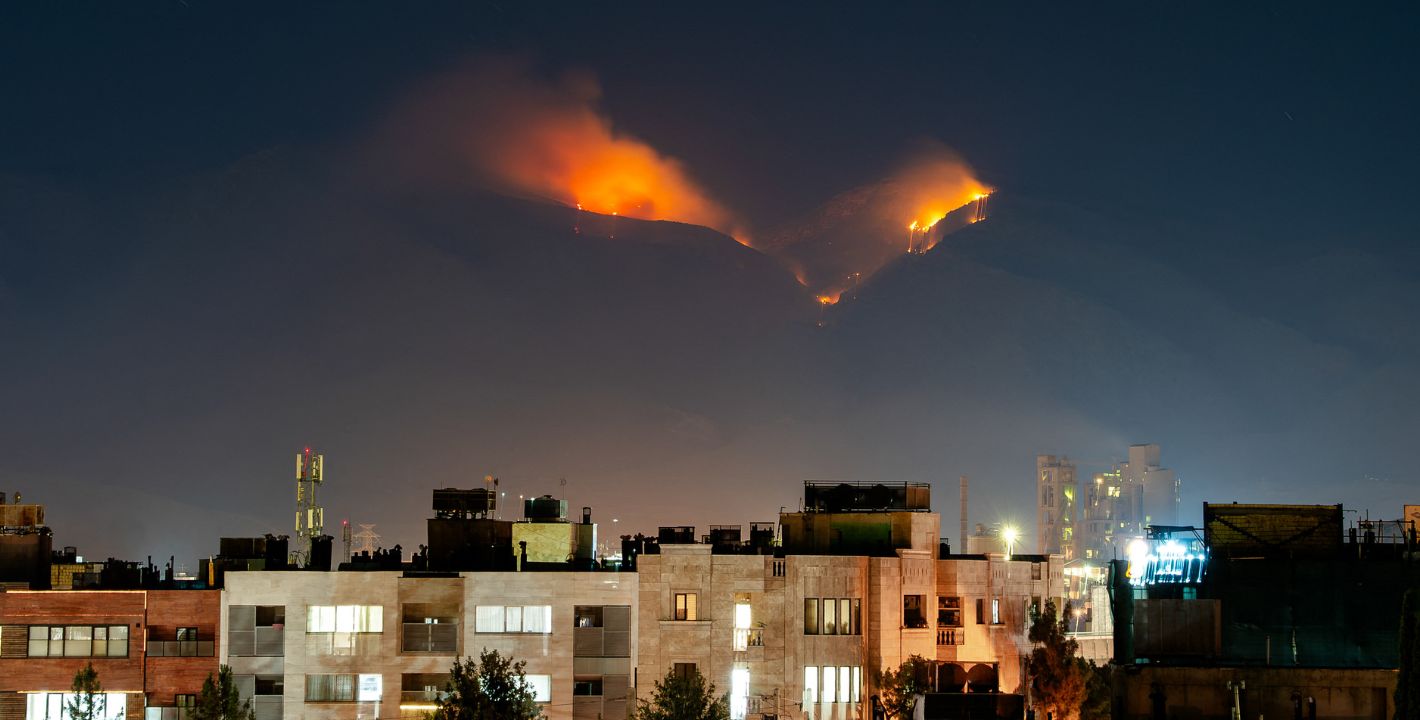
A coalition of states is seeking to avert a U.S. attack, and Israel is in the forefront of their mind.

Michael Young

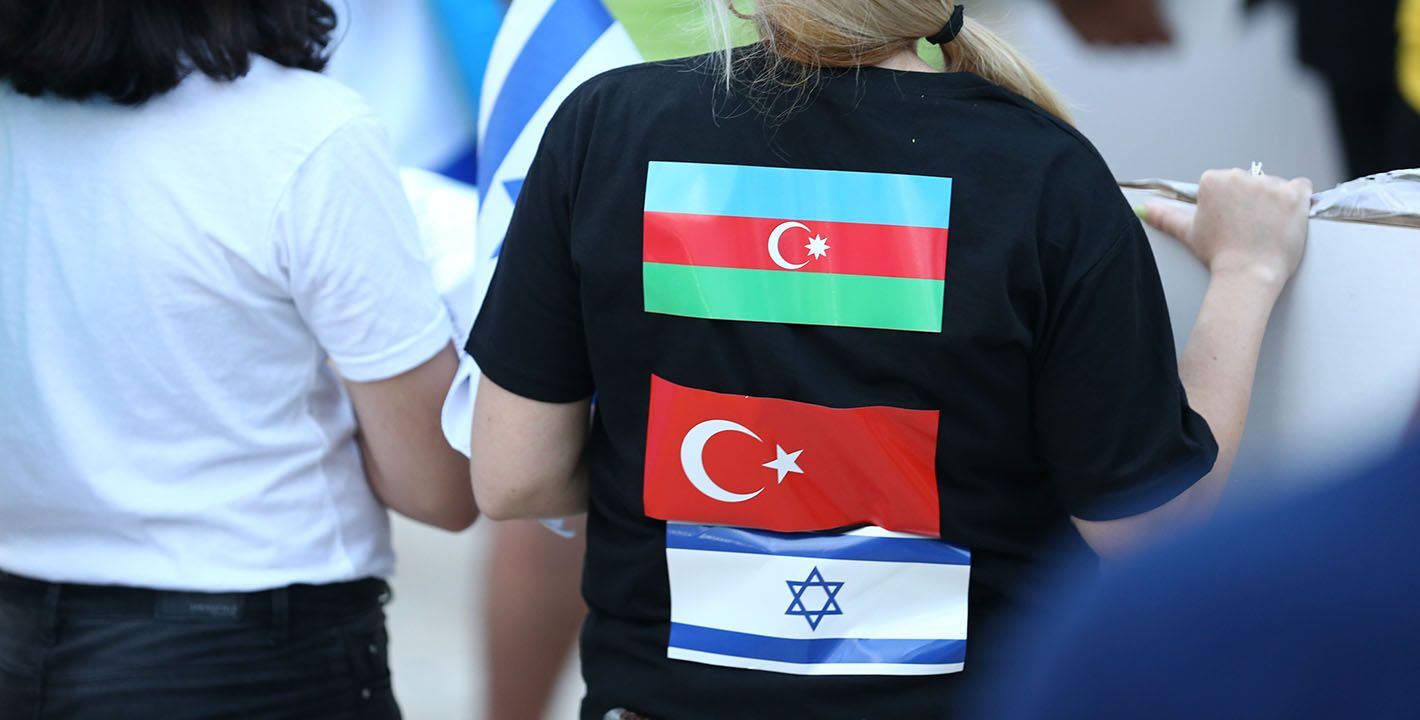
Baku may allow radical nationalists to publicly discuss “reunification” with Azeri Iranians, but the president and key officials prefer not to comment publicly on the protests in Iran.

Bashir Kitachaev
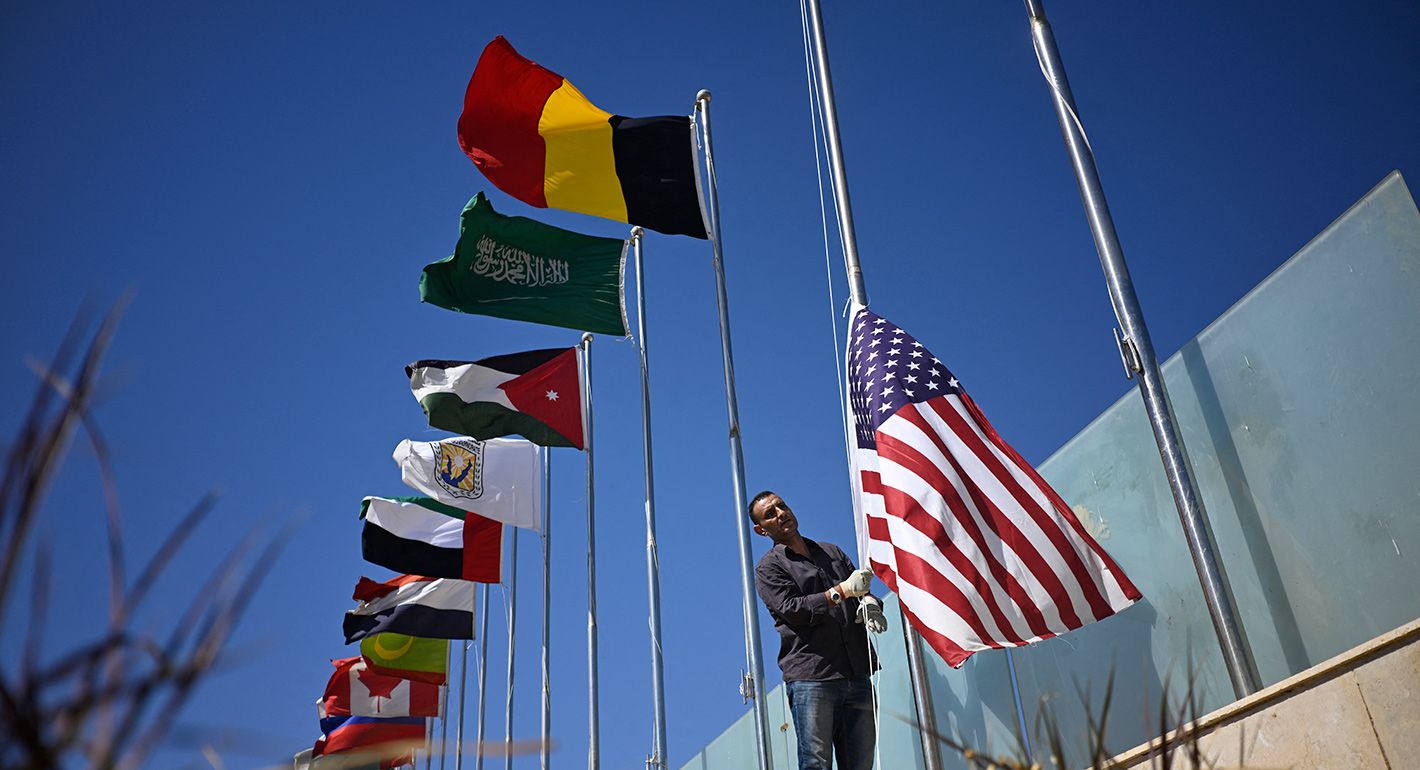
The country’s leadership is increasingly uneasy about multiple challenges from the Levant to the South Caucasus.

Armenak Tokmajyan
The countries of the region have engaged in sustained competition that has tested their capacities and limitations, while resisting domination by rivals. Can a more stable order emerge from this maelstrom, and what would it require?


Hamza Meddeb, Mohamed Ali Adraoui

As Washington reduces its presence in the country, the success of its withdrawal and continued containment of the Islamic State will hinge on adopting an approach of flexible oversight built around three priorities, as well as balancing Turkish and Israeli red lines.

Kheder Khaddour, Issam Kayssi