• Research
  • Diwan
  • About
  • Experts
Carnegie Middle East logoCarnegie lettermark logo
PalestineSyria
The Arctic Climate Change and Security Policy Conference: Final Report and Findings
Report

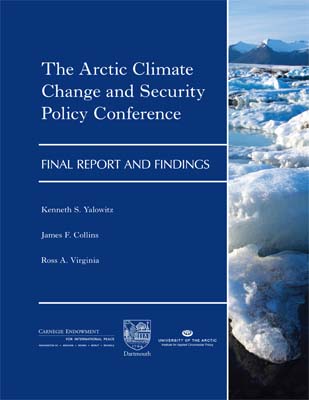
The Arctic Climate Change and Security Policy Conference: Final Report and Findings

Minimizing the environmental impact of climate change and resource development in the Arctic must be a top priority, if environmental disaster is to be avoided.

Link Copied
By Kenneth S. Yalowitz, James F. Collins, Ross A. Virginia
Published on Jun 24, 2009

Additional Links

Full Text

The accelerating pace of climate change, increasing competition over resources, and new territorial claims demand that greater attention be paid to the Arctic. As the most immediate and serious threat to the region, minimizing the environmental impact of climate change and resource development must be the top priority, according to a report from the Carnegie Endowment, the University of the Arctic, and Dartmouth College.

Key points:

  • An efficient and multilateral process for responding to environmental disasters is the Arctic’s most pressing need.
  • The Arctic is unlikely to be a security flashpoint in the short term. State-to-state negotiations and multilateral institutions have effectively handled territorial claims thus far, and neither Russia nor the United States is looking for a new source of tension.

As a major Arctic power, the United States has environmental, political, and security interests and responsibilities and should play a key role in preserving the Arctic ecosystem.

Recommendations for U.S. policy makers:

  • Create a sub-cabinet commission on global warming headed by the vice president to address the effects of climate change on the Arctic.
  • Promote the Arctic Council as the principal international forum for addressing Arctic issues.
  • Ratify the UN Convention on the Law of the Sea (UNCLOS) immediately. The UNCLOS provides a framework to adjudicate disagreements over borders and territory claims, which could become more heated as global warming facilitates access to resources. 
  • Support policy-relevant scientific research that can identify critical first steps for policy makers and identify the costs of inaction on the threat of global warming.

The report concludes:

“The environment and the management of natural resources are the most pressing security issues in the North. States are committed to addressing boundary and access issues through existing institutions, principally UNCLOS. Large-scale damage to the Arctic from transportation accidents, energy development, fishing, and pollutants from the South pose greater immediate threats than classic security issues. Existing emergency response systems and contingency plans are not up to the task.” 

Authors

Kenneth S. Yalowitz
Dartmouth College
James F. Collins
Nonresident Senior Fellow, Russia and Eurasia Program; Diplomat in Residence
James F. Collins
Ross A. Virginia
Dartmouth College
North AmericaUnited StatesCaucasusRussiaClimate Change

Carnegie does not take institutional positions on public policy issues; the views represented herein are those of the author(s) and do not necessarily reflect the views of Carnegie, its staff, or its trustees.

More Work from Malcolm H. Kerr Carnegie Middle East Center

  • Commentary
    Diwan
    All or Nothing in Gaza

    Implementing Phase 2 of Trump’s plan for the territory only makes sense if all in Phase 1 is implemented.

      Yezid Sayigh
  • Commentary
    Diwan
    A Mechanism of Coercion

    Israeli-Lebanese talks have stalled, and the reason is that the United States and Israel want to impose normalization.

      Michael Young

  • Commentary
    Diwan
    Iran’s Woes Aren’t Only Domestic

    The country’s leadership is increasingly uneasy about multiple challenges from the Levant to the South Caucasus.

      Armenak Tokmajyan
  • Commentary
    Diwan
    Pax Israelica and Its Discontents

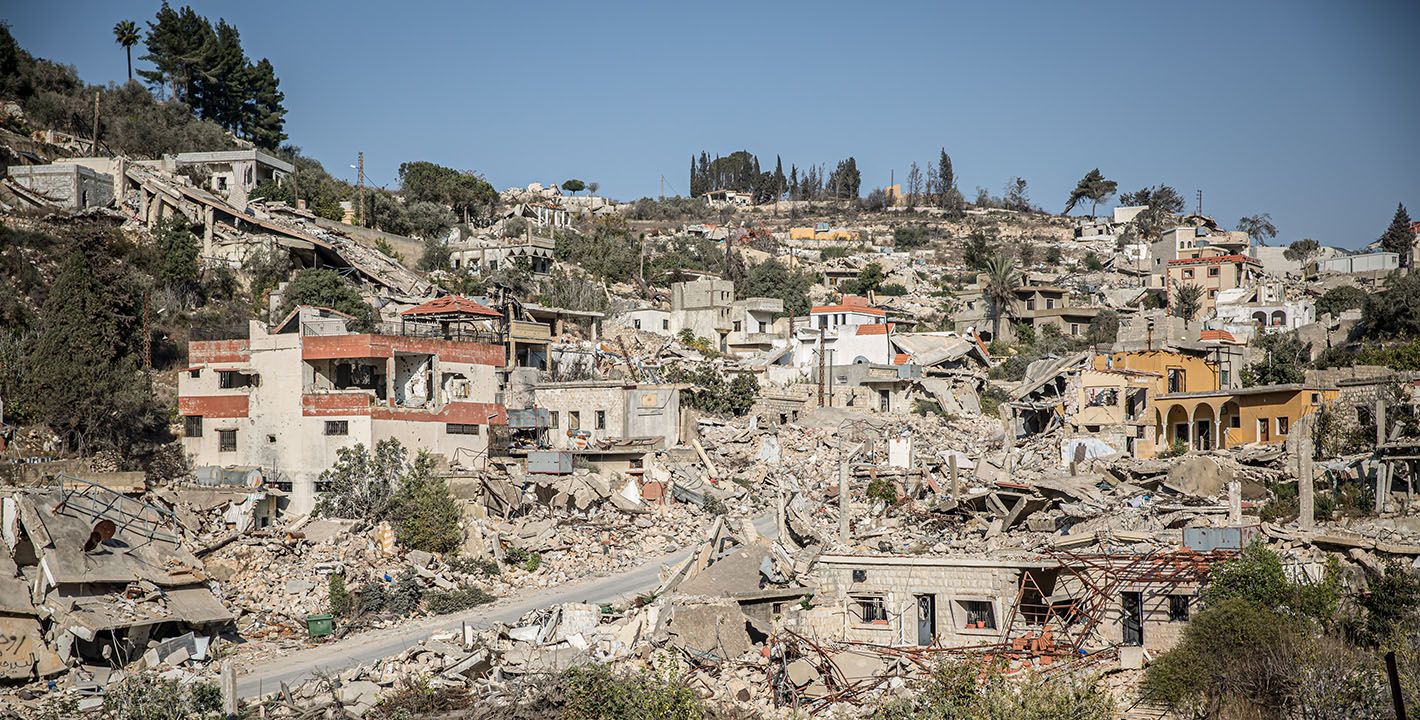
    The U.S. is trying to force Lebanon and Syria to normalize with Israel, but neither country sees an advantage in this.

      Michael Young
  • Commentary
    Diwan
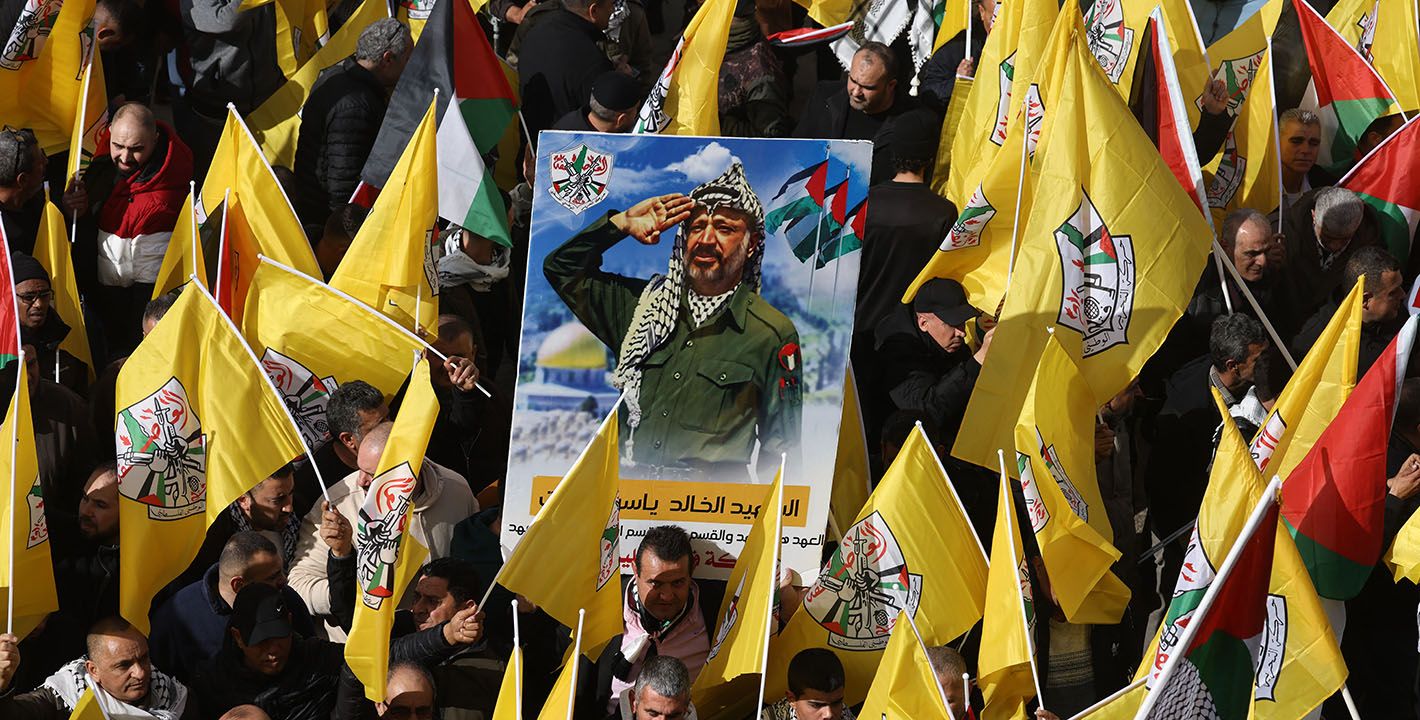
    The Perils of the Palestinian Authority’s New Party Law

    The objective is to lock Hamas out of political life, but the net effect may be negative indeed.

      Nathan J. Brown

Get more news and analysis from
Malcolm H. Kerr Carnegie Middle East Center
Carnegie Middle East logo, white
  • Research
  • Diwan
  • About
  • Experts
  • Projects
  • Events
  • Contact
  • Careers
  • Privacy
  • For Media
Get more news and analysis from
Malcolm H. Kerr Carnegie Middle East Center
© 2026 Carnegie Endowment for International Peace. All rights reserved.