

Commentary
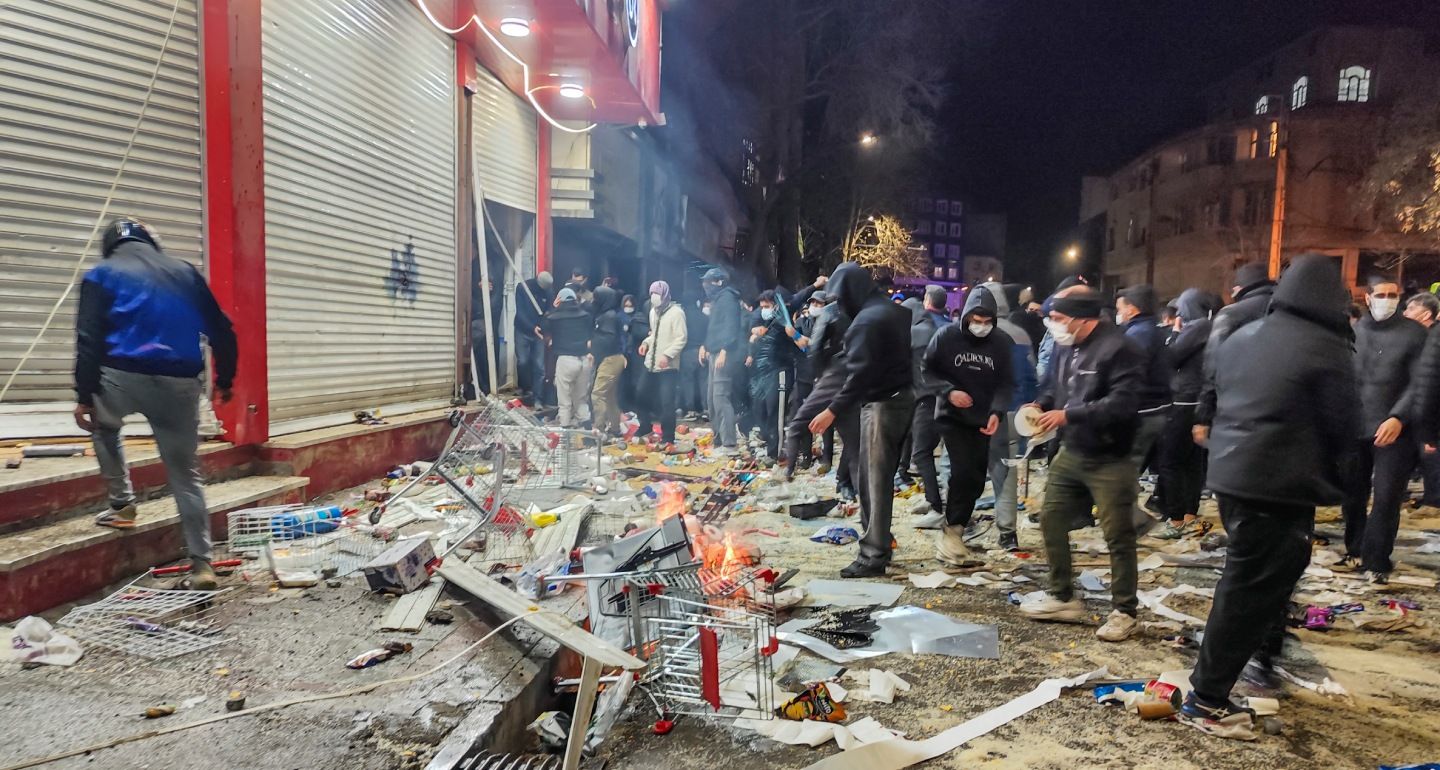
Baku may allow radical nationalists to publicly discuss “reunification” with Azeri Iranians, but the president and key officials prefer not to comment publicly on the protests in Iran.
Bashir Kitachaev
{
  "authors": [
    "Areg Kochinyan"
  ],
  "type": "commentary",
  "blog": "Carnegie Politika",
  "centerAffiliationAll": "",
  "centers": [
    "Carnegie Endowment for International Peace",
    "Carnegie Russia Eurasia Center"
  ],
  "englishNewsletterAll": "",
  "nonEnglishNewsletterAll": "",
  "primaryCenter": "Carnegie Russia Eurasia Center",
  "programAffiliation": "",
  "programs": [],
  "projects": [],
  "regions": [
    "Armenia",
    "Caucasus"
  ],
  "topics": [
    "Foreign Policy",
    "Civil Society"
  ]
}
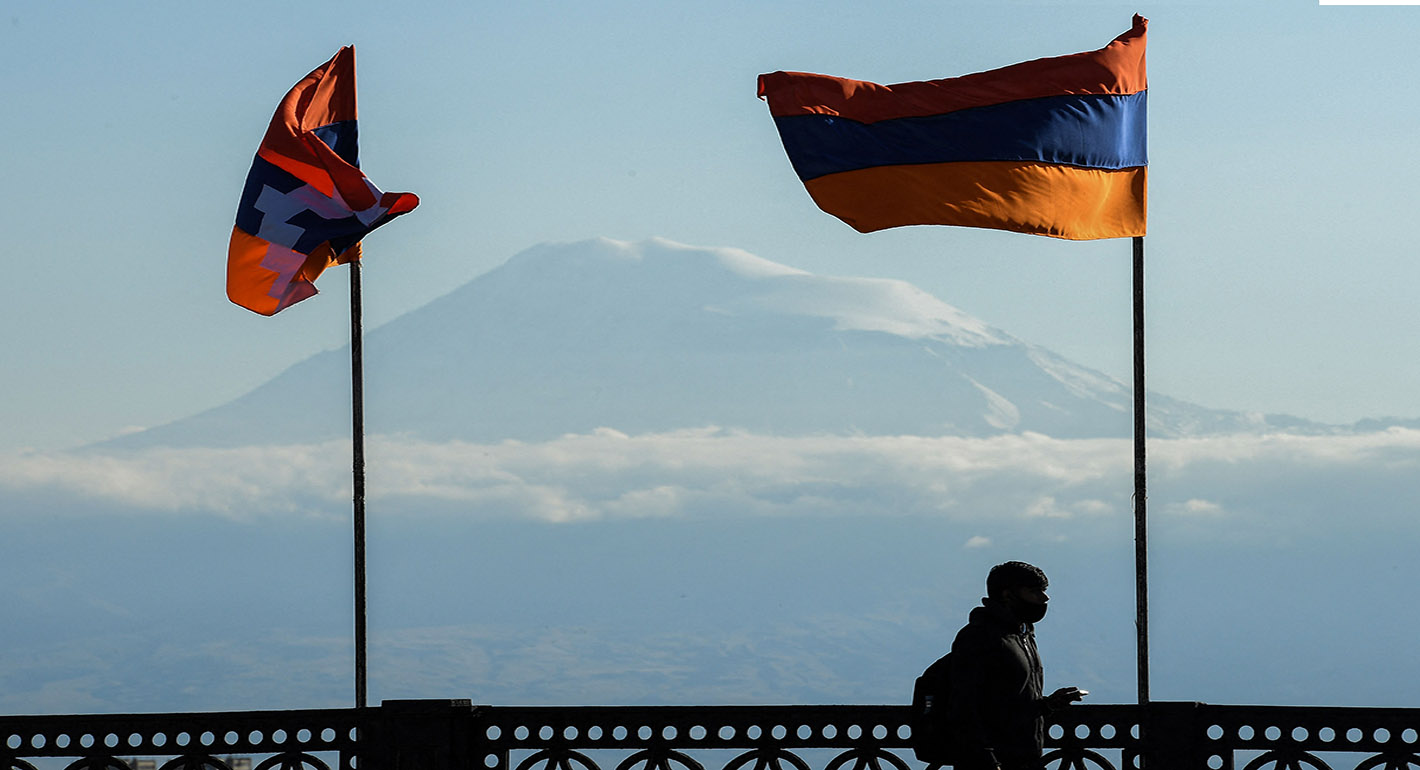
Фото: AFP via Getty Images
Yerevan should not delay if it wants to integrate with the West, diversify its foreign policy, and build a new model of bilateral relations with Moscow.
There have been dramatic shifts in Armenian foreign policy in recent months. Yerevan has frozen its membership in the Russia-led Collective Security Treaty Organization (CSTO), stopped its financing, and despite Russian protests joined the International Criminal Court. It has also started the process of removing Russian border guards from its airports, and scaled back participation in Russian-dominated bodies like the Commonwealth of Independent States (CIS) and the Eurasian Economic Union (EAEU). Last but not least, Armenian Prime Minister Nikol Pashinyan has attended high-level meetings in Europe and the United States, including an unprecedented trilateral meeting on April 5 with European Commission President Ursula von der Leyen, EU High Representative Josep Borrell, and U.S. Secretary of State Antony Blinken.
For the first time in its modern history, Yerevan is pursuing a process of foreign policy diversification and developing political, military, and technological partnerships that have nothing to do with Russia.
Defeat in the Second Nagorno-Karabakh War in 2020 badly damaged Armenia’s military capabilities. Subsequently, following the Azerbaijani incursions into Armenia in 2021 and 2022, and the exodus of the Armenian population of Nagorno-Karabakh following its conclusive seizure by Baku in 2023, Yerevan began to reassess its long-standing alliance with Russia.
To put it bluntly, Moscow failed to underwrite Armenia’s security—the reason Armenia was in thrall to Russia in the first place. This was not so much about the 2020 war (in which Russia did not have any legal obligations), but because Moscow reneged on its formal obligations when Azerbaijan violated Armenia’s internationally recognized borders in 2021 and 2022, and because of the failure of Russia’s peacekeeping mission in Nagorno-Karabakh in 2023.
Russia had traditionally enjoyed a positive reputation among Armenians: that was the foundation of Russia’s presence in the country. But the number of Armenians who consider Russia to be their most important political partner declined from 88 percent in 2019 to 34 percent in 2023. This is the most significant shift in Yerevan’s relations with Moscow—and one that might never be reversed.
Moscow has many ways of influencing life in Armenia, even outside the realm of security. Russia provides more than 90 percent of Armenia’s natural gas, and owns the country’s gas pipeline infrastructure. It supplies all of the uranium for Armenia’s nuclear power plant. It is Armenia’s biggest trade partner, and the main destination for the country’s exports. Russia owns Armenia’s railroads and the majority of its electricity networks. It also has a huge presence in sectors like telecommunications, power plant management, and food security (it provides most of Armenia’s grain imports, for example).
Russia also retains a military presence in Armenia in the form of a military base in Gyumri and an air base in Erebuni. In addition, there are Russian border guards on Armenia’s borders with Iran and Turkey. There was also a limited Russian presence on Armenia’s border with Azerbaijan, but after the demand from Yerevan, Moscow is now withdrawing the guards on the Armenia-Azerbaijan border, a process that will end in May–June.
None of these factors, however, is an insurmountable obstacle to Armenia seeking to break out of Russia’s orbit—at least in the short and medium term. While Armenia buys a lot of gas from Russia, it does so because it is cheap. If the price rose, Armenia could switch to buying more gas from Iran. There is already a gas pipeline connecting Armenia to Iran, which, if it were upgraded and equipped with turbines, could supply up to 80 percent of the country’s needs. Admittedly, the pipeline belongs to Russia, but if Russia halted Iranian exports or imposed higher costs, there would be nothing to stop Armenia from nationalizing it.
Uranium for Armenia’s nuclear reactor could be purchased from Kazakhstan (whose president visited Armenia in mid-April). Technologically there would be no difference.
Yerevan is planning to develop its border guard capabilities: if Armenia were aided by Western technology, training, and finance, Russian officers on its borders could become a thing of the past.
None of this would save the country from difficulties if Russia were to flex its economic and political muscle, but Armenia would be able to avoid being pushed into the abyss. Concerns that Russia could seek to cause economic problems in tandem with launching hybrid attacks on Armenia’s democracy are real. But fears of an apocalyptic “Ukrainian scenario” in which Russia uses all the options at its disposal to preserve its influence in Armenia are exaggerated.
Yerevan should use the window of opportunity that is open right now. While Armenian integration with Western institutions will be a step-by-step process, a slow disengagement from Russia-led institutions is difficult to imagine. Yerevan needs a one-off solution to leave Moscow’s orbit, and right now it has that chance thanks to a confluence of circumstances both in the region (the security situation and democratic governance in Armenia) and internationally (Russia’s war against Ukraine and Russian exhaustion in that war), which will not last forever.
Armenia will likely need to placate Russia as it pivots toward the West by articulating a new model for bilateral relations with its larger neighbor (although, luckily for Armenia, it doesn’t have a border with Russia). This may resemble how Azerbaijan and Uzbekistan have developed their relationships with Russia in recent years: keeping a distance from Russia-led regional integration projects and minimizing Russia’s presence within their countries while at the same time retaining significant economic ties, developing bilateral political relations, and gradually introducing the concept of non-bloc status.
Armenia’s relations with Russia will also be influenced by the ongoing peace process with Azerbaijan and political normalization with Turkey. The decades-old security paradigm in which Armenia required a third party to provide it with security guarantees is no longer relevant. Russia is unwilling—or unable—to be that guarantor, while Western countries do not have a large enough presence in the region to play such a role. If the rapprochement between Armenia and Azerbaijan (and Armenia and Turkey) continues, then the United States and the EU could and should be able to provide political support to ensure that it is not derailed.
Of course, like any transition process, the current situation is extremely fragile, and nothing should be taken for granted. But there is no doubt that things are moving forward. Armenia has a historic opportunity to develop a new, more balanced and more diversified foreign policy.
Carnegie does not take institutional positions on public policy issues; the views represented herein are those of the author(s) and do not necessarily reflect the views of Carnegie, its staff, or its trustees.
Baku may allow radical nationalists to publicly discuss “reunification” with Azeri Iranians, but the president and key officials prefer not to comment publicly on the protests in Iran.

Bashir Kitachaev
The story of a has-been politician apparently caught red-handed is intersecting with the larger forces at work in the Ukrainian parliament.

Konstantin Skorkin
Geological complexity and years of mismanagement mean the Venezuelan oil industry is not the big prize officials in Moscow and Washington appear to believe.

Sergey Vakulenko
It’s one thing to export Russian helicopters to Iran to fight the insurgency, and it’s easy to imagine Moscow becoming a haven for fleeing Iranian leaders. But it’s very difficult to imagine Russian troops defending the Iranian regime on the ground.
Nikita Smagin
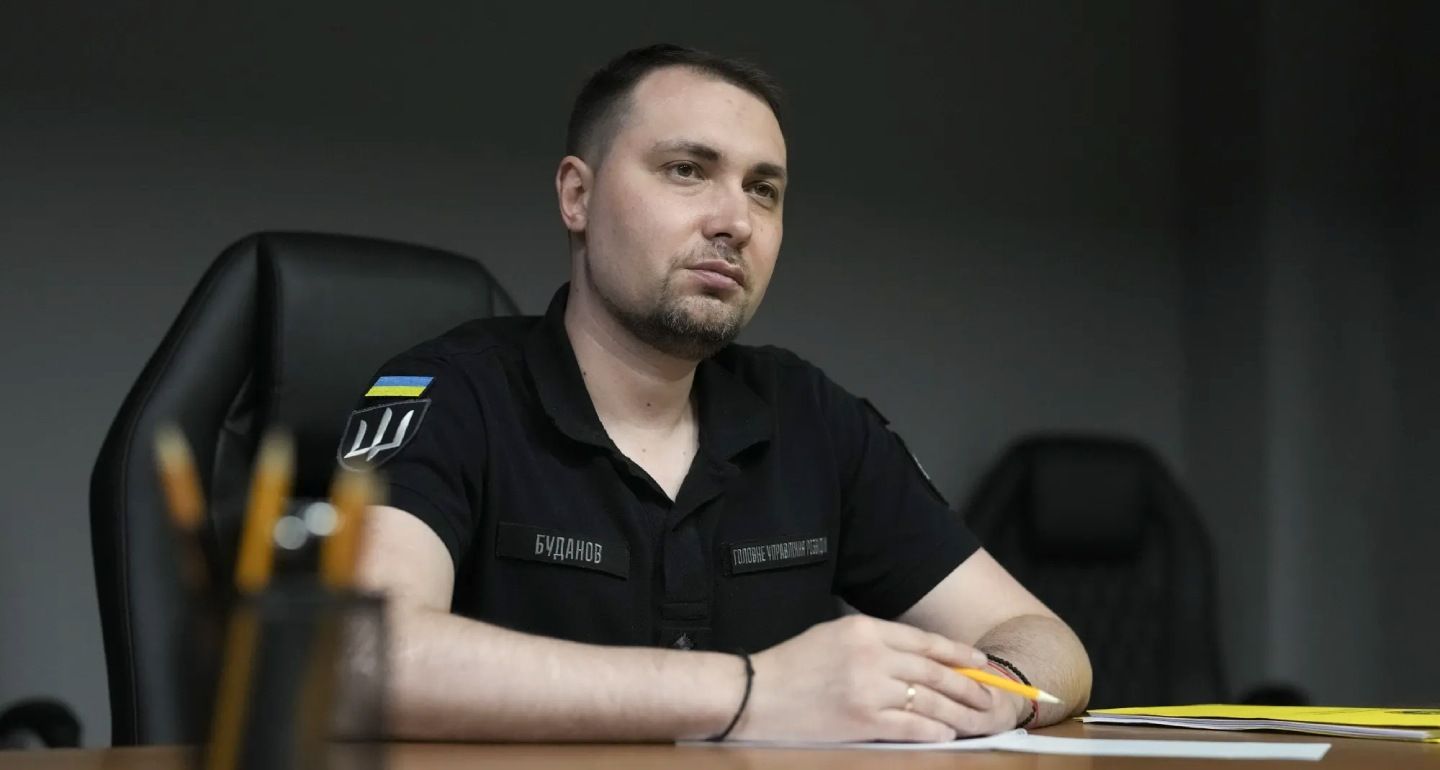
While appointing Kyrylo Budanov will help shore up Zelensky’s political authority and balance the president’s inner circle, the spy chief’s political ambitions mean he could be a threat.
Konstantin Skorkin