

Commentary
Konstantin Skorkin
{
  "authors": [
    "Konstantin Skorkin"
  ],
  "type": "commentary",
  "blog": "Carnegie Politika",
  "centerAffiliationAll": "",
  "centers": [
    "Carnegie Endowment for International Peace",
    "Carnegie Russia Eurasia Center"
  ],
  "englishNewsletterAll": "",
  "nonEnglishNewsletterAll": "",
  "primaryCenter": "Carnegie Russia Eurasia Center",
  "programAffiliation": "",
  "programs": [],
  "projects": [],
  "regions": [
    "Ukraine"
  ],
  "topics": [
    "Domestic Politics",
    "Political Reform",
    "Security",
    "Civil Society"
  ]
}
Source: Getty
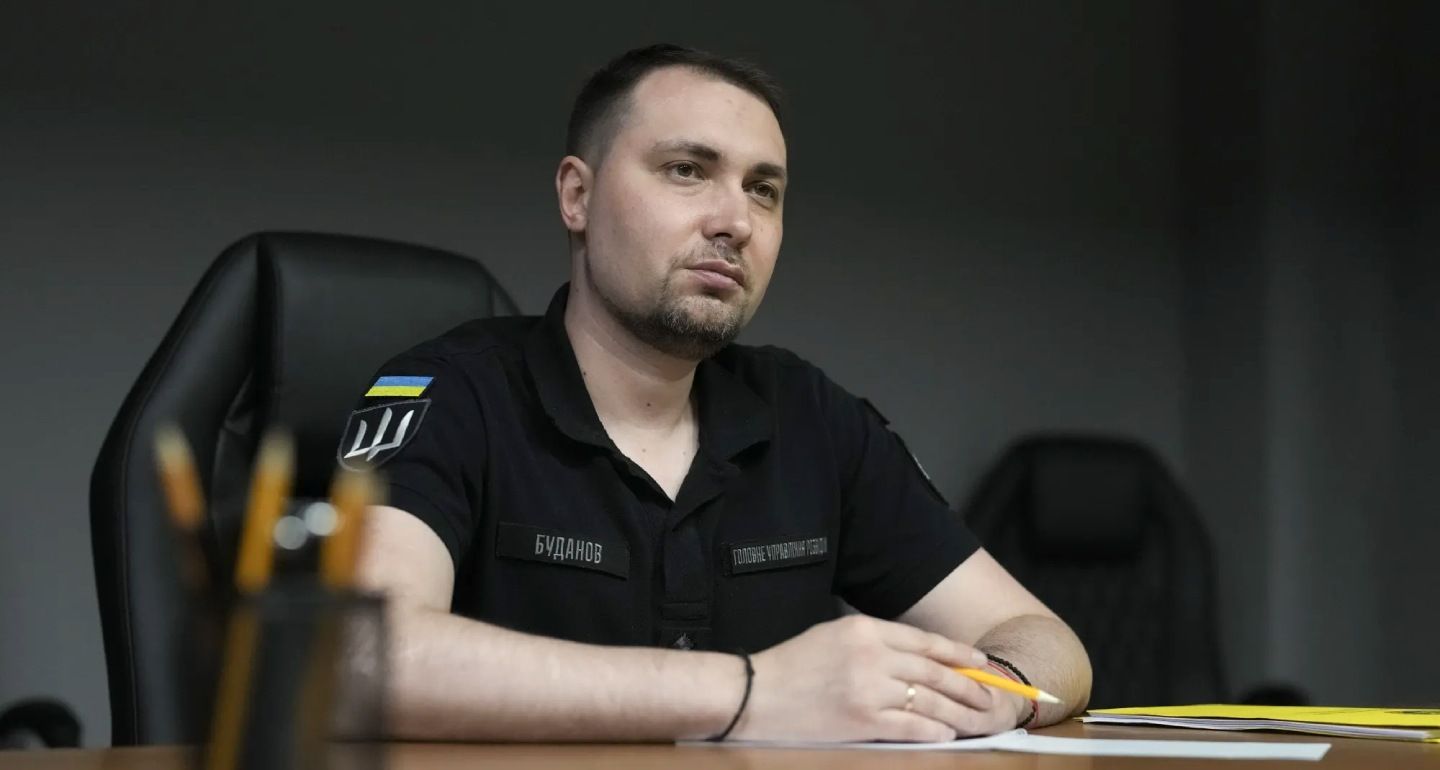
While appointing Kyrylo Budanov will help shore up Zelensky’s political authority and balance the president’s inner circle, the spy chief’s political ambitions mean he could be a threat.
Ukrainian President Volodymyr Zelensky has chosen one of the country’s top spies—Kyrylo Budanov, head of Ukraine’s military intelligence agency—to be his chief of staff after Andriy Yermak was forced out in 2025 amid a corruption scandal. Budanov is one of Ukraine’s most popular security officials, and his appointment will help strengthen Zelensky’s authority. However, it could also spell more domestic political turbulence. Unlike Yermak, who operated in the shadows, Budanov may have political ambitions, and polling suggests he could even beat Zelensky in a presidential election.
In the search for a new chief of staff, Zelensky struggled to find any suitable candidates. Most were either politically beholden to the departed Yermak (choosing such a person would have fueled suspicions that Yermak was still pulling the strings), linked to anti-corruption investigations, or already in a senior position for which it would be hard to find a replacement. Budanov’s name came up almost immediately.
Budanov is one of Ukraine’s most effective military commanders, and has a well-established media presence (unusually for a spymaster, he often gives interviews). His public pronouncements tend to be optimistic, though this is sometimes unjustified—for example, his prediction in September 2022 that Ukrainian troops would enter Crimea the following year. A Hero of Ukraine, Budanov has been involved in a series of successful military operations: he led the defense of Kyiv from Russian sabotage groups in 2022, took part in the liberation of the Kyiv and Kharkiv regions, and planned the campaign to re-establish Ukrainian control over the western Black Sea.
Not only will Budanov’s appointment help improve Zelensky’s image after the recent corruption crisis involving the president’s old friend, Timur Mindich, it could also bring much-needed balance to Zelensky’s team. Even at the peak of Yermak’s power, Budanov remained one of the few independent power centers in Ukraine with access to the president. Yermak tried—and failed—to remove him several times.
In his new position, Budanov will likely seek to push out those loyal to Yermak, who was a master at placing his own people at all levels of government. However, as a military officer, Budanov is unlikely to try to dismantle the system of centralized government of which he is now at the apex. That means Ukrainian democracy faces a new challenge: a member of the armed forces has never before held such a high political post.
Budanov will also have an important foreign policy role. As head of the presidential administration, he will replace Yermak as the lead peace negotiator with the White House. Budanov has a reputation as a hawk, so his participation might be seen as reducing the chances of peace. However, he is also a more acceptable negotiating partner for Washington than the high-handed Yermak, who irritated many of his U.S. interlocutors. Part of a new generation of security officers to emerge amid the war with Russia, he has good connections with his Western counterparts, particularly in the United States.
Finally, Budanov might also play a role in negotiations with Russia. Although he’s a sworn enemy of the Kremlin, and there are currently three criminal cases open against him in Russia, his involvement in organizing prisoner exchanges means he’s one of the few Ukrainian officials to have maintained contacts in Moscow. In November 2025, Budanov was present at U.S.-Russia talks in Abu Dhabi.
Other changes made around the same time as Budanov was moved to the presidential administration include the appointment of yet another defense minister. For this post, Zelensky chose Mykhailo Fedorov, who has been deputy prime minister and minister of digital transformation since 2019. Fedorov is a young IT entrepreneur and technocrat, and he has been highly successful at pushing through Ukraine’s digitalization. Fedorov was also in the running for Yermak’s position, but his innovative approach was ultimately deemed more necessary at the Defense Ministry, which has been at the center of repeated corruption scandals and is in need of greater transparency.
Denys Shmyhal, who served as defense minister for just a few months, will now become energy minister. It was the Energy Ministry that was embroiled in the Mindich corruption scandal, and Shmyhal will have his work cut out to restore order. His experience as prime minister, and as an energy specialist, should help.
In addition, Ukraine has a new head of its Border Guard Service and five new regional governors. Perhaps Zelensky’s most controversial move, though, was to replace the head of the Security Service of Ukraine (SBU), Vasyl Malyuk, another popular military figure. Initial reports about Malyuk’s departure sparked a wave of anger among Ukraine’s opposition, and even from the armed forces. However, Zelensky prevailed.
The logic for removing Malyuk was the same as replacing Yermak: helping the president distance himself from corruption allegations, as well as rehabilitating the SBU’s battered reputation, following its crackdown on anti-corruption agencies last summer.
On the one hand, these changes are a bid by Zelensky to rejuvenate his team and install powerful figures in new jobs. On the other, he is attempting to preserve a centralized system of governance and avoid an infusion of new blood. While his appointments look well-judged, there is also a feeling he has simply reshuffled the pack.
The changes are also an illustration of how political competition is gradually returning to Ukraine. There have been more and more frequent discussions about the possibility of elections, and the Ukrainian parliament is now considering legislative changes to make them possible (under the Ukrainian constitution, elections cannot be held at a time of martial law).
Unlike Yermak, who would never have been popular enough to stand against Zelensky, Budanov has political ambitions, and polling suggests he would come third in a presidential vote (behind Zelensky and ex-commander-in-chief Valery Zaluzhny). One poll suggested Budanov would even beat the incumbent president if the two men entered a second-round run-off.
Accordingly, there has been speculation that Zelensky appointed Budanov to the traditionally unpopular post of head of the presidential administration as a way of neutralizing a potential political opponent. However, that is unlikely: the chief of staff position offers huge opportunities— formal and informal—to boost the incumbent’s popularity. The political risks for Zelensky are likely to increase from this appointment, not recede.
Nor is it particularly likely that Zelensky is grooming Budanov to be his successor. This theory posits that if Zelensky decides not to stand in elections, Budanov could continue his political program while also providing security guarantees to the ex-president and his inner circle.
Of course, it’s difficult to rule anything out in Ukraine—even a spy replacing an actor as president. But there’s little evidence that Ukraine’s rulers have time for such elaborate, long-term planning. It's far more likely that Zelensky’s reshuffle is simply an illustration of the seriousness of the domestic and foreign policy challenges facing the country.

An independent journalist.
Recent Work
Konstantin Skorkin
Konstantin Skorkin
Carnegie does not take institutional positions on public policy issues; the views represented herein are those of the author(s) and do not necessarily reflect the views of Carnegie, its staff, or its trustees.

Japan’s long-term security policy is driven by concerns about China, and there is little appetite for (or interest in) pursuing a confrontation with Moscow.

James D.J. Brown

The truth of the strategic situation is that Europe and Russia are extremely unlikely to be able to “turn the page” on their confrontation within the next two decades.

Arkady Moshes
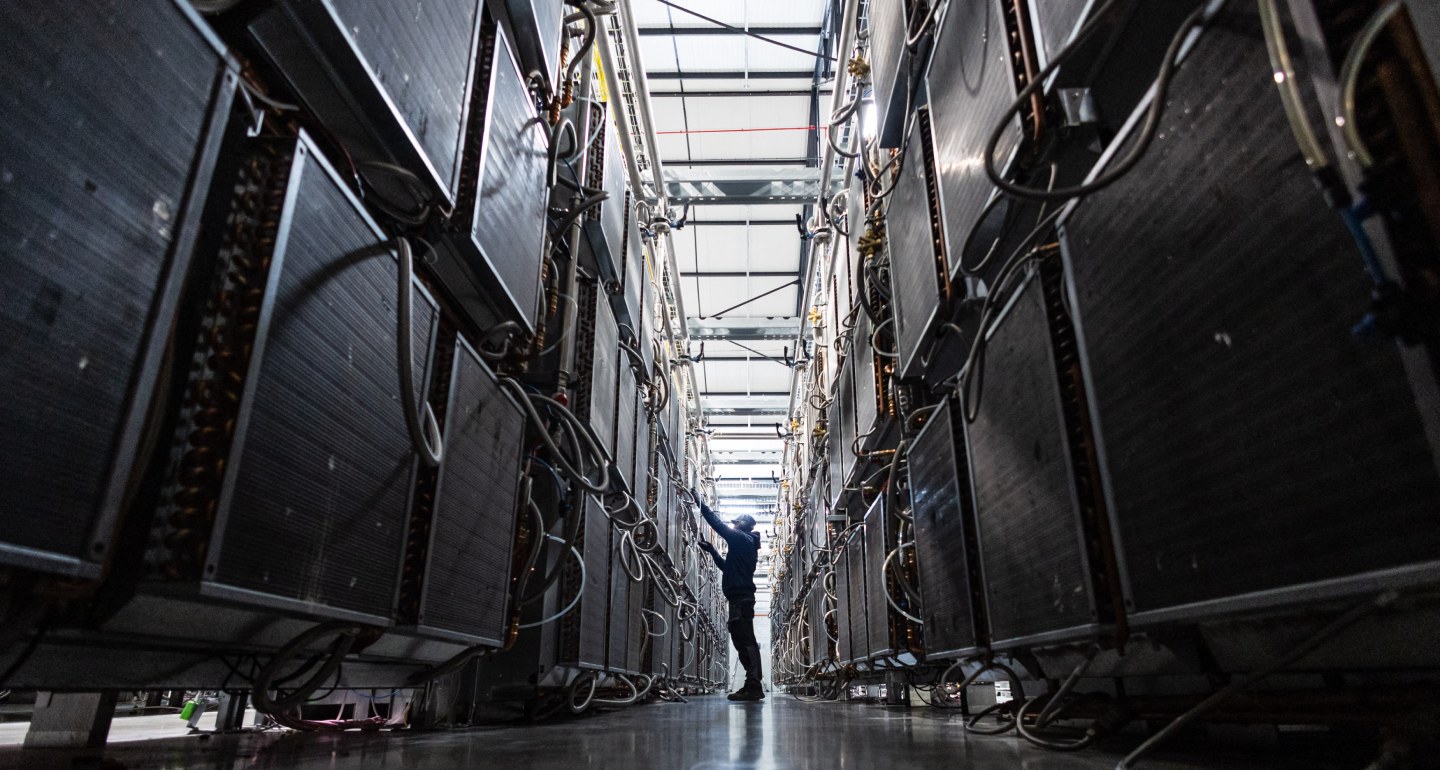
Russia spent years building a “sovereign internet,” concentrating web infrastructure exclusively within Russian territory. Ukrainian drone attacks have shown how vulnerable that approach has left the Russian internet.

Maria Kolomychenko

Putin’s conservative staffing policies and search for ever greater control have cemented parliament’s transformation into a bureaucratic appendage of the executive branch.

Andrey Pertsev

Russia’s AI-driven propaganda campaigns operate in a fragmented, chaotic, and often illogical manner. That’s not necessarily a problem for the Kremlin, though: It’s much easier to mimic genuine public debate that way.

Ilya Klishin