

Commentary
Unexpectedly, Trump’s America appears to have replaced Putin’s Russia’s as the world’s biggest disruptor.
Alexander Baunov
{
  "authors": [
    "Mikhail Komin"
  ],
  "type": "commentary",
  "blog": "Carnegie Politika",
  "centerAffiliationAll": "",
  "centers": [
    "Carnegie Endowment for International Peace",
    "Carnegie Russia Eurasia Center"
  ],
  "englishNewsletterAll": "",
  "nonEnglishNewsletterAll": "",
  "primaryCenter": "Carnegie Russia Eurasia Center",
  "programAffiliation": "",
  "programs": [],
  "projects": [],
  "regions": [
    "Russia"
  ],
  "topics": [
    "Defense",
    "Military",
    "Domestic Politics"
  ]
}
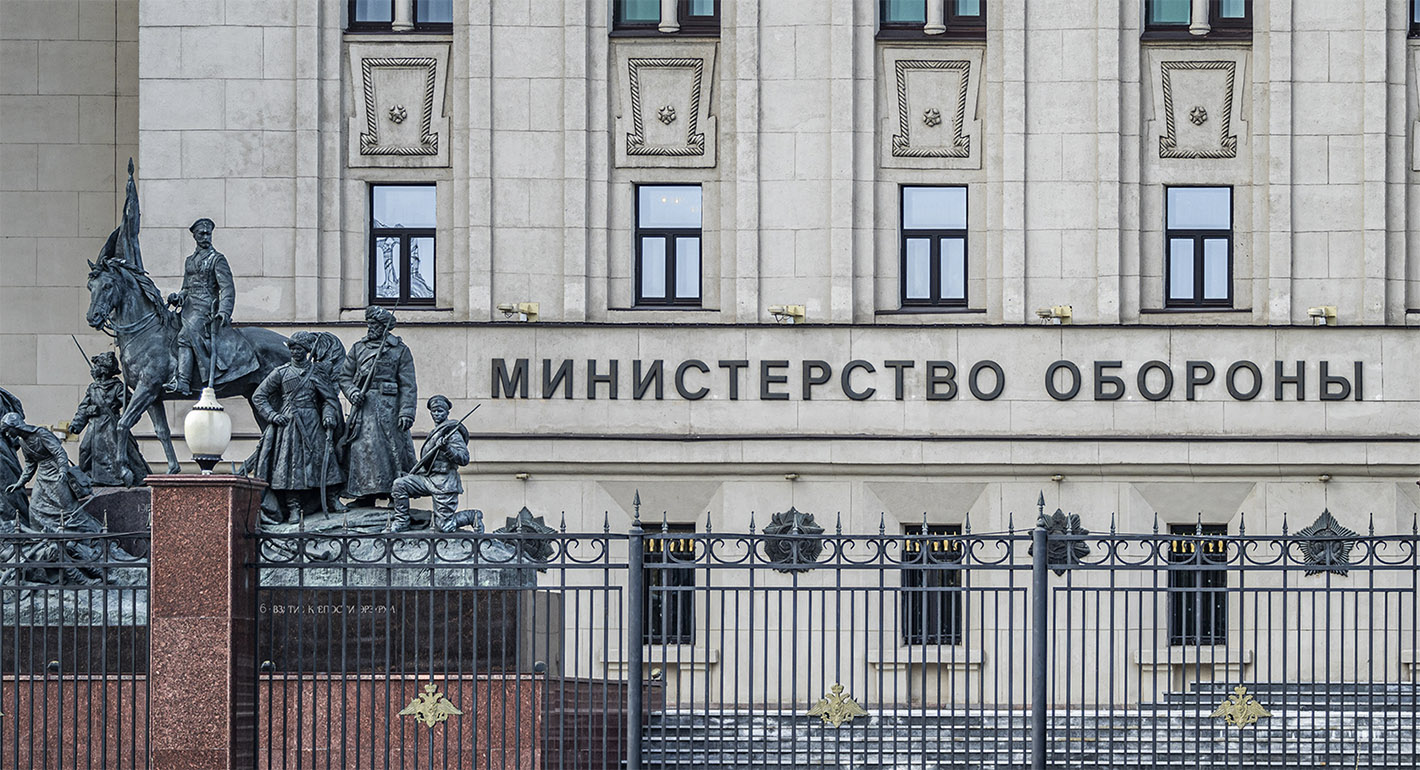
Officials who were removed include both close associates of former defense minister Sergei Shoigu, and generals seen to have failed in Ukraine.
President Vladimir Putin’s replacement of Russian Defense Minister Sergei Shoigu with economist Andrei Belousov on May 12 was accompanied by a series of arrests and dismissals among the country’s top defense officials and generals. While there are nuances in each case, the arrest of five senior military officials in the space of a month can be described as a coordinated campaign.
At least three of the arrests are part of a purge of those close to Shoigu. The replacement of a top official in Russia is always followed by incomers leveraging corruption and seizing control of rent flows. And for more than a decade, Shoigu and his inner circle have been in charge of one of the greatest rent-seeking opportunities in Russia: state defense spending.
The amount of money allocated to defense has grown exponentially since Russia’s full-scale invasion of Ukraine in 2022, generating enormous interest in the Defense Ministry among different groups within the Russian elite. In the end, it was this interest that cost Shoigu his position—and resulted in his associates being jailed.
The first to be arrested was Deputy Defense Minister Timur Ivanov, who had previously worked with Shoigu in the Moscow region government. In the Defense Ministry, he oversaw the significant money flows linked to construction, and signed off on all construction-related tenders.
The second arrest was Yuri Kuznetsov, the head of the Defense Ministry’s personnel directorate. Previously, he was in charge of protecting classified information for the General Staff, which is a key position when it comes to controlling money flows. Restricting access to classified data means you can influence the outcomes of tenders, and shield information from prying eyes. Leaks suggest that Kuznetsov was involved in selling such access.
Although Kuznetsov was appointed to the General Staff before Shoigu became defense minister, he was gradually co-opted to Shoigu’s team. Indeed, Shoigu’s efforts to buy Kuznetsov’s loyalty were revealed in a series of absurd PR stunts (for example, the flag of Kuznetsov’s directorate being blessed by a priest in the Cathedral of the Armed Forces).
Finally, Vladimir Verteletsky, a defense ministry procurement official who was arrested at the end of May, was also a close associate of Shoigu. Verteletsky was in charge of tenders relating to digitization, and while he may appear to be small fry, he actually oversaw huge amounts of money. IT is traditionally the least transparent and most corrupt article of expenditure in Russian agencies—because it’s extremely difficult to assess the effectiveness of IT systems, or whether they even exist. This is particularly true in the highly secretive Defense Ministry.
The arrests of Ivanov, Kuznetsov, and Verteletsky have taken out of circulation three key players for Shoigu, but this doesn’t mean the Defense Ministry will become less corrupt and more effective. Rather, the purge speaks to the intention of other groups in the Russian elite to take control of Defense Ministry money flows.
On top of these three arrests, there have been two other arrests—and one dismissal that could end in a criminal prosecution—of top military officials. However, these cases differ in one important regard: the detained are generals who answered to the General Staff, not the Defense Ministry.
Lieutenant General Vadim Shamarin, deputy head of the General Staff, was arrested on May 22. A veteran soldier who had risen from the ranks, Shamarin began his career in signals—a part of the Russian military considered a sort of intellectual elite, because of the higher standards of education required. Signal troops are also often close to the top brass because they are the medium through which troops are commanded in action.
At the same time, signals have long been viewed as a serious weak point of the Russian military, and this has been obvious in Ukraine, with even Putin highlighting communications problems. As a result, the job of heading signals is seen as a poisoned chalice. For example, Shamarin’s predecessor, Khalil Arslanov, was arrested in 2020 on fraud charges. The case against Shamarin himself appears to have been prepared long ago, and dusted off by the Federal Security Service (FSB) when it was required.
The other general arrested at the same time as Shamarin was Ivan Popov, the former commander of Russia’s 58th army who shot to fame in 2023, when his frank criticism of military commanders was leaked. Popov is a rare example of a military leader promoted for his success in action. He was in charge of a platoon in the Second Chechen War, took part in the war with Georgia in 2008, and, after the annexation of Crimea in 2014, was sent to the peninsula to manage the Black Sea Fleet’s land forces and purge the Ukrainian military in Sevastopol.
It appears that Popov has risen through the ranks without the personal protection of Valery Gerasimov, the head of the General Staff, and likely believed he had more leeway than most of his peers. However, it’s the role of FSB military counterintelligence to limit the influence of popular generals. It’s likely the FSB held off arresting Popov after his leaked outburst because it came hard on the heels of mercenary leader Yevgeny Prigozhin’s revolt in June 2023. Instead, they waited for the purge at the Defense Ministry.
Finally, Lieutenant General Sukhrab Akhmedov, commander of the 20th Combined Arms Army (the biggest military unit deployed to Ukraine) was removed from his post. Unlike Popov, Akhmedov has been bitterly criticized by pro-war commentators for his incompetence, and the news of his dismissal was interpreted by some as an effort to save troop lives in Ukraine.
The targeting of Popov, Shamarin, and Akhmedov amounts to a bid to improve the manageability of the army, and ensure the loyalty of its officers. Shamarin and Akhmedov had long been a source of irritation for their inability to resolve chronic problems. And Popov was arrested to show a certain type of officer that too much ambition can end in disaster.
The sheer number of arrests and dismissals of military officials in such a short space of time suggests it was Putin himself who gave the green light. Putin is known for his tendency to replace top officials in batches—except this process usually unfolds without criminal prosecutions. However, this time the FSB’s overeager military counterintelligence appears to have persuaded Putin to opt for a mixture of reshuffle and repression.
In the final analysis, the removal of both unsuccessful frontline generals and Shoigu’s rent managers in the Defense Ministry is supposed to further one goal: raising the effectiveness of the Russian war machine ahead of a new offensive in Ukraine.
Carnegie does not take institutional positions on public policy issues; the views represented herein are those of the author(s) and do not necessarily reflect the views of Carnegie, its staff, or its trustees.
Unexpectedly, Trump’s America appears to have replaced Putin’s Russia’s as the world’s biggest disruptor.
Alexander Baunov
The Kremlin will only be prepared to negotiate strategic arms limitations if it is confident it can secure significant concessions from the United States. Otherwise, meaningful dialogue is unlikely, and the international system of strategic stability will continue to teeter on the brink of total collapse.
Maxim Starchak
The story of a has-been politician apparently caught red-handed is intersecting with the larger forces at work in the Ukrainian parliament.
Konstantin Skorkin
For years, the Russian government has promoted “sovereign” digital services as an alternative to Western ones and introduced more and more online restrictions “for security purposes.” In practice, these homegrown solutions leave people vulnerable to data leaks and fraud.

Maria Kolomychenko
Geological complexity and years of mismanagement mean the Venezuelan oil industry is not the big prize officials in Moscow and Washington appear to believe.
Sergey Vakulenko