

Commentary
The supposed threats from China and Russia pose far less of a danger to both Greenland and the Arctic than the prospect of an unscrupulous takeover of the island.
Andrei Dagaev
{
  "authors": [
    "Alexander Kolyandr"
  ],
  "type": "commentary",
  "blog": "Carnegie Politika",
  "centerAffiliationAll": "",
  "centers": [
    "Carnegie Endowment for International Peace",
    "Carnegie Russia Eurasia Center"
  ],
  "englishNewsletterAll": "",
  "nonEnglishNewsletterAll": "",
  "primaryCenter": "Carnegie Russia Eurasia Center",
  "programAffiliation": "",
  "programs": [],
  "projects": [],
  "regions": [
    "Russia"
  ],
  "topics": [
    "Defense",
    "Economy",
    "Domestic Politics"
  ]
}
Russia’s tax reform comes at the expense of companies working outside of the defense sector and related industries.
Passed under the guise of reform, tax hikes became inevitable in Russia in the fall of 2023, when discussions of the budget for the next three years revealed just how drastically government spending—particularly defense spending—was set to rise. In February, the month before the presidential election, Vladimir Putin confirmed that taxes would go up. The only remaining questions were who would pay more—and how much more.
Now details of planned income and corporate profit tax hikes have emerged, showing that Russia’s leadership is not only prepared to increase the tax burden on Russians, but is also shifting its economic development priorities.
The Finance Ministry projects that in 2025, the new rates will bring in an extra 2.6 trillion rubles ($29.1 billion at current exchange rates). Along with Russia’s reserves, this additional revenue will pay for Putin’s latest “May Decrees” passed following his inauguration for a fifth presidential term: they are expected to cost 9.7 trillion rubles ($109 billion) through 2030, leaving a surplus of more than 1 trillion rubles ($11.2 billion).
The savings could be even greater, with the draft budget for 2025 assuming a year-on-year decrease in defense spending of 2.3 trillion rubles ($25.8 billion), or 1.3 percent of GDP. But how that could happen without the war in Ukraine ending is unclear. Either the Finance Ministry’s revenue projections are too conservative, or its prediction that the budget deficit will stand at 0.4 percent of GDP in 2025 is overly optimistic.
The government says the tax hikes will make society more fair. Certainly, with the rollout of a progressive tax system, wealthier Russians will have to pay a larger share of the tax bill. Finance Minister Anton Siluanov estimates that the increase will affect just 3.2 percent of taxpayers.
With tax brackets not indexed, however, bracket creep awaits many Russians as inflation persists and wages rise. Moreover, the wealthiest have been spared increased taxes on dividends, savings, and investment income: a coup, since the wealthier a person is, the more important passive income is likely to be to them compared with wage income.
Still, the capitalists haven’t gotten off scot-free. The government is also raising the corporate profit tax rate from 20 percent to 25 percent, which should generate 1.6 trillion rubles ($17.9 billion) in additional revenue in 2025, compared with the 553 billion rubles ($6.2 billion) the income tax hike is predicted to bring in.
Not all companies will be equally affected. Companies that invest in research and development or buy domestic equipment can claim tax deductions: conditions most easily met by large industrial enterprises. The service, construction, and trade sectors, by contrast, are not well-positioned to take advantage, given that they will struggle to find the required domestic technology or the money to pay for it in order to qualify for relief.
In addition, unlike heavy industry, the trade, agriculture, and tourism sectors will find it difficult to pass on their increased tax costs to the consumer, since their room for maneuver is limited by intense domestic and international competition. Nor can the issue be addressed with pay cuts, as companies are already constantly losing workers to conscription and emigration and face increasingly strict rules around labor migration.
The effect of the tax reform, then, is not only to help pay for new government programs, but also to redirect investment to domestic manufacturing and technology. It will further enable Russia’s leadership to balance the budget without cutting military spending, which over the past two years has become key to growing the economy, improving living standards, and increasing popular support for the war and the regime.
It is hard to say how effective the tax hikes will be in reducing social inequality. It will take several years for the Gini coefficient, a measurement of income inequality, to reflect any progress made. Even if the gap narrows, economists will surely debate whether it is attributable to the tax reform or wartime spending.
Ultimately, the tax reform marks the end of a quarter century in which Russians enjoyed an unprecedentedly high standard of living. In this new era, the cost of the transition to domestic technology and increased social spending will be borne by the owners of companies working outside the defense sector and related industries; high-earning individuals; and natural resource exporters, who must also pay more in taxes.
Carnegie does not take institutional positions on public policy issues; the views represented herein are those of the author(s) and do not necessarily reflect the views of Carnegie, its staff, or its trustees.
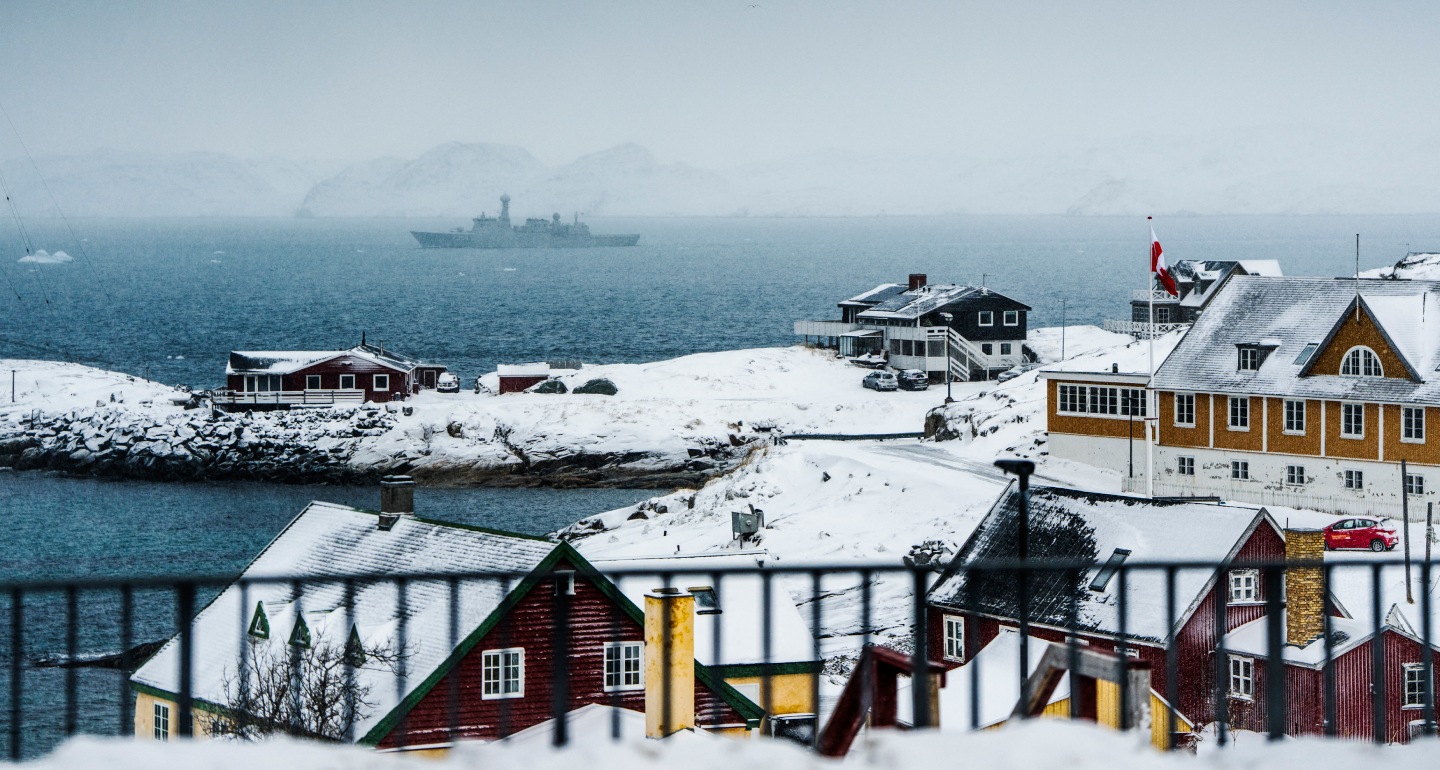
The supposed threats from China and Russia pose far less of a danger to both Greenland and the Arctic than the prospect of an unscrupulous takeover of the island.

Andrei Dagaev
Western negotiators often believe territory is just a bargaining chip when it comes to peace in Ukraine, but Putin is obsessed with empire-building.
Andrey Pertsev
Unexpectedly, Trump’s America appears to have replaced Putin’s Russia’s as the world’s biggest disruptor.
Alexander Baunov
The Kremlin will only be prepared to negotiate strategic arms limitations if it is confident it can secure significant concessions from the United States. Otherwise, meaningful dialogue is unlikely, and the international system of strategic stability will continue to teeter on the brink of total collapse.
Maxim Starchak
The story of a has-been politician apparently caught red-handed is intersecting with the larger forces at work in the Ukrainian parliament.
Konstantin Skorkin