

Commentary
Western negotiators often believe territory is just a bargaining chip when it comes to peace in Ukraine, but Putin is obsessed with empire-building.
Andrey Pertsev
{
  "authors": [
    "Mikhail Komin"
  ],
  "type": "commentary",
  "blog": "Carnegie Politika",
  "centerAffiliationAll": "",
  "centers": [
    "Carnegie Endowment for International Peace",
    "Carnegie Russia Eurasia Center"
  ],
  "englishNewsletterAll": "",
  "nonEnglishNewsletterAll": "",
  "primaryCenter": "Carnegie Russia Eurasia Center",
  "programAffiliation": "",
  "programs": [],
  "projects": [],
  "regions": [
    "Russia"
  ],
  "topics": [
    "Domestic Politics"
  ]
}
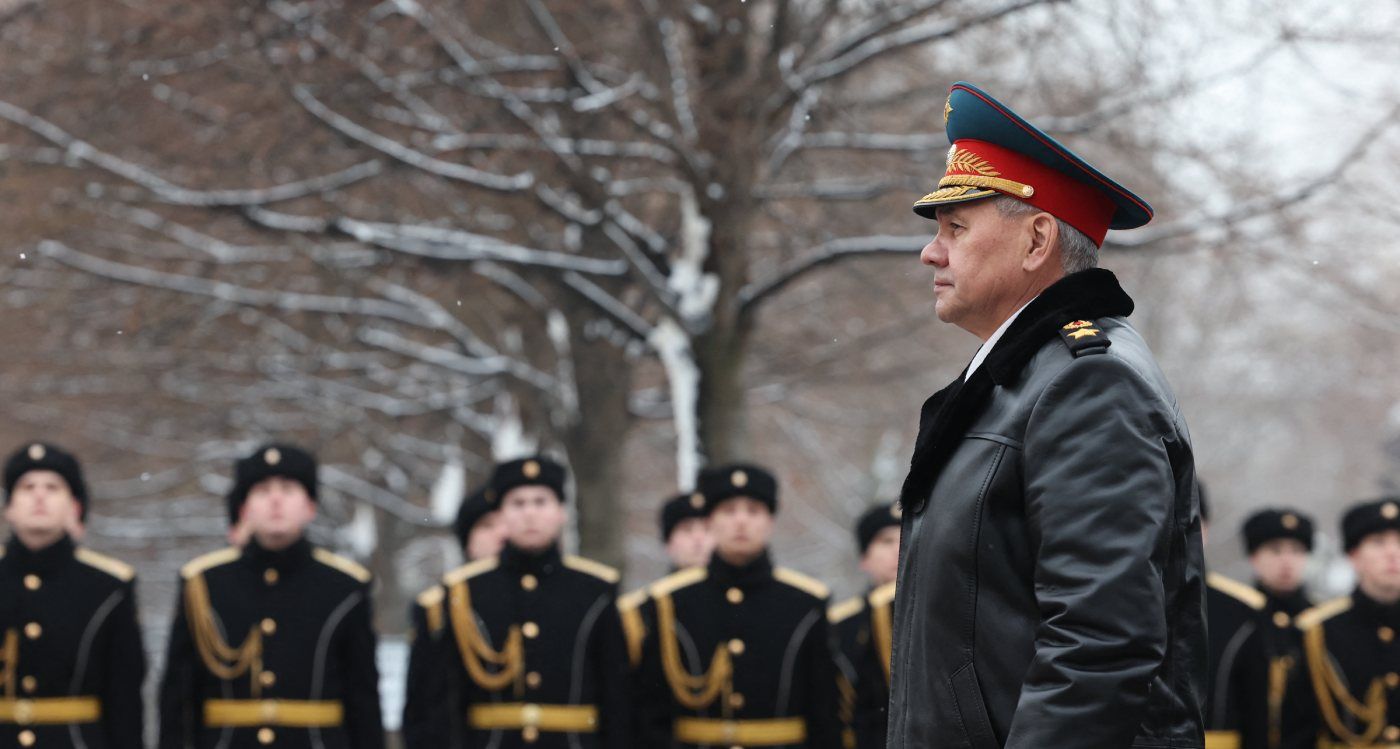
The anxiety among the broader elite caused by the Defense Ministry purge has been intensified by the fact that newly available rent flows have been divided up among different elite groups.
The biggest source of tension within the Russian elites in 2024 was the purge of the Defense Ministry. Defense Minister Sergei Shoigu was moved to a different post, and several dozen officials were detained over the course of many months, including three former deputy defense ministers. The shake-up was likely conceived as a way to improve the management of Russia’s ballooning military spending. In order to speed up the process of clearing out Shoigu-era placeholders, the Kremlin opted for a method that could be described as “rotation through repression.”
This is not a new approach, but the scale of what occurred at the Defense Ministry is unprecedented. The purge has not only redirected rent flows associated with the ministry, but also led to the dismantling of Shoigu’s entire clan within the Russian elite. Although Shoigu seems—for the moment—to be under the personal protection of President Vladimir Putin, he has been powerless to intervene in unfolding events.
The easiest way to understand the purge is to look at the criminal cases that followed the first—and most high-profile—arrest: that of Shoigu’s long-time associate, ex-deputy defense minister Timur Ivanov. Each wave of arrests seemed to lead to new arrests in turn, as well as generate new charges against Ivanov himself.
After Ivanov’s arrest in April 2024, he was charged with the embezzlement of 1.18 billion rubles ($11.5 million). That was followed by the arrest of two other senior officials at the Defense Ministry: Yury Kuznetsov, accused of selling state secrets to contractors linked with Ivanov, and Vladimir Verteletsky, who oversaw spending on digitization.
All three men maintained their innocence, and Ivanov’s lawyer sought to get him moved to house arrest on the basis that Ivanov was subject to Western sanctions, had participated in military action, and been decorated (indeed, he was wearing his medals at the moment of his arrest).
Ultimately, however, none of that helped. On the contrary, there was another wave of arrests in July arising from the documents seized by investigators in April. This time, the men who ended up behind bars were Andrei Belkov, a military contractor used by Ivanov, and another former deputy defense minister, Dmitry Bulgakov.
In turn, the July arrests led to another rash of criminal cases that encompassed construction and military logistics as a whole. As a result of the arrest of Bulgakov, security officers detained the head of military equipment retailer Voentorg, Vladimir Pavlov, and several of his business associates. A third wave of arrests in August included the head of the war-themed Patriot Park, Vyacheslav Akhmedov, and yet another former defense minister, Pavel Popov (who was close to Shoigu).
Since then, the arrests have spread to numerous institutions connected to the former leadership of the Defense Ministry, varying from Rosgvardiya, Russia’s National Guard, which is also involved in state defense contracts, to a little known organization, Oboronles, which manages forests on the territory of military bases and supplies timber, to the government of the Moscow region (Shoigu was briefly governor of the Moscow region in 2012).
In eight months of purges, therefore, several major rent flows have been disrupted, and charges filed against dozens of officials linked with Shoigu across a whole spectrum of different agencies and organizations. Ivanov is currently implicated in two criminal cases, and investigators have hinted there may be more to come.
Neither Ivanov nor Popov have sought to cut a deal with investigators. By pushing ahead to seize the two men’s assets, though, it appears investigators want to pressure them to give evidence against Shoigu himself.
When giving the green light to these arrests, it’s possible Putin didn’t expect investigators to take to their task with such enthusiasm. But the rivalries between Russia’s security agencies run deep, and the Federal Security Service (FSB) and the Investigative Committee have accumulated many grudges against the military over the years. Evidently, they’ve decided to take full advantage of the opportunity, both reanimating old criminal cases and opening new ones.
Of course, Putin could call a halt. But the president doesn’t look like he’s in a hurry to do that. One possibility is that Putin wants Shoigu to watch the dismantling of his entire clan because he blames Shoigu for mismanaging the elite conflict that led to the rebellion by mercenary leader Yevgeny Prigozhin in 2023. If that is Putin’s position, though, it’s unlikely to be shared by many other top officials—who tend to blame Putin himself.
The anxiety among the broader elite caused by the Defense Ministry purge has been intensified by the fact that newly available rent flows have been divided up among different elite groups. The first major beneficiary was the current defense minister, Andrei Belousov (although Belousov has only been allowed to appoint one of his close associates to a major role: Oleg Savelyev to oversee digitization). The second was Pavel Fradkov, son of the ex-spy chief Mikhail Fradkov, who has been put in charge of construction. And the third is a group headed by Putin’s niece, Anna Tsivileva, who is now the deputy defense minister overseeing military medicine and social payments to armed forces personnel.
Dividing up responsibilities and rent flows among competing elite groups in such a way has never before taken place in a single entity such as the Defense Ministry. Traditionally, whole sectors, resources, or Russian regions were given over to a single elite group. The logic was that this helped prevent inter-elite conflicts.
The Defense Ministry’s new approach will inevitably lead to increased competition among the elites for rent flows. The Kremlin’s plan is probably that this will help to make military spending more efficient. However, there is a flip side: other elite groups will now be worried about being treated in the same way as Shoigu’s clan.
Those feeling vulnerable might include, for example, Deputy Prime Minister Yury Trutnev, who has built an influential clan over many years of overseeing the Far East, and the brutal leader of Chechnya, Ramzan Kadyrov. Given Kadyrov’s reported health problems, a power transfer in Chechnya could lead to a purge even more dramatic than that at the Defense Ministry.
Dismantling major elite groups and encouraging inter-elite competition might become an approach that the Kremlin ends up using more broadly. It would be a logical way to adapt to a long standoff with the West. But it would also lead to an even greater personalization of power in Russia, and increased uncertainty for the elite.
Carnegie does not take institutional positions on public policy issues; the views represented herein are those of the author(s) and do not necessarily reflect the views of Carnegie, its staff, or its trustees.
Western negotiators often believe territory is just a bargaining chip when it comes to peace in Ukraine, but Putin is obsessed with empire-building.
Andrey Pertsev
Unexpectedly, Trump’s America appears to have replaced Putin’s Russia’s as the world’s biggest disruptor.
Alexander Baunov
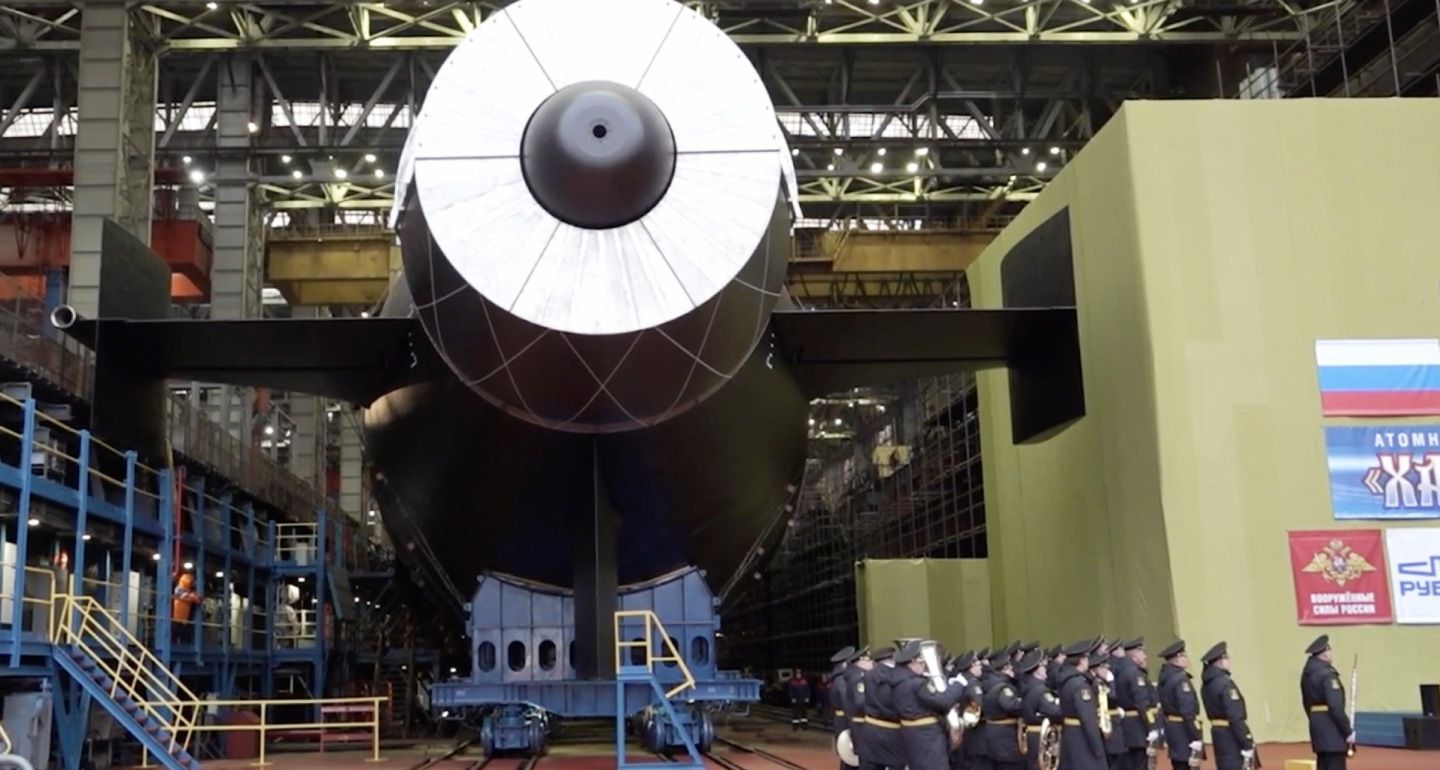
The Kremlin will only be prepared to negotiate strategic arms limitations if it is confident it can secure significant concessions from the United States. Otherwise, meaningful dialogue is unlikely, and the international system of strategic stability will continue to teeter on the brink of total collapse.
Maxim Starchak
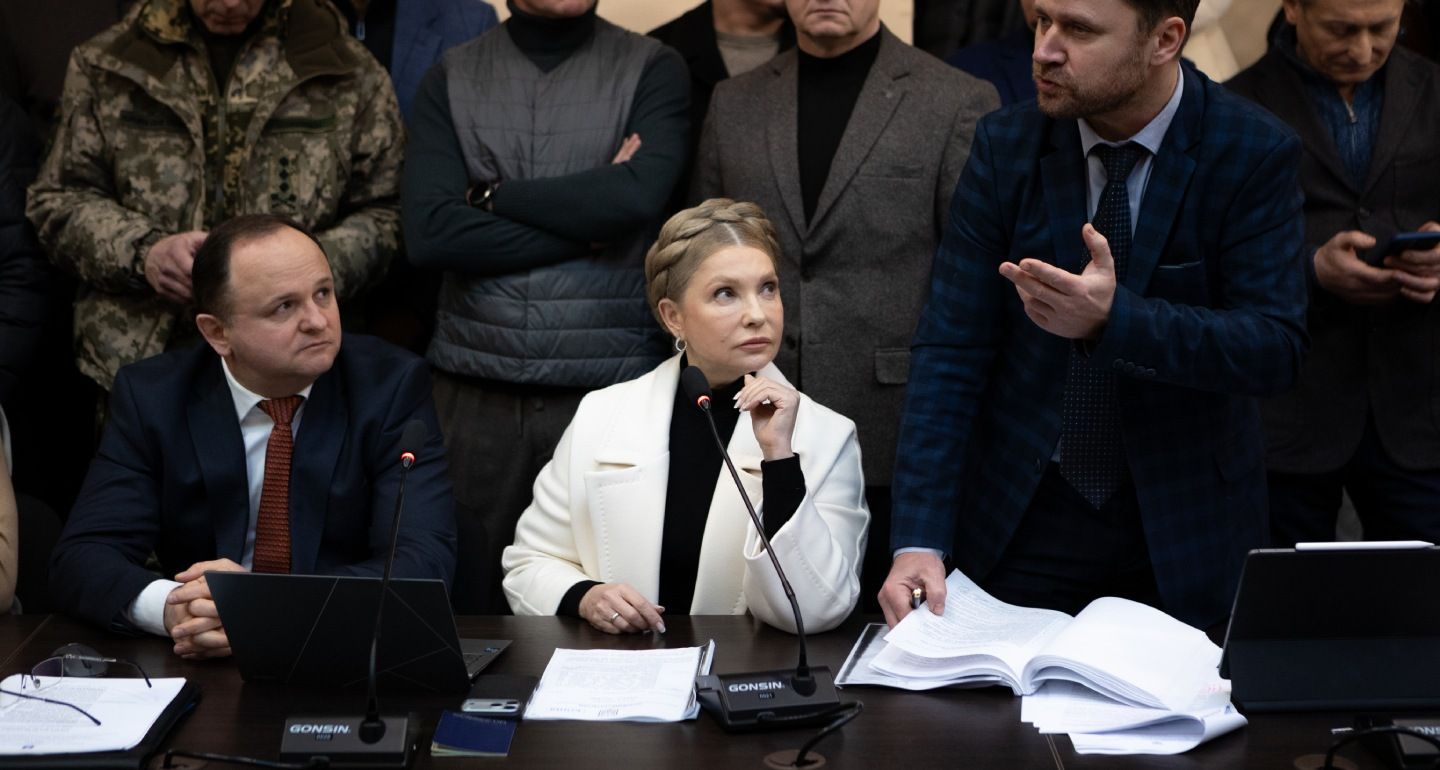
The story of a has-been politician apparently caught red-handed is intersecting with the larger forces at work in the Ukrainian parliament.
Konstantin Skorkin
For years, the Russian government has promoted “sovereign” digital services as an alternative to Western ones and introduced more and more online restrictions “for security purposes.” In practice, these homegrown solutions leave people vulnerable to data leaks and fraud.

Maria Kolomychenko