

Commentary
What should happen when sanctions designed to weaken the Belarusian regime end up enriching and strengthening the Kremlin?
Denis Kishinevsky
{
  "authors": [
    "Konstantin Skorkin"
  ],
  "type": "commentary",
  "blog": "Carnegie Politika",
  "centerAffiliationAll": "",
  "centers": [
    "Carnegie Endowment for International Peace",
    "Carnegie Russia Eurasia Center"
  ],
  "englishNewsletterAll": "",
  "nonEnglishNewsletterAll": "",
  "primaryCenter": "Carnegie Russia Eurasia Center",
  "programAffiliation": "",
  "programs": [],
  "projects": [],
  "regions": [
    "Ukraine",
    "United States"
  ],
  "topics": [
    "Foreign Policy",
    "Domestic Politics",
    "Global Governance",
    "Security"
  ]
}
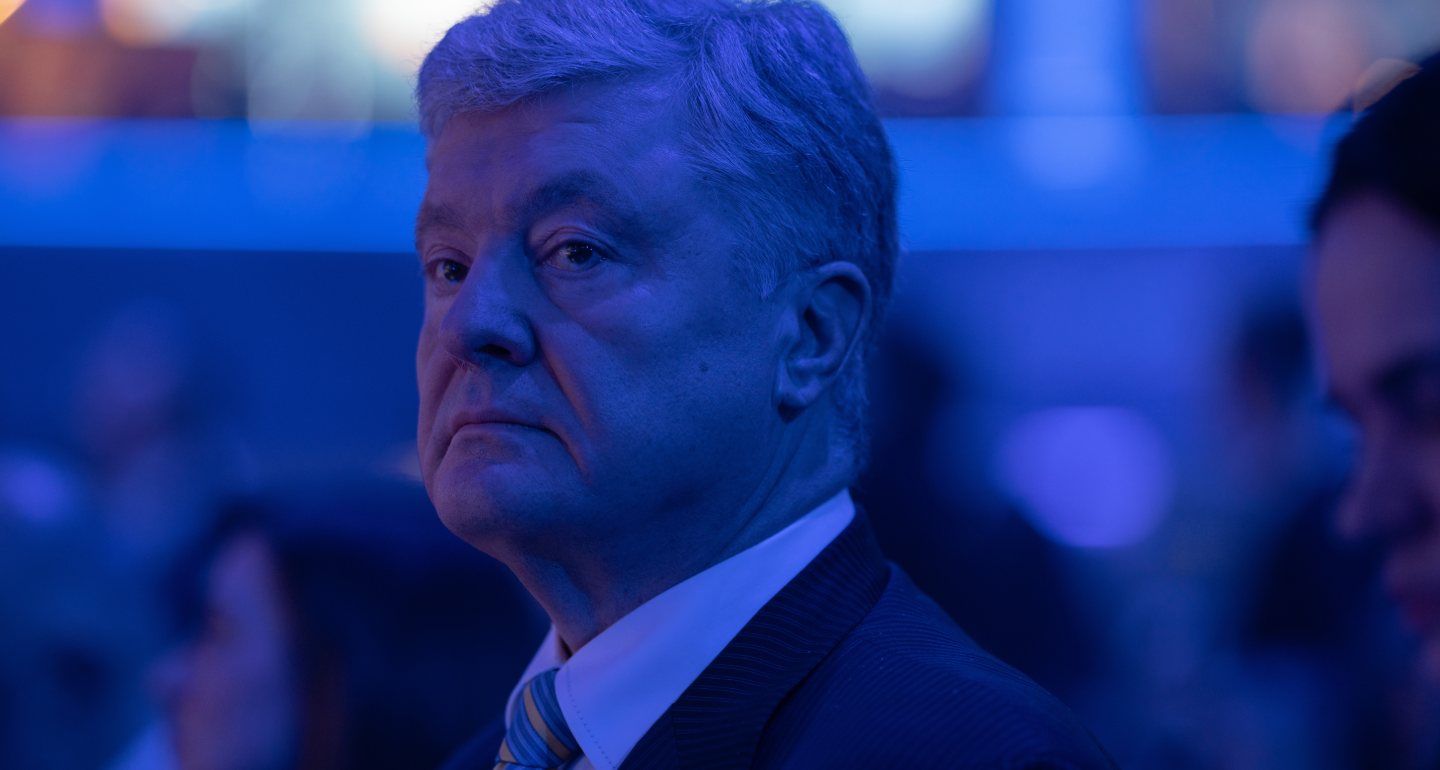
The Ukrainian government clearly feels it has a freer hand with its opponents because of the beliefs of the new administration in Washington.
The unexpected rapprochement between the United States and Russia amid negotiations to end the war in Ukraine has prompted Ukrainian President Volodymyr Zelensky to turn to domestic sanctions once again—this time against a group of Ukrainian oligarchs including former president Petro Poroshenko.
This shows that Zelensky is preparing for the political struggle that would follow the imposition of a disadvantageous peace. It’s also clear the Ukrainian government feels it has a freer hand with its opponents because U.S. President Donald Trump is unconcerned about democracy.
Poroshenko was the most prominent member of a group sanctioned by Ukraine’s National Security and Defense Council on February 12. One of Ukraine’s richest men, Poroshenko lost to Zelensky in the 2019 presidential election, but is still considered one of his main rivals.
Despite his long-standing opposition to Zelensky, this is the first time Poroshenko has faced such serious problems. All the criminal cases opened against him in recent years have quickly unraveled. Until now, the most serious threat had been accusations of financing terrorism linked to the illegal supply of coal to areas of eastern Ukraine controlled by Russian-backed rebels in 2015, but investigators have had little success advancing the case.
In other words, the authorities had created minor problems for Poroshenko, but refrained from crossing a red line. The general consensus was that subjecting a former president to political persecution would not go down well in the West.
Now, however, the situation has changed. Trump and his allies are indifferent to Poroshenko’s fate—not least because Poroshenko has close ties with the Democratic Party and fired the prosecutor who began an anti-corruption investigation into Burisma, the gas company where the son of Trump’s predecessor, Joe Biden, was employed.
As a result, Poroshenko is facing more and more problems. His eldest son, Oleksii, has been declared a draft dodger, and the recent sanctions mean the former president is the subject of an asset freeze and is banned from withdrawing capital from the country. “I can’t even buy a coffee at the gas station,” he complained in one interview.
The decision to sanction Poroshenko was a consequence of the growing possibility of elections in Ukraine (all elections were suspended when Kyiv imposed martial law at the beginning of Russia’s full-scale invasion in 2022). Zelensky is likely seeking to limit Poroshenko’s freedom of maneuver.
While Ukrainian officials have been fiercely critical of the prospect of a peace deal negotiated over their heads by the United States and Russia, they also understand there is little they can do to stop it from happening. And that is having a knock-on effect on domestic politics: officials know that if the fighting ends, elections will have to be held. There is even a possibility elections could take place before a full peace deal.
The others sanctioned alongside Poroshenko were all opponents of Zelensky who no longer posed any political threat. They included Viktor Medvedchuk, who has been discredited as a Kremlin agent; jailed tycoon Ihor Kolomoisky and his business partner Gennady Bogolyubov, who fled the country; and tycoon Kostyantyn Zhevago, who now lives in France.
It's possible that the Ukrainian authorities want some of the mineral licenses still held by these men in order to be in a better position to broker a deal with Washington, since Trump has made clear his interest in Ukraine’s natural resources. But the chief aim of the sanctions was likely to discredit Poroshenko by putting him on the same list as a traitor and corrupt oligarchs—paving the way for further political persecution and possible arrest.
Trump’s claims about Zelensky’s unpopularity have made the Ukrainian authorities nervous—and more sensitive to domestic political challenges. One example is a recent incident in which structural changes were made to an Odesa university after it emerged that its director, Serhii Kivalov (formerly close to ex-president Viktor Yanukovych), had been in contact with former commander in chief Valery Zaluzhny (another political rival of Zelensky’s).
“I am ready to speak about elections if you want. Ukrainians don’t want [them]; totally don’t want [them], because they are afraid. Because otherwise we will lose the martial law, our soldiers will come back home, and Putin will occupy all our territory,” Zelensky said at the Munich Security Conference in February. But it’s difficult to know whether this is really what Ukrainians think—or whether it’s what the authorities would like them to think.
The last polling on this issue was carried out in the spring of 2024, and showed strong support for delaying elections to after the war’s end. However, the situation has evolved and, with an end to the fighting in the cards, the issue is again becoming a more divisive one. It doesn’t look like Ukrainian society has decided what it wants.
It has often been suggested that the pressures of wartime have led to a dangerous centralization of power in Ukraine. Previously, it was hoped that the West’s support for democracy would be a restraining factor in this process. But the arrival of the anti-democratic Trump means that brake has now been removed.
For Ukrainians, the U.S. calls for elections look a lot like Kremlin rhetoric about Zelensky’s “illegitimacy.” And it’s true that Trump and his administration have little interest in promoting democracy for its own sake—they’re only interested in a deal to end the war.
However, by compelling Zelensky to make peace, Trump is also untying Zelensky’s hands at home, allowing him to strengthen his political position without worrying about what the West might think. Despite Ukraine’s historical intolerance of any hint of dictatorship, authoritarianism might start to look increasingly tempting.
Carnegie does not take institutional positions on public policy issues; the views represented herein are those of the author(s) and do not necessarily reflect the views of Carnegie, its staff, or its trustees.
What should happen when sanctions designed to weaken the Belarusian regime end up enriching and strengthening the Kremlin?

Denis Kishinevsky
The supposed threats from China and Russia pose far less of a danger to both Greenland and the Arctic than the prospect of an unscrupulous takeover of the island.

Andrei Dagaev
Western negotiators often believe territory is just a bargaining chip when it comes to peace in Ukraine, but Putin is obsessed with empire-building.
Andrey Pertsev
Unexpectedly, Trump’s America appears to have replaced Putin’s Russia’s as the world’s biggest disruptor.
Alexander Baunov
Baku may allow radical nationalists to publicly discuss “reunification” with Azeri Iranians, but the president and key officials prefer not to comment publicly on the protests in Iran.

Bashir Kitachaev