

Commentary
Unexpectedly, Trump’s America appears to have replaced Putin’s Russia’s as the world’s biggest disruptor.
Alexander Baunov
{
  "authors": [
    "Andrey Pertsev"
  ],
  "type": "commentary",
  "blog": "Carnegie Politika",
  "centerAffiliationAll": "",
  "centers": [
    "Carnegie Endowment for International Peace",
    "Carnegie Russia Eurasia Center"
  ],
  "collections": [
    "Politika: The Best of 2025"
  ],
  "englishNewsletterAll": "",
  "nonEnglishNewsletterAll": "",
  "primaryCenter": "Carnegie Russia Eurasia Center",
  "programAffiliation": "",
  "programs": [],
  "projects": [],
  "regions": [
    "Russia",
    "Caucasus"
  ],
  "topics": [
    "Domestic Politics",
    "Political Reform",
    "Global Governance"
  ]
}
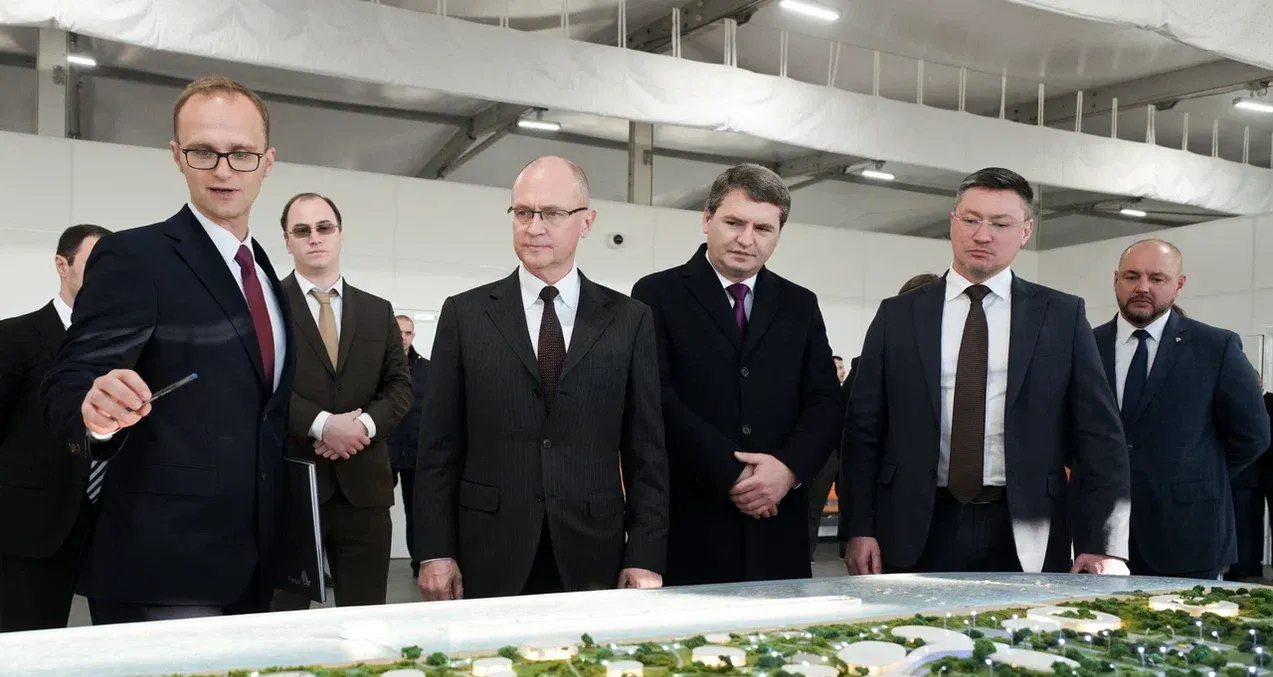
In a departure from tradition, top Kremlin official Sergei Kiriyenko has acquired foreign policy powers alongside his major role in domestic policy.
Russian President Vladimir Putin’s first deputy chief of staff Sergei Kiriyenko has been in charge of Russian domestic policy for a decade. But he recently significantly expanded his sphere of influence. It now extends to elements of foreign policy, including Russia’s relations with former Soviet nations Armenia and Moldova, as well as breakaway Georgian regions Abkhazia and South Ossetia.
Kiriyenko’s foreign policy style is noticeably different from that of his predecessors, Vladislav Surkov and Dmitry Kozak. As special envoys of Putin, Surkov and Kozak publicly mainly took part in negotiations—and tried to be discreet about Russia’s interference in the internal affairs of other countries. Under Kiriyenko, Russia’s interference is not only much more public, it is central to Russian strategy in what it terms its “near abroad.”
To formalize his new powers, Kiriyenko’s team has been lobbying to set up a special department within the presidential administration. Just a few years ago, this would have been seen as impossible, even absurd—domestic policy and foreign policy were long considered to be distinct—but Kiriyenko looks like he might get what he wants.
The power grab began last year, when Kiriyenko took on the task of facilitating the victory of the pro-Kremlin Badra Gunba in Abkhazia’s presidential election. The statelet was undergoing a major political crisis, engulfed by mass protests against a new investment agreement with Russia, which led to early presidential elections. Kiriyenko grabbed the opportunity, arguing that Russian political strategists had experience of working in the region, and got the overseeing of Abkhazia transferred to him instead of Kozak.
Kiriyenko visited Abkhazia,promised some social handouts, and posed for the cameras with Gunba. Notably, Kremlin-linked political strategist Sergei Tolmachevhelped to run Gunba’s campaign. Although Gunba did not win in the first round of voting, he prevailed in the second round and became president, despite accusations from the opposition of mass electoral fraud. Putin appeared pleased with Kiriyenko’s work, and met personally with the new Abkhazian leader.
The success in Abkhazia allowed Kiriyenko to expand his authority. Now, in addition to the occupied parts of Ukraine, it includes oversight of relations with South Ossetia, Moldova, and Armenia (all previously Kozak’s responsibility). He was also put in charge of overseeing relations with a number of African nations.
Before Kozak, Surkov was Putin’s point man for overseeing the post-Soviet space, above all Ukraine. His approach was to engage in secret negotiations to try to get Kyiv to recognize the Russia-backed rebel statelets of the Donetsk People’s Republic and Luhansk People’s Republic as autonomous republics within Ukraine. The idea was that they could be used as a springboard for pro-Russian politicians inside the country. But Surkov failed.
Kozak’s approach was more pragmatic, and more public. Unlike Surkov, he met openly with leaders from both sides, leveraging his status as Putin’s representative. But ultimately, Kozak saw the problem of Ukraine as an obstacle to better relations with the West—and he consequently fell out of favor following the full-scale invasion in 2022.
Despite the differences in their approaches, both Surkov and Kozak operated primarily as external negotiators, albeit with the option of deploying “political strategists” to influence electoral processes. When they were in office, the Kremlin saw relations with post-Soviet countries as part of a broader Russian foreign policy. And it attempted to hide its foreign meddling, even if it was still periodicallyexposed by journalists and campaigners.
Under Kiriyenko, things are different. Direct interference has evolved from being just one option in Moscow’s armory into its main weapon. In pro-Russia Abkhazia, for example, Kiriyenko behaved as if he were a visiting boss, as well as a generous envoy from an “older brother nation.” He tried the same playbook in the Moscow-friendly Transnistria, a breakaway region of Moldova. And he might well do the same thing in South Ossetia.
These sorts of tactics, however, will not work in Moldova or Armenia, where the government and most of the elite are skeptical of Moscow’s intentions. The demands of Kiriyenko’s day job as “curator” of Russian domestic policy mean he cannot engage in lengthy negotiations with Yerevan or Chișinău—either secretly (like Surkov) or publicly (like Kozak). Instead, the approach that Kiriyenko has apparently sold to Putin is simple: Russia should stop being coy about interfering in the domestic affairs of other countries in the post-Soviet space. Some of Kiriyenko’s staff evenjoke about how “Russia’s borders are endless.” What that actually means is that the influence of the Kremlin’s political bloc is endless.
Sources close to Kiriyenko cited in Russian media have beenopen about the possibility of running interference campaigns in Armenia to undermine the current government. If Kiriyenko can persuade Putin that this sort of flagrant interference is effective, then it’s possible he will be trusted with similar operations in bigger countries (the Kremlin seems to have tested the waters in France, where political strategist Ilya Gambashidze, who is close to Kiriyenko’s team, wasaccused in 2024 of organizing disinformation campaigns).
For his part, Kiriyenko will be keen to add more countries to his portfolio because that would give him more weight within Russia’s state apparatus. He would also be able to try to coordinate the work of Russian diplomats and security services. Above all, though, he would get more face time with Putin—and in Russian politics, personal access to the president is the most valuable asset.
However, there are also risks for Kiriyenko. He and his team have gotten used to Russia’s docile political system where elections are easy to manipulate. But they will have to find new ways of operating in countries where politics is genuinely competitive. Some of Kiriyenko’s team are apparently alreadyaware that they likely won’t be able to significantly influence the 2026 Armenian parliamentary elections.
At least at first, Kiriyenko will be immune from criticism—and he will be able to blame foreign policy failures on other officials, or the “machinations of Russia’s enemies.” Even if he is unsuccessful, though, he may be saved from having to face a reckoning by receiving a long-sought promotion. In that case, he would be able to blithely hand all the problems he has created over to his successor.
Carnegie does not take institutional positions on public policy issues; the views represented herein are those of the author(s) and do not necessarily reflect the views of Carnegie, its staff, or its trustees.
Unexpectedly, Trump’s America appears to have replaced Putin’s Russia’s as the world’s biggest disruptor.
Alexander Baunov
Baku may allow radical nationalists to publicly discuss “reunification” with Azeri Iranians, but the president and key officials prefer not to comment publicly on the protests in Iran.
Bashir Kitachaev
The Kremlin will only be prepared to negotiate strategic arms limitations if it is confident it can secure significant concessions from the United States. Otherwise, meaningful dialogue is unlikely, and the international system of strategic stability will continue to teeter on the brink of total collapse.
Maxim Starchak
The story of a has-been politician apparently caught red-handed is intersecting with the larger forces at work in the Ukrainian parliament.
Konstantin Skorkin
For years, the Russian government has promoted “sovereign” digital services as an alternative to Western ones and introduced more and more online restrictions “for security purposes.” In practice, these homegrown solutions leave people vulnerable to data leaks and fraud.

Maria Kolomychenko