• Research
  • Politika
  • About
Carnegie Russia Eurasia center logoCarnegie lettermark logo
  • Donate
{
  "authors": [
    "Uri Dadush",
    "Shimelse Ali"
  ],
  "type": "other",
  "centerAffiliationAll": "",
  "centers": [
    "Carnegie Endowment for International Peace"
  ],
  "collections": [],
  "englishNewsletterAll": "",
  "nonEnglishNewsletterAll": "",
  "primaryCenter": "Carnegie Endowment for International Peace",
  "programAffiliation": "",
  "programs": [],
  "projects": [],
  "regions": [
    "Southern, Eastern, and Western Africa",
    "North America"
  ],
  "topics": [
    "Economy"
  ]
}
Other

Whither Africa?

After stagnating for decades, economic growth in Africa has accelerated, but maintaining this rapid growth is far from guaranteed. Policy makers must build on past successes and tackle tough reforms before the world’s poorest continent can make sustained economic progress.

Link Copied
By Uri Dadush and Shimelse Ali
Published on Mar 3, 2011

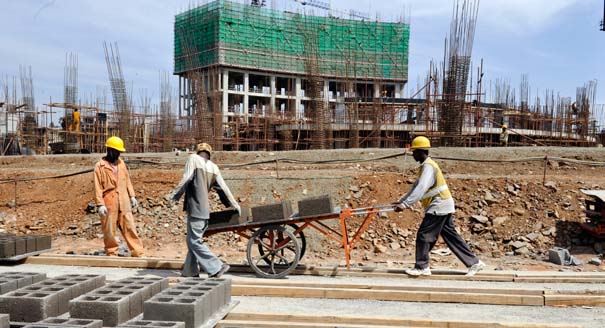
After stagnating for much of the postcolonial period, economic growth in Africa has accelerated since the mid-1990s. Improved terms of trade, better macroeconomic and education policies, and greater demand for services helped Africa’s annual GDP growth rate more than double to 4.6 percent from 1999–2008 compared to the previous decade. Impressively, GDP in African economies accelerated more quickly than that of developing economies in other regions.

To continue this growth, Africa must overcome numerous challenges. Africa suffers from low investment and savings rates, a lagging demographic transition as the continent’s high fertility rate creates a bulge in the number of young people requiring education, low productivity, and a low level of exports—even as export prices have increased.

Still, Africa also has a number of long-term growth opportunities. By developing ties with emerging economies such as China and India, Africa will be able to export more goods abroad, particularly as income and wages in those countries grow. The emergence of a middle class in Africa will also create more demand.

To ensure Africa successfully moves up the development ladder, policy makers must improve the continent’s governance and business climate, allowing it to compete successfully with other poor but increasingly dynamic developing regions. Specific steps include:

  • Improve the investment climate. Africa must take small steps—such as reducing the cost of registering and closing a business—and make fundamental reforms—such as strengthening the rule of law—to make the business environment more predictable. Improving trade logistics will also help Africa reap new opportunities as production processes become more globalized.

  • Raise agricultural productivity. Few sectors offer greater room for improvement than agriculture, as Africa has the lowest cereal yield per hectare of any developing region. Africa should use genetically modified seeds, complementary fertilizers, and more efficient farming to boost crop yields.

  • Invest in a skilled labor force. Policy makers must raise the quality of education—for example, through increasing enrollment in the sciences and improving skills such as numeracy and problem-solving—to close the widening innovation gap with other developing regions. Highly skilled workers make up the largest share of Africa’s emigrants. Adequate compensation, better job opportunities, a strong business climate, and easy access to information technology will help African economies retain skilled workers.

Africa’s continued—and accelerated—growth over the long term is by no means guaranteed. But if policy makers can build on their successes so far and tackle tougher second-generation reforms, they can help Africa become more competitive, improve productivity, and increase per-capita incomes well into the future.

Authors

Uri Dadush
Former Senior Associate, International Economics Program
Uri Dadush
Shimelse Ali
EconomySouthern, Eastern, and Western AfricaNorth America

Carnegie does not take institutional positions on public policy issues; the views represented herein are those of the author(s) and do not necessarily reflect the views of Carnegie, its staff, or its trustees.

More Work from Carnegie Russia Eurasia Center

  • Commentary
    Carnegie Politika
    Including Russia on the EU Financial Blacklist Will Hurt Ordinary People, Not the Kremlin

    The paradox of the European Commission’s decision is that the main victims will not be those it formally targets. Major Russian businesses associated with the Putin regime have long adapted to sanctions with the help of complex schemes involving third countries, offshore companies, and nonpublic entities.

      Alexandra Prokopenko
  • Commentary
    Carnegie Politika
    Why Didn’t the Ukraine War Turn Russia’s Ruling Class Against Putin?

    A new book by Alexandra Prokopenko looks at why the Russian ruling class became the regime’s willing servants—and how they might fare in a post-Putin world.

      Vladislav Gorin

  • Commentary
    Carnegie Politika
    Collateral Damage: The Frozen Foreign Assets of Middle-Class Russians

    The volume of frozen private assets might seem insignificant compared with Russia’s sovereign reserves, but these are the savings of millions of people who believed that foreign securities were a safe investment and in the institution of private property.

      Yulia Starostina

  • Commentary
    Carnegie Politika
    The Kremlin Has Weaponized Western Financial Checks to Punish Russian Dissidents

    International compliance and anti-money laundering standards are currently formulated in such a way that the Western financial system does not differentiate between Russian political prisoners and ISIS militants.

      Alexandra Prokopenko

  • Commentary
    Carnegie Politika
    Russia’s Oligarchs Must Walk a Wartime Tightrope to Keep Their Fortunes

    Caught between problems at home and in the West, Forbes list Russians are resorting to a variety of survival strategies. The end result will be the disappearance of oligarchs from Russia once and for all.

      Arnold Khachaturov

Get more news and analysis from
Carnegie Russia Eurasia Center
Carnegie Russia Eurasia logo, white
  • Research
  • Politika
  • About
  • Experts
  • Events
  • Contact
  • Privacy
Get more news and analysis from
Carnegie Russia Eurasia Center
© 2026 Carnegie Endowment for International Peace. All rights reserved.