

Commentary
Baku may allow radical nationalists to publicly discuss “reunification” with Azeri Iranians, but the president and key officials prefer not to comment publicly on the protests in Iran.
Bashir Kitachaev
{
  "authors": [
    "R. Shashank Reddy"
  ],
  "type": "legacyinthemedia",
  "centerAffiliationAll": "",
  "centers": [
    "Carnegie Endowment for International Peace",
    "Carnegie India"
  ],
  "collections": [],
  "englishNewsletterAll": "",
  "nonEnglishNewsletterAll": "",
  "primaryCenter": "Carnegie India",
  "programAffiliation": "",
  "programs": [],
  "projects": [],
  "regions": [
    "South Asia",
    "India"
  ],
  "topics": [
    "Technology",
    "Security",
    "Military"
  ]
}
The controversies surrounding autonomous weapons must not obscure the fact that like most technologies, AI has a number of non-lethal uses for militaries across the world, and especially for the Indian military.
Source: Livemint
Of all the purported uses of Artificial Intelligence (AI), it would be hard to find one more controversial than its possible use for military purposes. In popular consciousness, the idea of military AI immediately brings to mind the notion of autonomous weapon systems or “killer robots”, machines that can independently target and kill humans. The possible presence of such systems on battlefields has sparked a welcome international debate on the legality and morality of using these weapon systems. The controversies surrounding autonomous weapons, however, must not obscure the fact that like most technologies, AI has a number of non-lethal uses for militaries across the world, and especially for the Indian military. These are, on the whole, not as controversial as the use of AI for autonomous weapons, and, in fact, are far more practicable at the moment, with clear demonstrable benefits.
For the Indian military especially, these potential uses of AI could prove to be exploitable low-hanging fruit to quickly and effectively enhance its technological capabilities. Put together, there are three areas where AI can be readily deployed without much controversy or effort.
First, logistics and supply chain management. This is arguably the lowest of the low-hanging fruits available to the Indian military. Substantial work has already been done in deploying AI for logistics and supply chain management in the civilian sector, with several Indian companies also having built considerable expertise in this area. It would, therefore, not require much effort to transfer the technology, knowledge and expertise already present in the civilian space to meet the military’s needs. An efficient logistics system lies at the heart of any well-functioning military, and this is especially complicated for the Indian Armed Forces given the diverse environments and conditions they operate in. AI-backed systems could go a long way in increasing efficiencies, reducing wastage and overall costs in the military’s logistics management.
Second, cyber-operations. As cyber warfare becomes faster, more sophisticated and more dangerous, it becomes necessary to develop both offensive and defensive cyber-war capabilities both to protect the military’s own assets and communication links, and to attack similar assets of opposing militaries. Specifically trained AI systems could actually prove to be far more efficient and effective than humans for such tasks. The scale and speed of the responses necessary in evolving cyber-operation domains make it unlikely that humans will be able to tackle evolving threats in an effective manner by themselves. A number of cybersecurity experts and commentators believe that AI is the future of cyber-operations, with machine-on-machine engagements increasingly becoming the norm, especially to counter low-order or routine threats.
Third, intelligence, surveillance and reconnaissance (ISR). This has already been put into practice by various countries, including the US, and, possibly, China. Using AI for ISR tasks can take two different forms. The first is the use of AI in unmanned vehicles and systems, whether on air, land, or on and under water. This includes increasingly ubiquitous drones but also unmanned ships and submersibles and ground vehicles. Such “intelligent” unmanned systems could be used for patrolling in harsh terrains and weather conditions, providing harbour protection, and allowing the deploying force to scout the battlefield or conflict zone with no danger to human soldiers. The second use is for data analysis and interpretation. An AI system could, for instance, be trained to pick out predetermined suspicious behaviour from the video footage of a surveillance drone, and thereby identify potential targets. Much of this work is currently done by humans, but the time taken and possible data under-analysed is immense. AI could do in a few hours what would have taken a human days to do, and in a significantly more efficient manner. This fact has led the US to develop and deploy an experimental system called Project Maven, which analyses video footage from drones to identify potential threats in the US’ fight against the Islamic State (IS).
The three specific use-cases discussed above are the very low-hanging fruit that can be exploited with the existing technical and manpower capabilities. The incorporation of these AI systems in the functioning of the Indian military could potentially lead to a long-term reduction in costs, while improving its technological capabilities. Further, the technology for each of these use cases is already present in some form principally in the civilian space.
To fully exploit their potential, however, the Indian military needs to build a close working relationship with the vibrant private technology sector in India, and especially with start-ups doing exciting work in the AI space. This will inevitably involve handing over potentially sensitive data to private firms so as to enable the building of AI systems that can meet the specific needs of the Indian Armed Forces. This is entirely uncharted territory in India, and to assuage the valid concerns that may arise with sensitive data being in private hands, a unique legal “trust model” needs to be built that accounts for the needs of the military and technological innovation. While the development of such a model may, in fact, prove to be a tougher task than the simple integration of AI technologies, it needs to be done if the Indian military is to prepare itself for warfare in the 21st century.
Carnegie does not take institutional positions on public policy issues; the views represented herein are those of the author(s) and do not necessarily reflect the views of Carnegie, its staff, or its trustees.
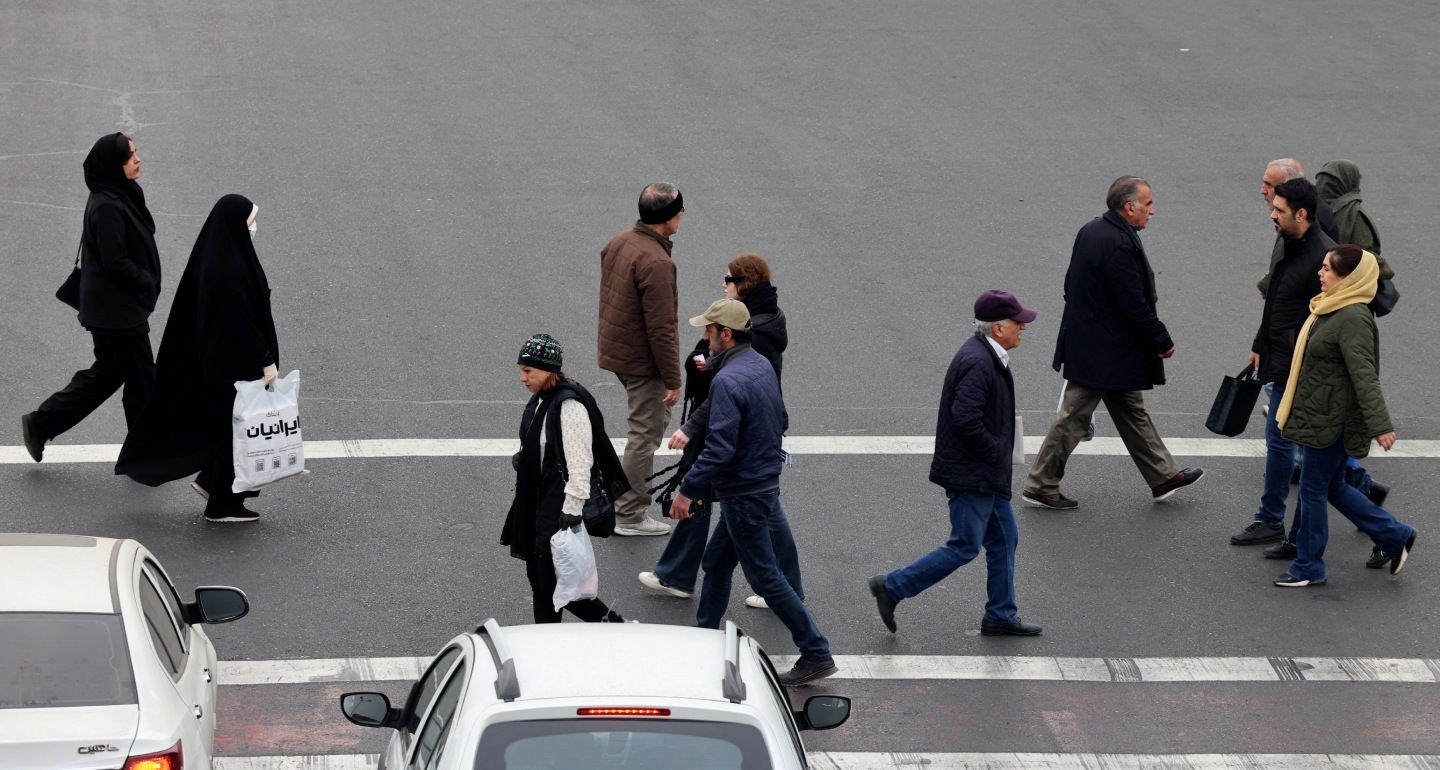
Baku may allow radical nationalists to publicly discuss “reunification” with Azeri Iranians, but the president and key officials prefer not to comment publicly on the protests in Iran.

Bashir Kitachaev
For years, the Russian government has promoted “sovereign” digital services as an alternative to Western ones and introduced more and more online restrictions “for security purposes.” In practice, these homegrown solutions leave people vulnerable to data leaks and fraud.

Maria Kolomychenko
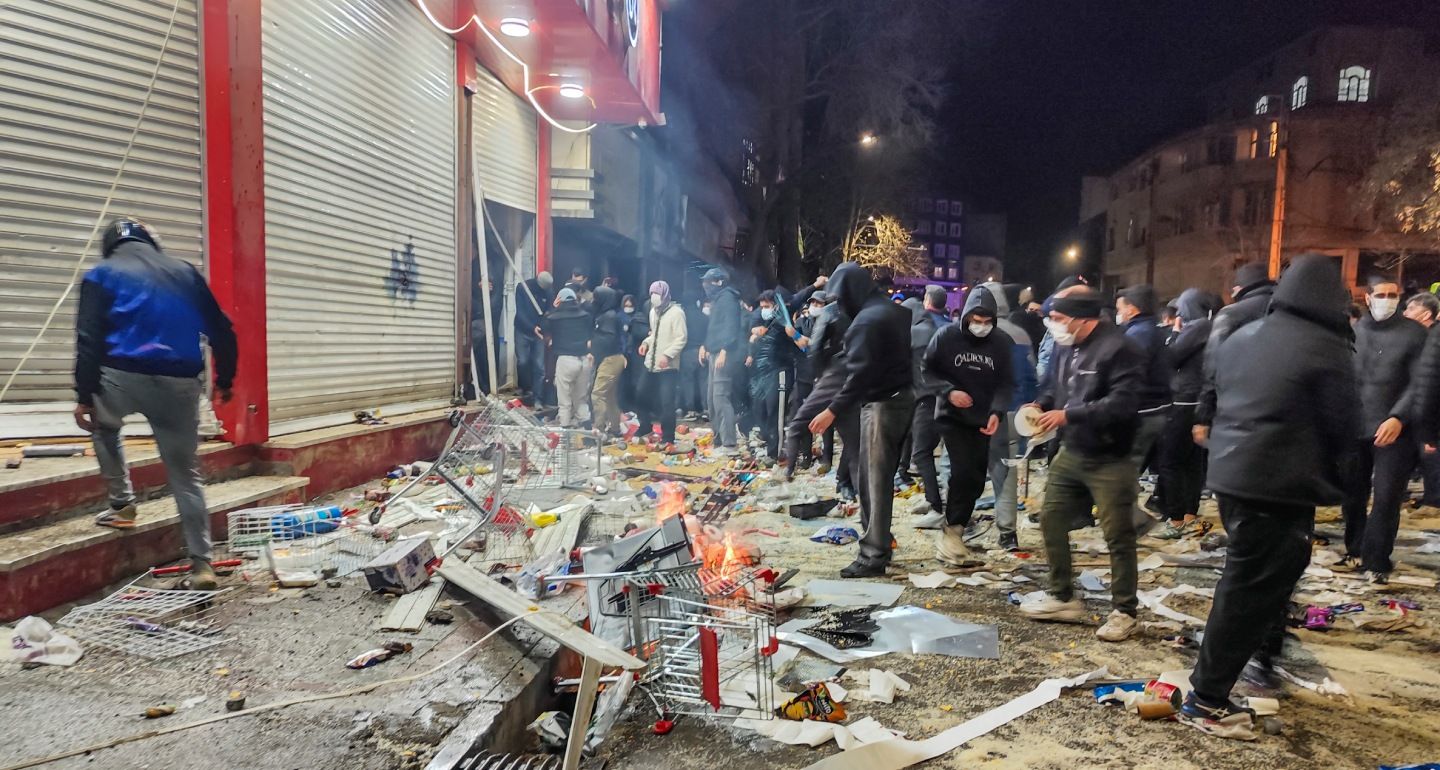
It’s one thing to export Russian helicopters to Iran to fight the insurgency, and it’s easy to imagine Moscow becoming a haven for fleeing Iranian leaders. But it’s very difficult to imagine Russian troops defending the Iranian regime on the ground.

Nikita Smagin

While appointing Kyrylo Budanov will help shore up Zelensky’s political authority and balance the president’s inner circle, the spy chief’s political ambitions mean he could be a threat.

Konstantin Skorkin
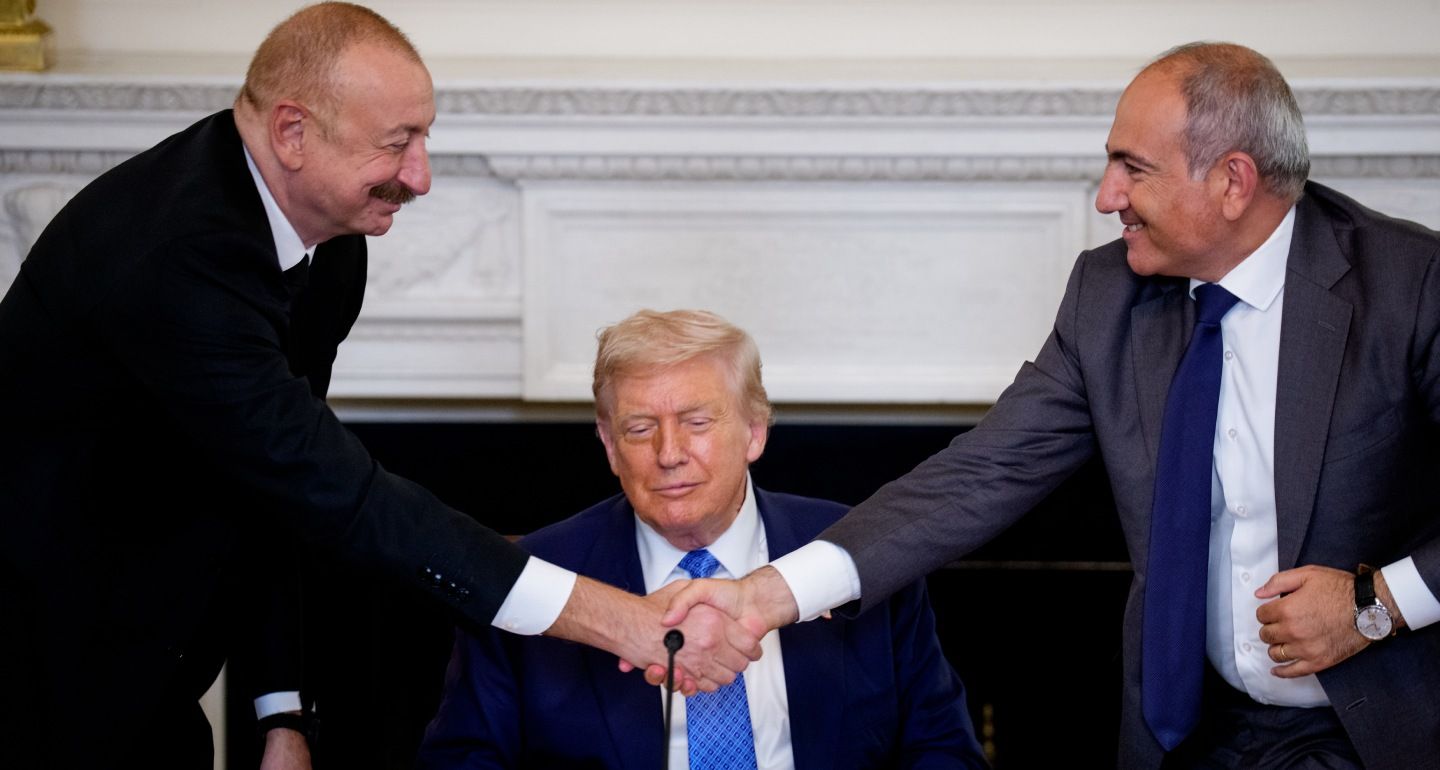
While signaling internationally that it wants peace, the Azerbaijani regime continues to promote anti-Armenian sentiment at home to mobilize domestic support.
Bashir Kitachaev