• Research
  • Politika
  • About
Carnegie Russia Eurasia center logoCarnegie lettermark logo
  • Donate
{
  "authors": [
    "Anirudh Burman"
  ],
  "type": "legacyinthemedia",
  "centerAffiliationAll": "",
  "centers": [
    "Carnegie Endowment for International Peace",
    "Carnegie India"
  ],
  "collections": [],
  "englishNewsletterAll": "",
  "nonEnglishNewsletterAll": "",
  "primaryCenter": "Carnegie India",
  "programAffiliation": "",
  "programs": [],
  "projects": [
    "Technology and Society"
  ],
  "regions": [
    "South Asia",
    "India"
  ],
  "topics": [
    "Technology"
  ]
}
In The Media
Carnegie India

Lost in the Data Localization Debate: Does India Have Full Power to Exploit Its Own Data?

The Narendra Modi government wants to reportedly water down the provisions related to data localization proposed in the draft Personal Data Protection Bill 2018 formulated by the Justice Srikrishna Committee.

Link Copied
By Anirudh Burman
Published on Oct 25, 2019
Project hero Image

Project

Technology and Society

This program focuses on five sets of imperatives: data, strategic technologies, emerging technologies, digital public infrastructure, and strategic partnerships.

Learn More

Source: Print

The Narendra Modi government wants to reportedly water down the provisions related to data localisation proposed in the draft Personal Data Protection Bill 2018 formulated by the Justice Srikrishna Committee.

The debate on the free-flow and storage of data has assumed significance in the wake of technological developments – such as Artificial Intelligence (AI) – that can harness data to provide better and cheaper services to consumers. The debate on data localisation is now not only a political one, but also a geopolitical one, and a key aspect of trade talks between India and other countries like the US. However, it is important to examine and analyse whether localisation, as defined in the data protection bill, would actually meet its underlying objectives.

Read the Full Text

This article was originally published by the Print.

Anirudh Burman
Former Associate Research Director and Fellow, Carnegie India
Anirudh Burman
TechnologySouth AsiaIndia

Carnegie does not take institutional positions on public policy issues; the views represented herein are those of the author(s) and do not necessarily reflect the views of Carnegie, its staff, or its trustees.

More Work from Carnegie Russia Eurasia Center

  • Commentary
    Carnegie Politika
    Russia’s Cyberfraud Epidemic Is Now a Political Issue

    For years, the Russian government has promoted “sovereign” digital services as an alternative to Western ones and introduced more and more online restrictions “for security purposes.” In practice, these homegrown solutions leave people vulnerable to data leaks and fraud.

      Maria Kolomychenko

  • Commentary
    Carnegie Politika
    How Far Will the Kremlin Take Its Internet Crackdown?

    In an attempt to stop Ukrainian drones from reaching their targets, the Russian authorities have significantly ramped up online repression.

      Maria Kolomychenko

  • Commentary
    Carnegie Politika
    China Is Using Vocational Training Centers to Rebuild Its Image in Central Asia

    In Central Asia, Beijing is learning to adapt. The era of raw economic assertiveness is giving way to a more nuanced strategy that fuses investment with education, infrastructure with human capital, and ambition with a dose of humility.

      Edward Lemon, Bradley Jardine

  • Commentary
    Carnegie Politika
    China Has Flooded Central Asia With Electric Cars—the Impact Will Be Long-Lasting

    By entering this new stage of development of the automotive industry via Chinese electric cars, Central Asia will eventually be forced to adopt Chinese standards for the industry’s development, integrating into the Chinese tech ecosystem and leaving no room for competition.

      Temur Umarov, Roman Vakulchuk

  • Commentary
    How China is Adapting to Tajikistan’s Demand for Security Cooperation

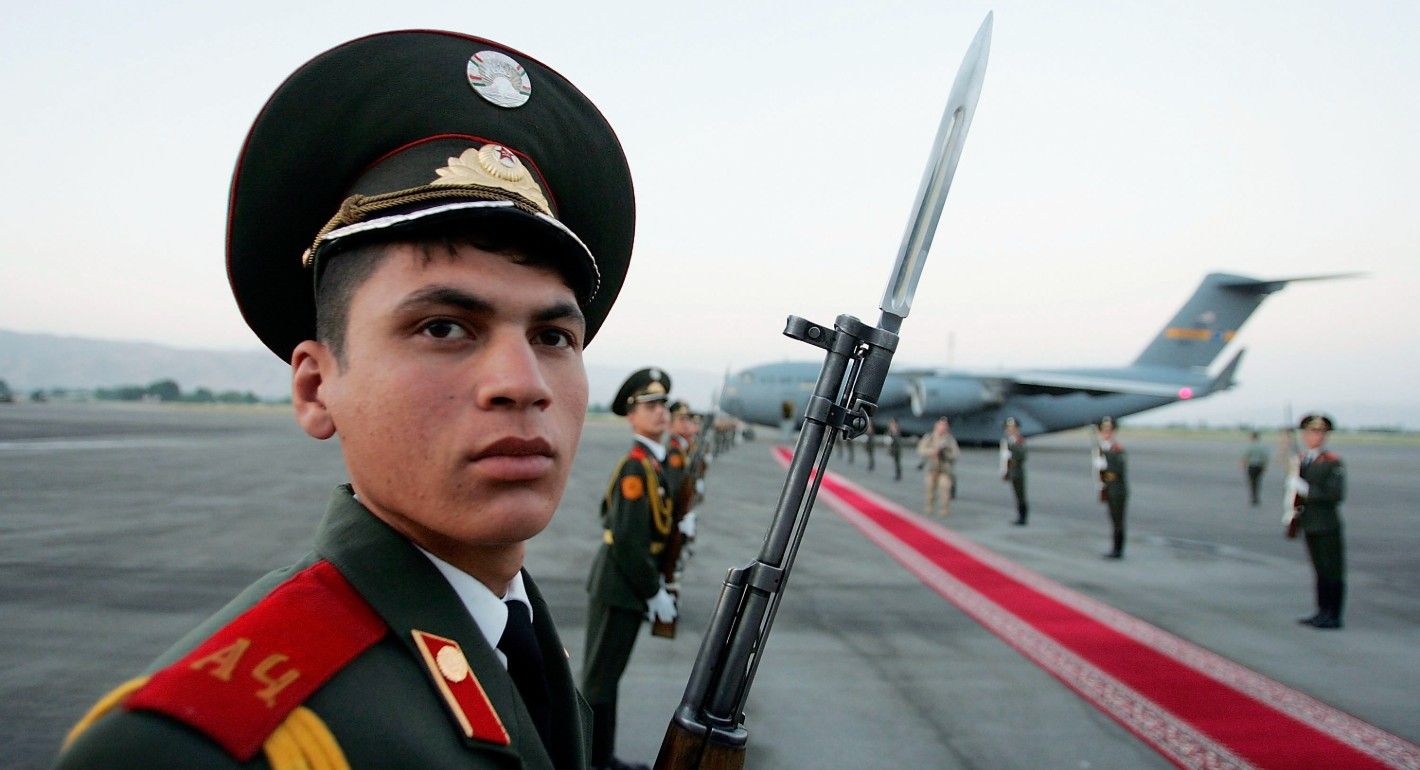
    Tajikistan is at the forefront of China’s evolving role in global security. But China is not simply imposing its will on Tajikistan’s authoritarian government; the Tajik side is shaping the relationship as well, using China to strengthen its regime.

      Edward Lemon, Ruslan Norov

Get more news and analysis from
Carnegie Russia Eurasia Center
Carnegie Russia Eurasia logo, white
  • Research
  • Politika
  • About
  • Experts
  • Events
  • Contact
  • Privacy
Get more news and analysis from
Carnegie Russia Eurasia Center
© 2026 Carnegie Endowment for International Peace. All rights reserved.